
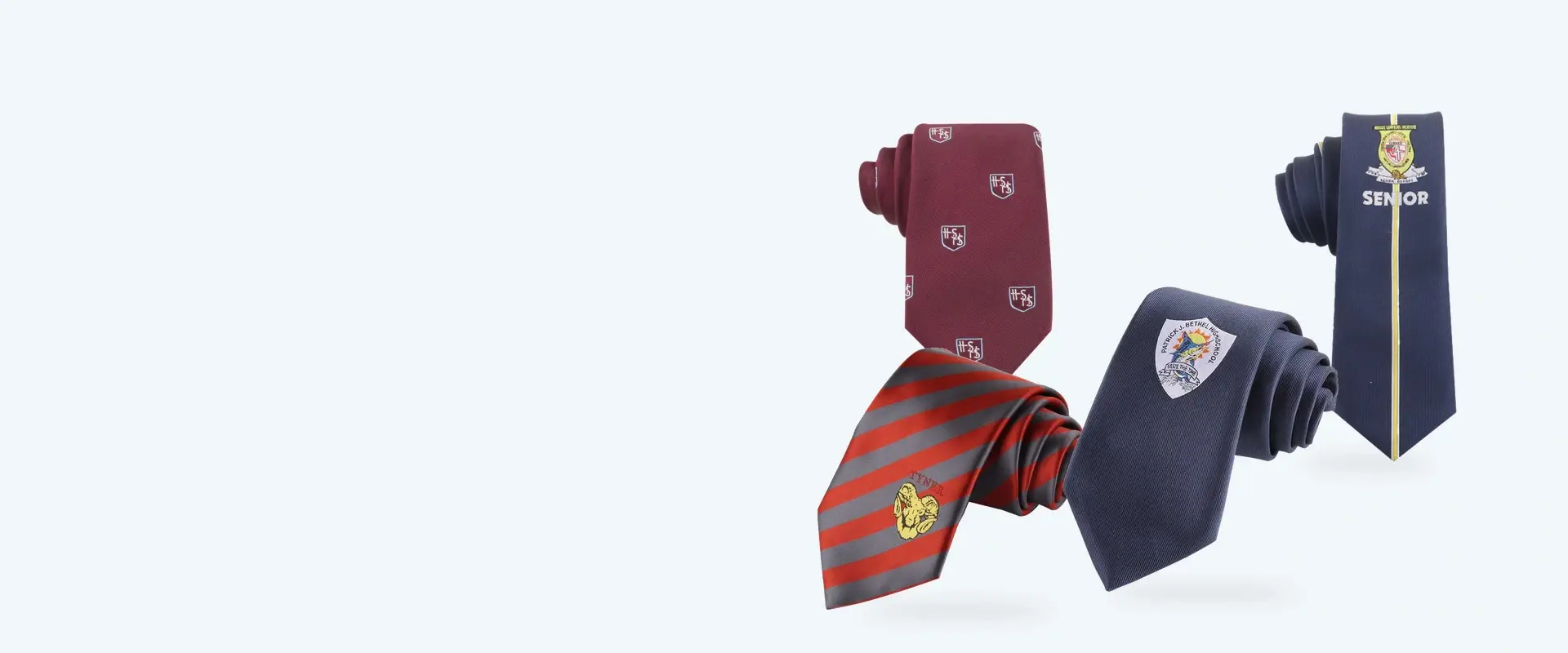
Custom School Ties
Plan crest, uniform, striped, and university ties with school colors, age-group sizing, variant quantities, labels, packing, and replenishment needs.
- ✓ Crest & Stripe Standards
- ✓ Age-Group Size Planning
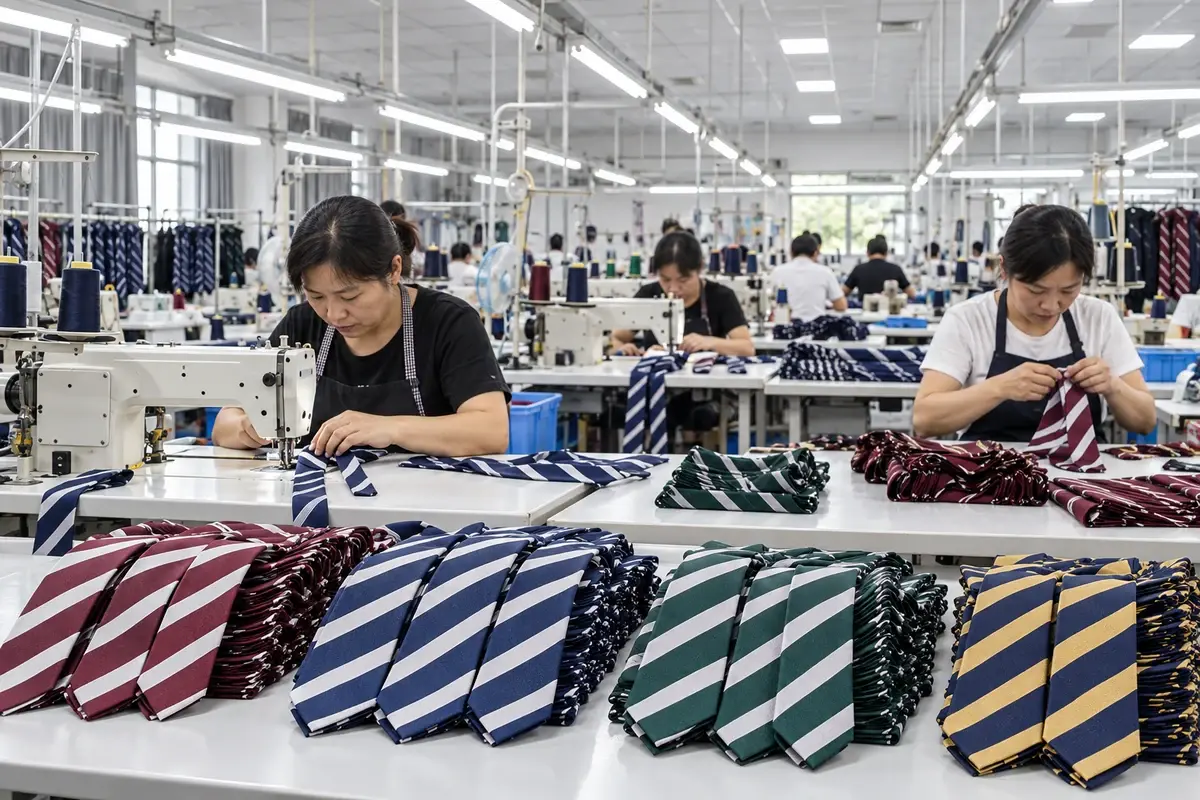
A Production Partner for School Tie Programs
LuxoTie helps schools, uniform suppliers, and education organizations define material, stripe, size, label, packing, and sample requirements based on crest artwork and color rules, then manages production and inspection against the approved school specification.
Six Decisions to Define Your School Tie Program
Confirm the shared school identity and every approved wearer variation before sampling so the first order and later replenishment follow one controlled specification.

1. Crest and Artwork
Provide usable crest or logo files and define size, placement, direction, colors, and whether the crest appears once, repeats, or is integrated with a stripe.

2. Color and Stripe Rules
Supply Pantone or physical references, then record each base color, stripe direction, width, spacing, repeat, and approved house, year, or role variation.

3. Material and Construction
Compare polyester and polyester-blend options, then confirm interlining, tipping, stitching, and whether a woven, printed, embroidered, transfer, or foil route suits the artwork.

4. Wearer and Size Groups
List each child, student, adult, or special-size group with its width, length, quantity, tie format requirement, and intended use before sampling.

5. Labels and Group Packing
Define main and care labels, hang loops or cards, individual wrapping, variant identification, carton grouping, and delivery allocation for each school group.

6. Approval and Replenishment
Approve every physical variant and record its artwork revision, colors, stripe rules, dimensions, construction, labels, packing, and sample reference for later orders.
Choose the School Tie Route for Your Program
Start with the school identity and wearer group, then define the crest or stripe, material, dimensions, labels, packing, and approval standard for that route.
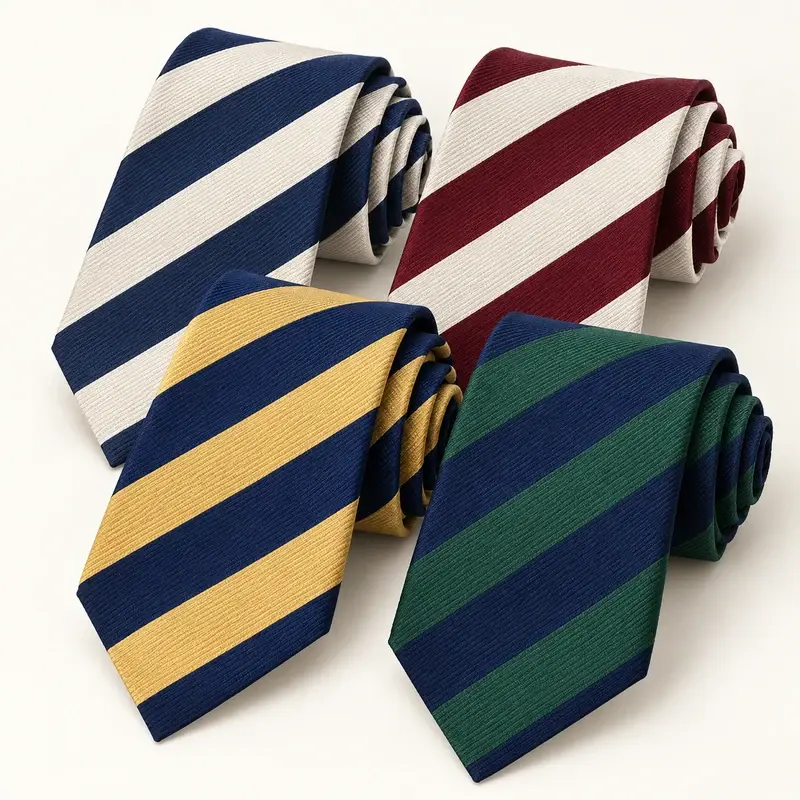
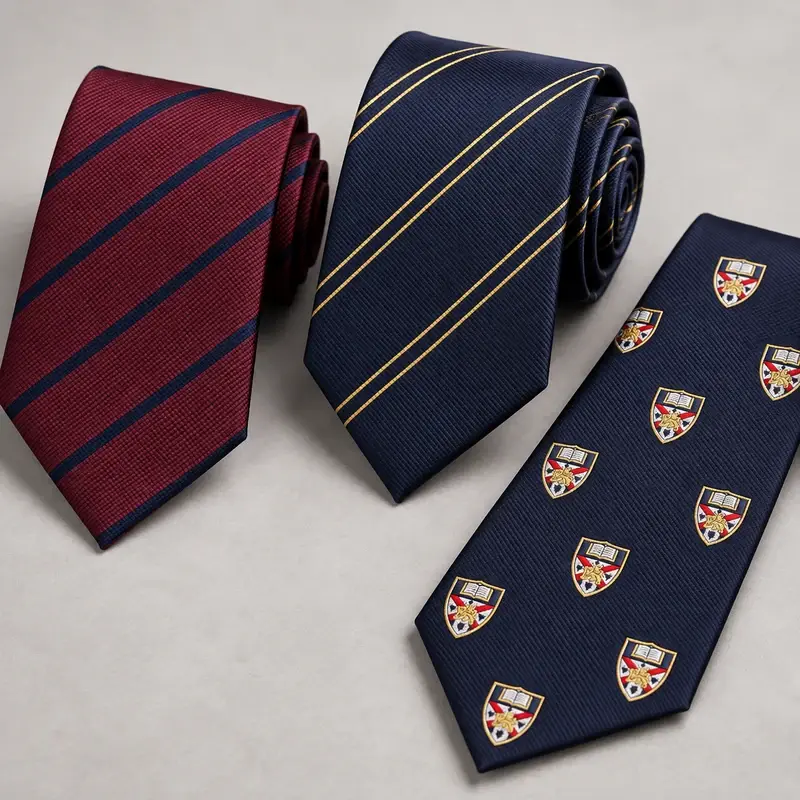
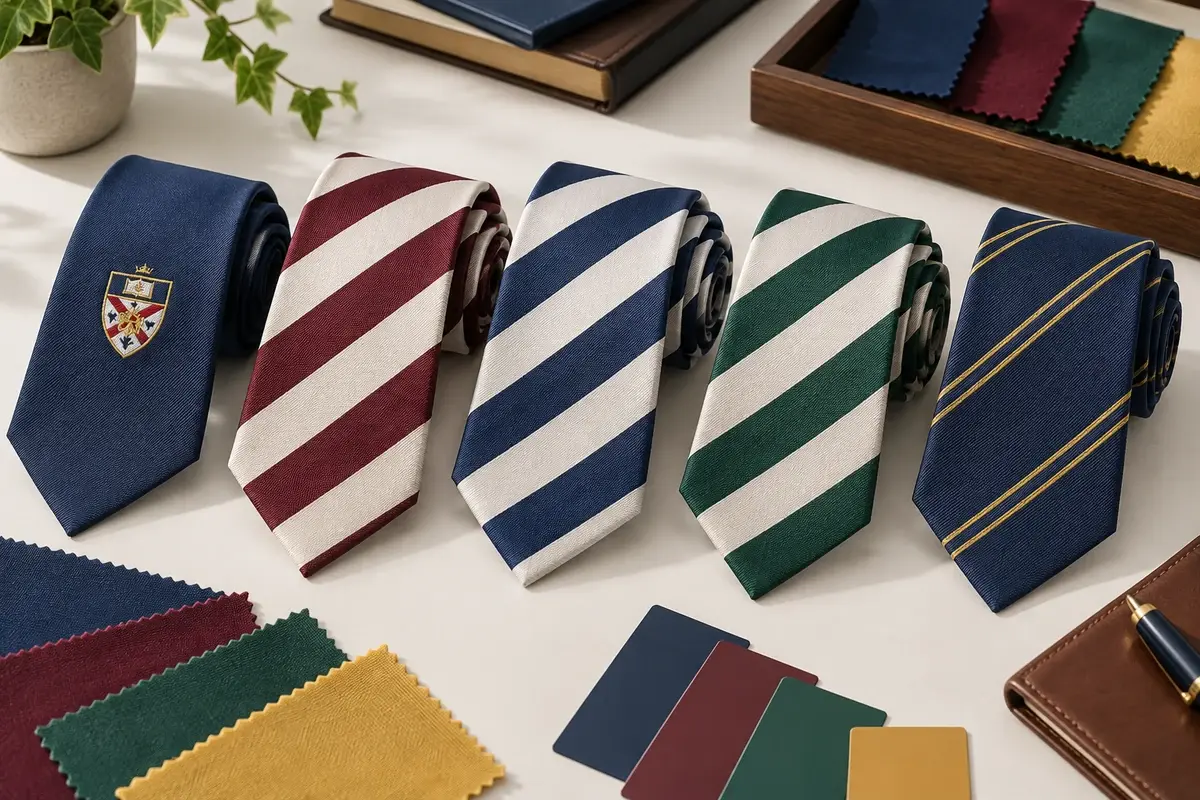
Define School Identity Through Crest and Stripe Rules
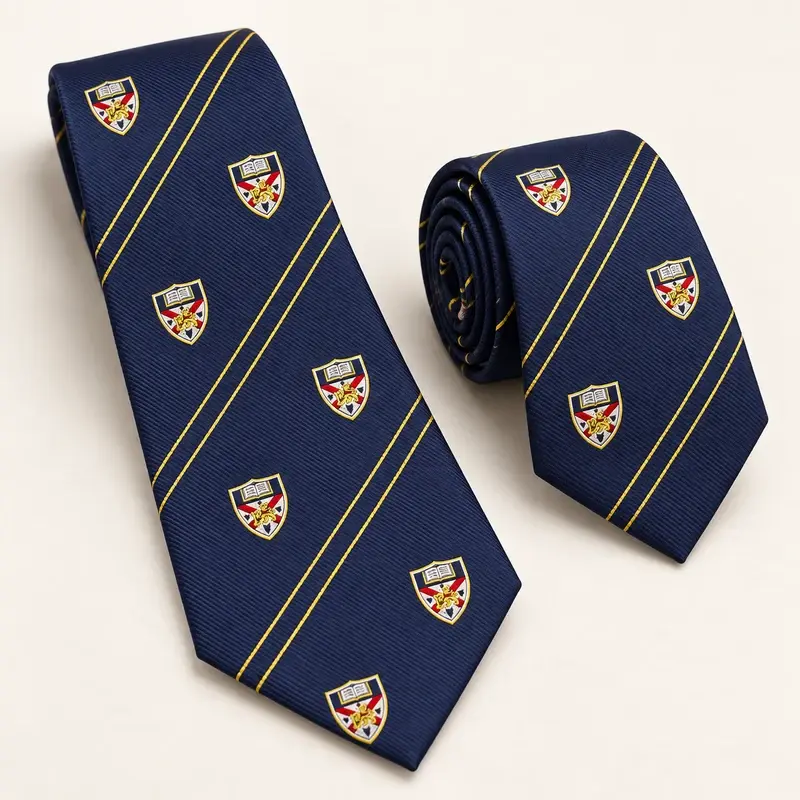
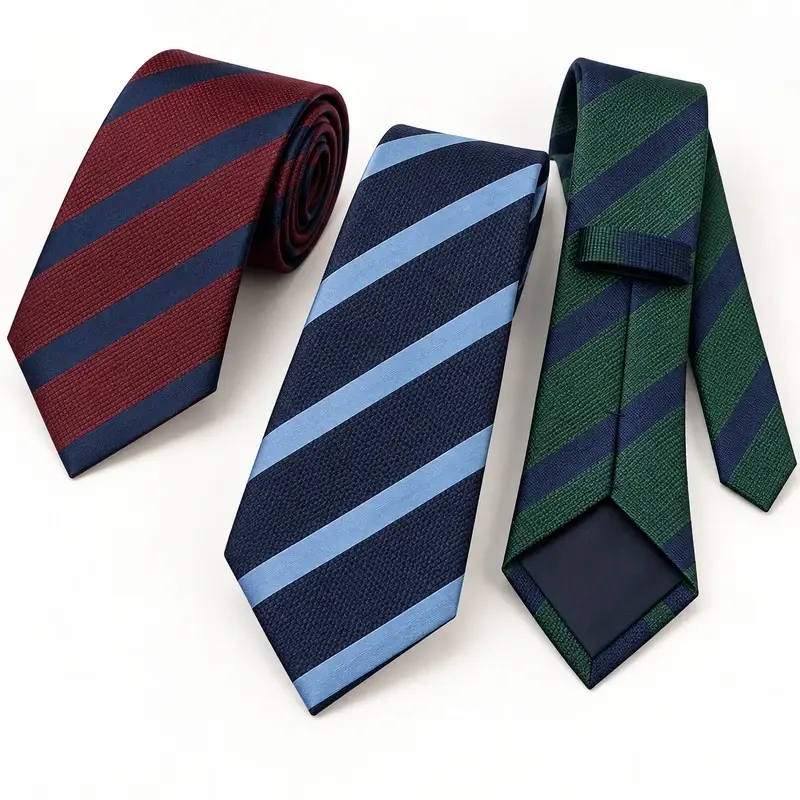
Use the school logo or color reference to create a repeatable tie specification. Define what remains shared and what may change before sampling.
- Establish the School Colors
Provide Pantone or physical references and identify the base, crest, stripe, accent, and restricted colors for every approved version. - Prepare the Crest Artwork
Supply clear files and confirm crest size, blade position, direction, spacing, background, and the minimum detail that must remain legible. - Define Every Stripe Rule
Record stripe direction, width, gap, repeat, edge relationship, and the exact color change for each house, year, or role variant. - Approve the Complete Design
Use the physical sample to review color, crest clarity, stripe proportion, material surface, dimensions, knot, and how the tie pairs with the uniform.
Plan Age Groups, Sizes, and Quantities
Base the size plan on the actual wearers. A clear schedule links child, student, adult, and special-size quantities to the correct design variant.
- List the Wearer Groups
Separate child, student, adult, staff, alumni, or other approved groups and state the intended use of each tie. - Assign Width and Length
Select from 6–10 cm widths and 135–155 cm lengths, or confirm child and special lengths for sample review. - Confirm the Tie Format
State the required wearing structure or school-specific rule before quotation. Any format beyond the confirmed standard tie requires project-specific review. - Allocate Quantity by Variant
Record the quantity for every crest, stripe, size, wearer group, packing group, and delivery batch before sampling and production.
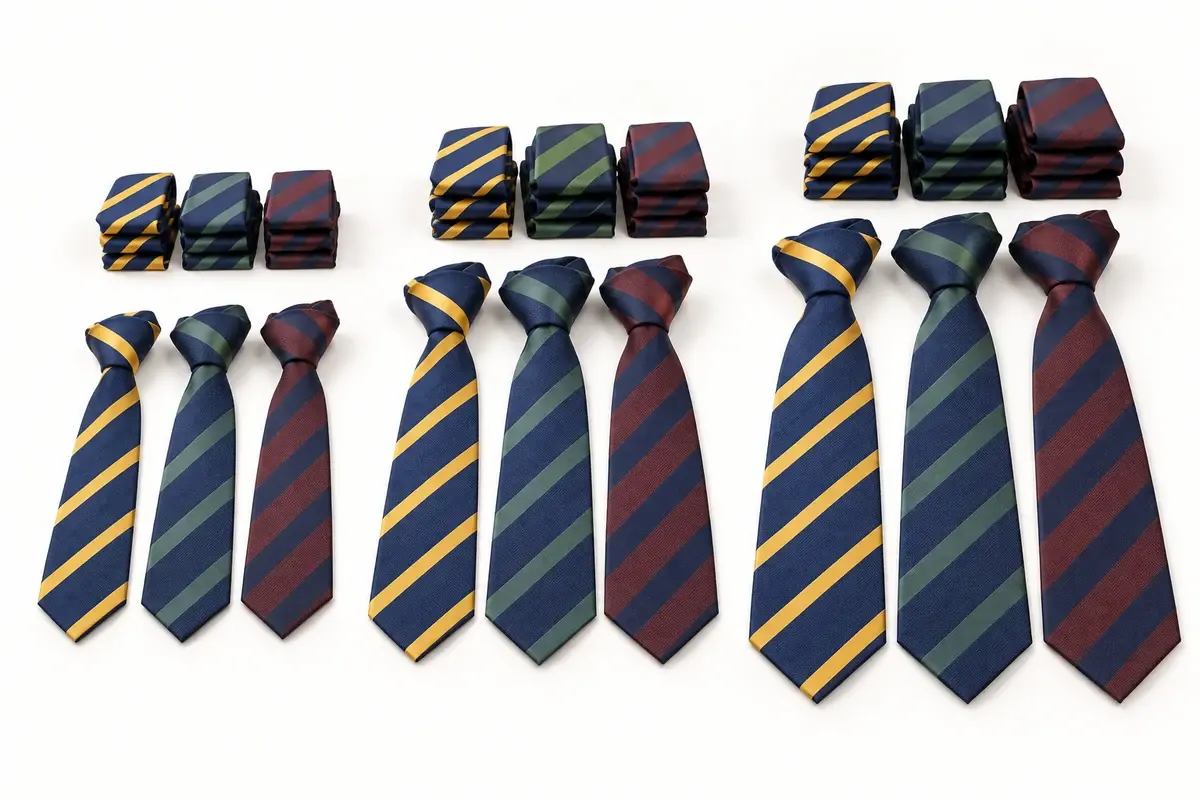
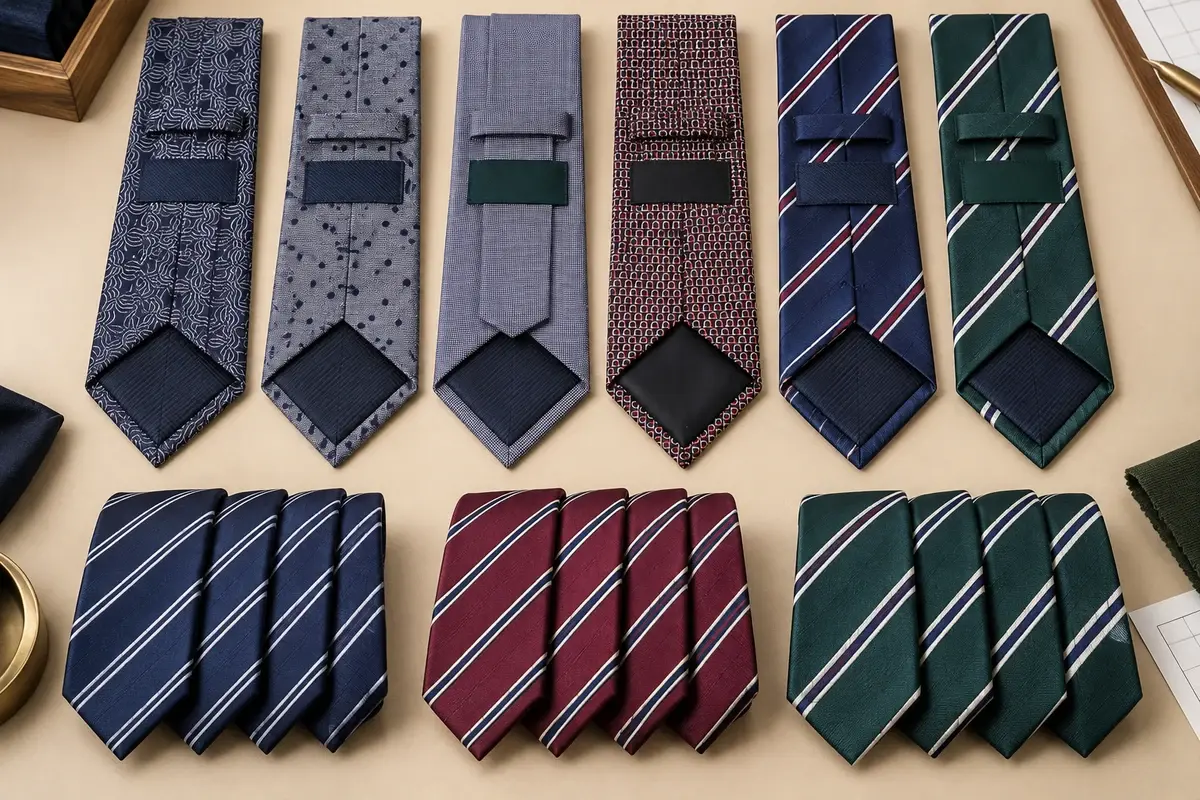
Control Academic-Year Orders and Replenishment
Treat each approved school tie as a named version. Link its design, size group, quantity, label, and packing record to the sample used for inspection.
- Name Every Approved Variant
Use clear identifiers for standard, house, year, role, university, alumni, or special-size versions to prevent ambiguity in reorder requests. - Save the Master Specification
Record artwork revision, colors, stripe rules, material, dimensions, construction, labels, packing, and the approved physical sample for each version. - Inspect Grouping and Identification
IQC, IPQC, and FQC check relevant materials, production details, finished ties, variant labels, group quantities, and packing against the project reference. - Document Replenishment Changes
Reference the prior order and list every new color, crest, stripe, size, quantity, label, packing, or delivery change in writing.
Three School Tie Program Structures
Use one structure or combine several. The final schedule should show the school identity, wearer group, size, quantity, and approved variation for every tie.
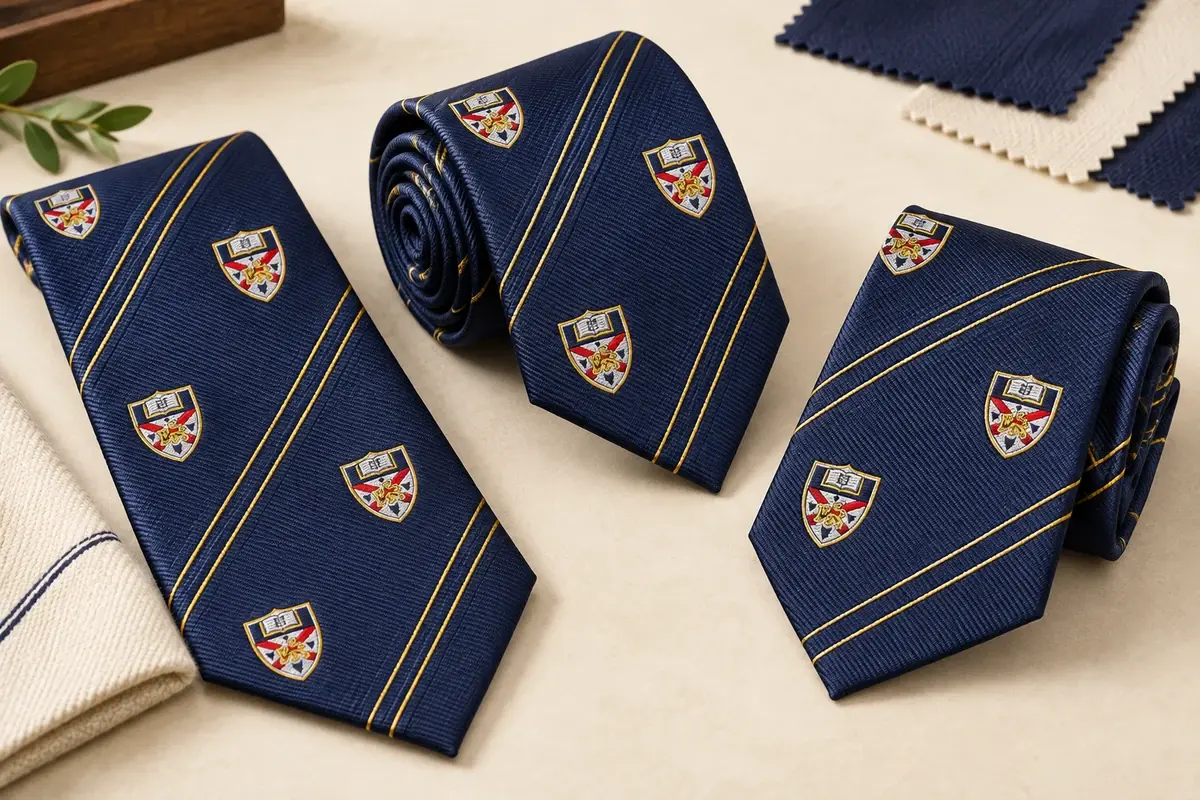
School Crest Tie
Uses an approved school crest or logo with defined colors, size, placement, material, and production method for a consistent identity.
Discuss a Crest Tie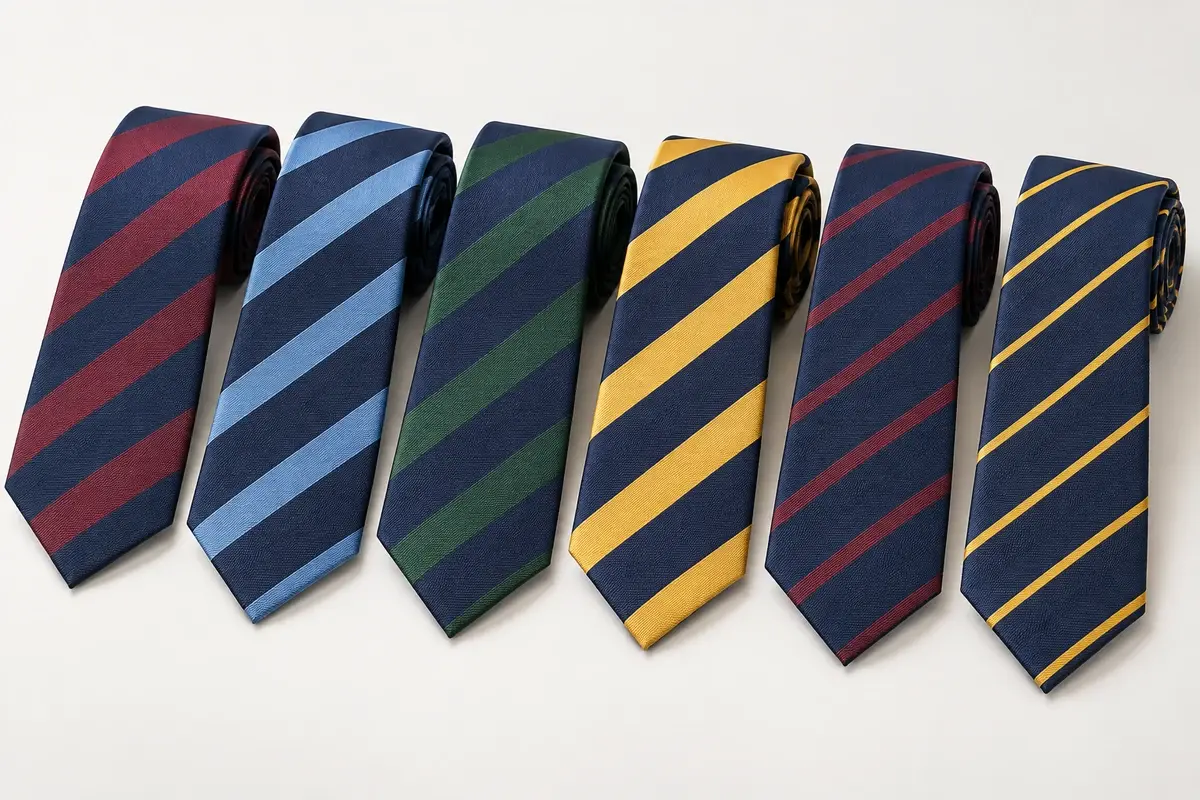
House or Year Stripe Tie
Uses controlled stripe colors, widths, spacing, and repeats to distinguish houses, years, or roles while keeping the shared school design recognizable.
Plan Stripe Variants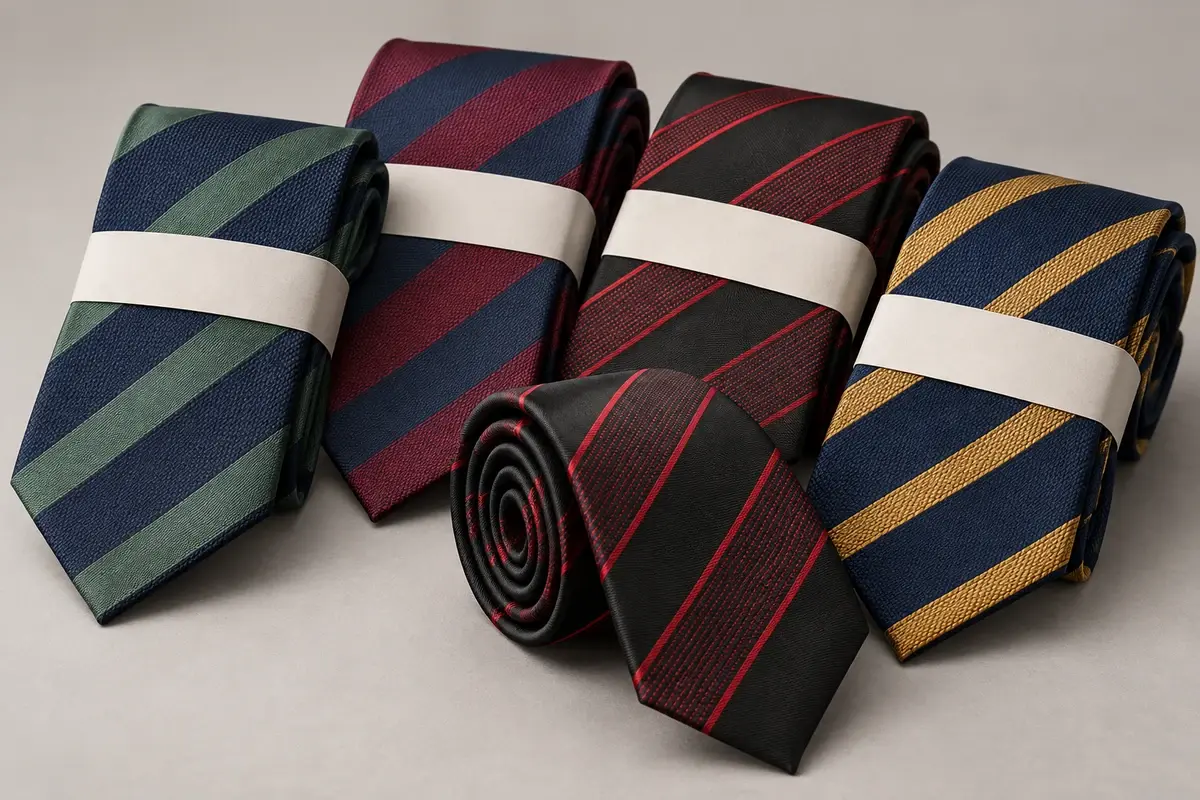
Uniform or University Program
Organizes everyday school, university, college, society, or alumni ties by wearer group, dimensions, labels, packing, and replenishment reference.
Discuss a School Program
School Tie Production and Variant Checks
LuxoTie manages artwork review, woven or printed development, cutting, interlining, sewing, pressing, labeling, inspection, and packing. IQC, IPQC, and FQC check material, color direction, crest, stripes, dimensions, construction, approved variants, labels, group quantities, and packaging against the school reference.
Start Your School Tie Program
Send your school tie requirements and estimated quantity.
Request a Custom Quote