
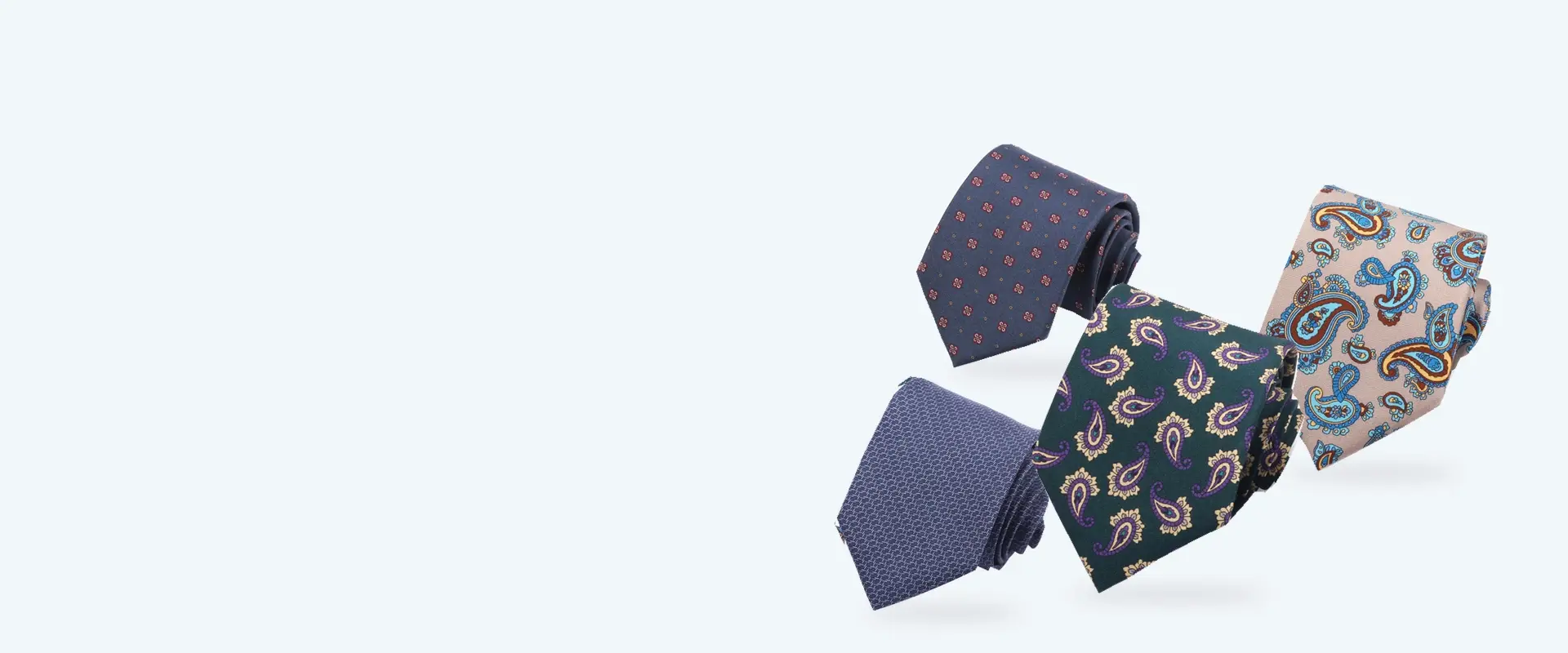
Custom Printed Ties
Plan full-color artwork for the tie’s tapered shape by confirming print method, material, scale, repeat, cropping, placement, and color.
- ✓ Detailed Full-Color Artwork
- ✓ Printed Sample Approval
A Production Partner for Custom Printed Ties
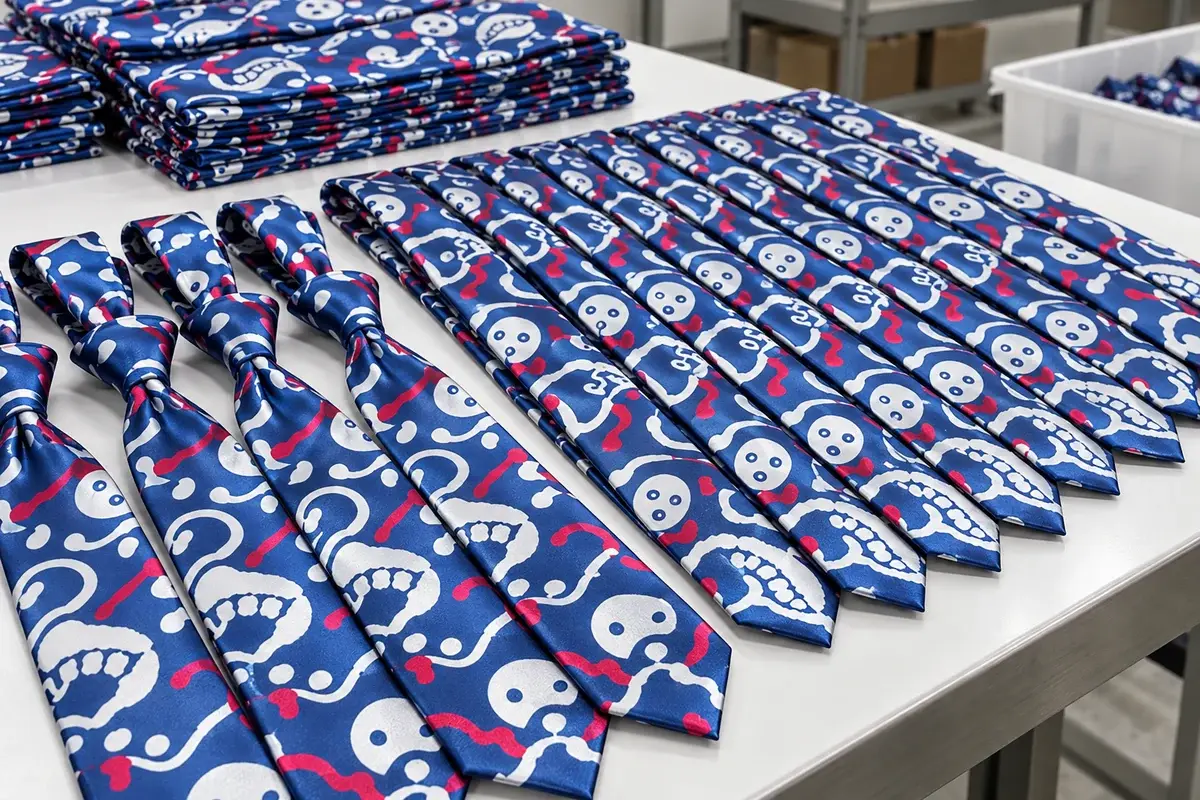
LuxoTie reviews artwork, layout, material, and print-route requirements, then manages screen or digital printing inputs and completes cutting, interlining, sewing, pressing, inspection, labeling, and packing for approved printed tie programs.
Six Decisions to Define Your Printed Tie
Confirm these points before sampling so the file, printed fabric, cut components, and finished tie follow one approved design standard.

1. Artwork Type
Identify a positioned logo, repeat pattern, illustration, gradient, photograph, or full-coverage design before selecting the print route.

2. Material Compatibility
Compare polyester and silk-polyester blend, then confirm whether the selected print method suits the actual material.

3. Print Route
Match screen printing, digital direct printing, heat transfer, or sublimation to the artwork, color count, material, quantity, and intended result.

4. Scale and Placement
Define motif size, repeat, direction, blade position, knot visibility, and acceptable cropping on the tapered tie shape.

5. Color Reference
Provide Pantone or physical references and approve the printed color direction on the selected material rather than relying only on a screen.

6. Finished Sample Check
Approve clarity, color, repeat, placement, dimensions, stitching, labels, and packaging on the agreed physical reference before bulk production.
Compare Four Custom Printed Tie Routes
Digital printing and sublimation describe print methods; logo and pattern describe designs. Sublimation requires compatible polyester.
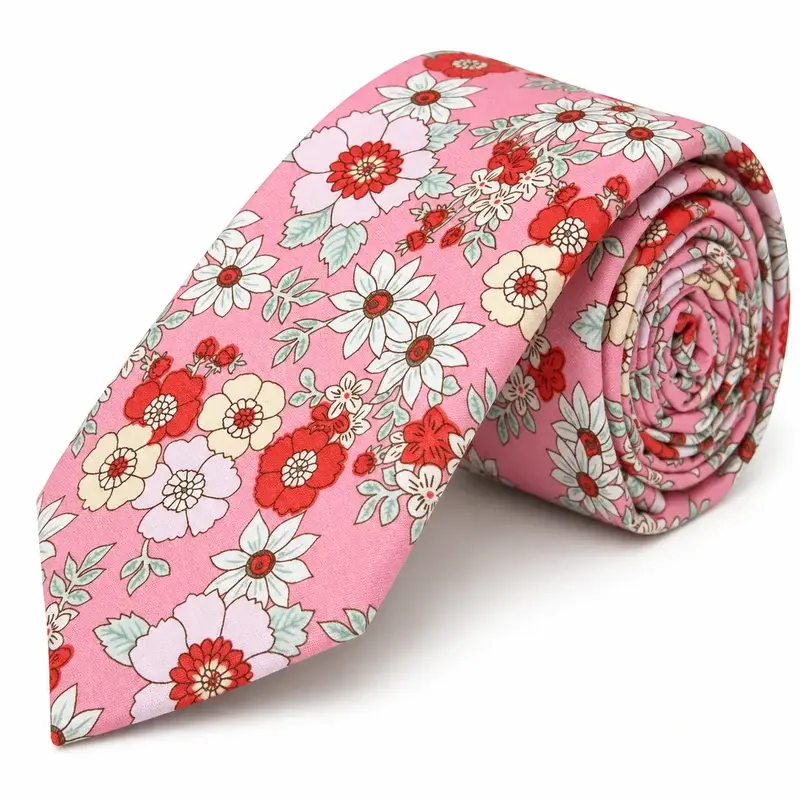
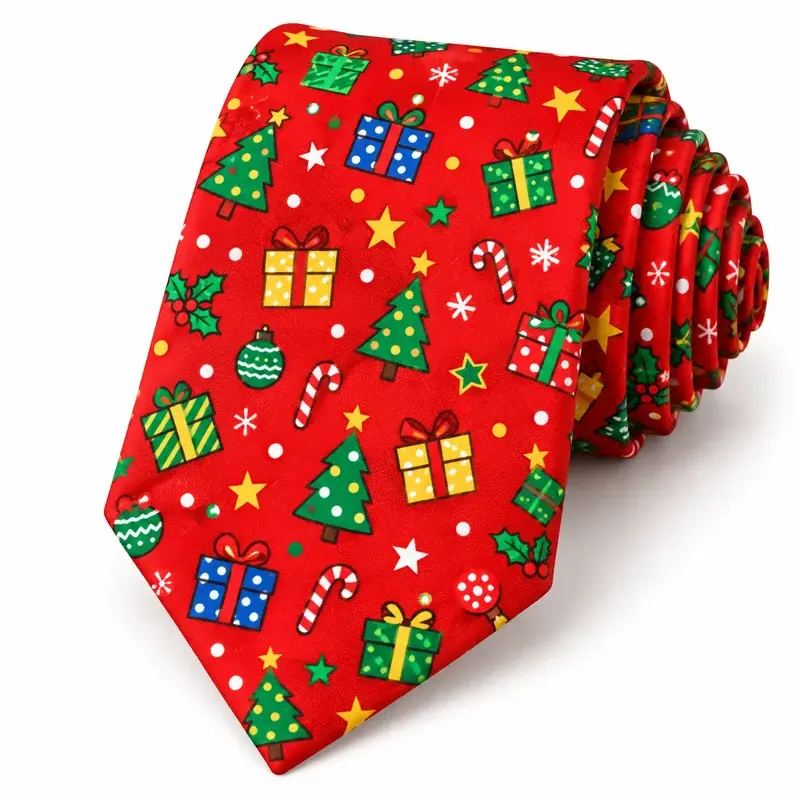
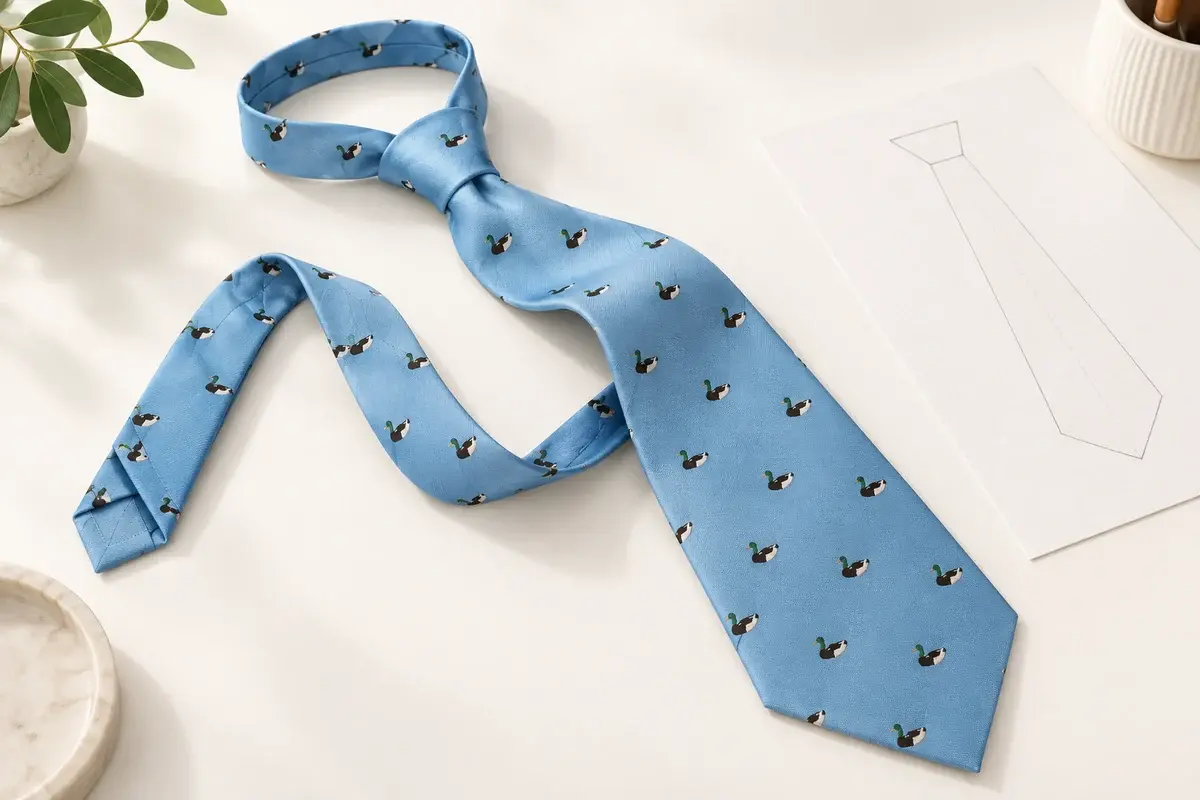
Build Artwork for a Tapered Tie Shape
A tie narrows toward the neck and changes when cut, sewn, and knotted. Prepare the layout for the finished product rather than relying only on a flat screen preview.
- Supply the Source File
Send AI, PDF, PSD, CDR, JPG, or PNG artwork with intended physical dimensions and any available reference sample. - Mark the Visible Area
Define what should remain visible on the blade, near the knot, and at the tip when the tie is worn. - Build the Repeat
Set motif size, spacing, direction, tile alignment, and acceptable partial elements for a continuous pattern. - Plan for Cutting
Keep critical logos, text, and borders away from potential crop areas and approve the final placement on a tie outline.
Match the Print Method to Artwork and Material
Choose the print route after reviewing detail, color count, coverage, material, quantity, and the desired surface result.
- Digital Direct Printing
Use for detailed, multicolor, gradient, or illustrated artwork when the selected fabric and project specification support this route. - Screen Printing
Use for clear logos or graphics with defined color areas, subject to artwork separation, material, quantity, and sample review. - Heat Transfer
Review transfer method, fabric response, coverage, color, and hand feel against the intended design and approved sample. - Dye Sublimation
Use a suitable polyester base, normally white or light-colored before printing, for selected full-color or all-over designs.
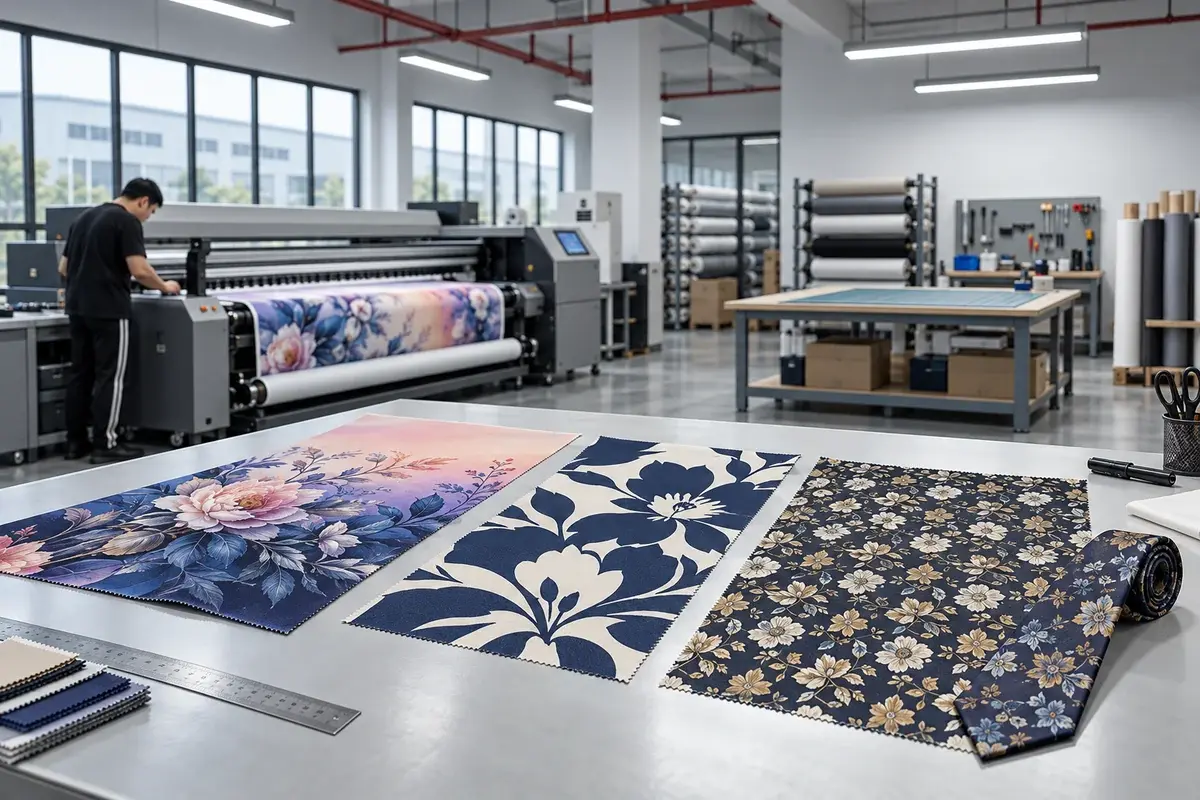
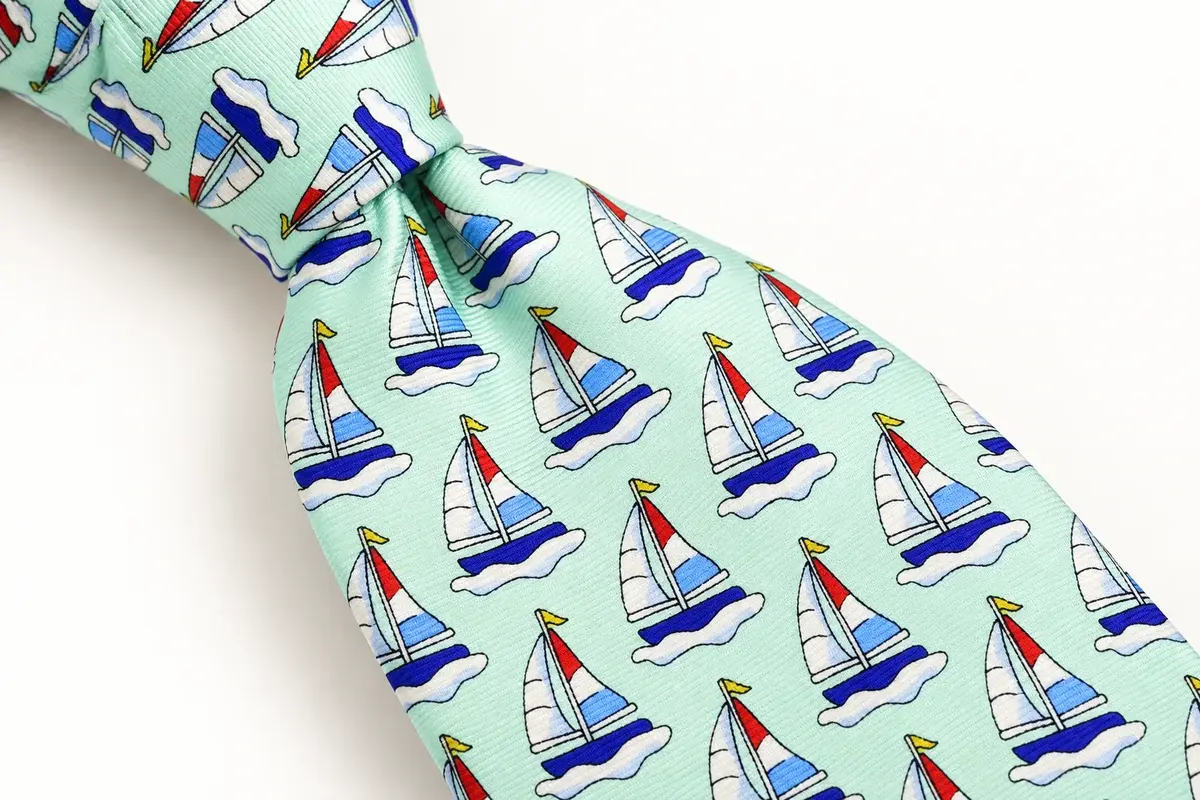
Approve Color, Detail, and Finished Placement
A digital proof confirms the layout; the physical sample shows how ink, material, cutting, sewing, and tie proportions work together.
- Color Direction
Provide Pantone or physical references and review the printed result on the actual selected material. - Detail and Contrast
Check small text, thin lines, gradients, edges, and contrast at the intended viewing distance. - Placement After Construction
Confirm the logo or motif remains correctly oriented and visible after cutting, sewing, pressing, and knotting. - Approved Version
Record the artwork revision, print route, material, dimensions, labels, packaging, and written approval used for production.
Three Printed Design Layouts
Select a layout before technical file preparation. The same artwork may need different scale, cropping, direction, and approval rules for each layout.
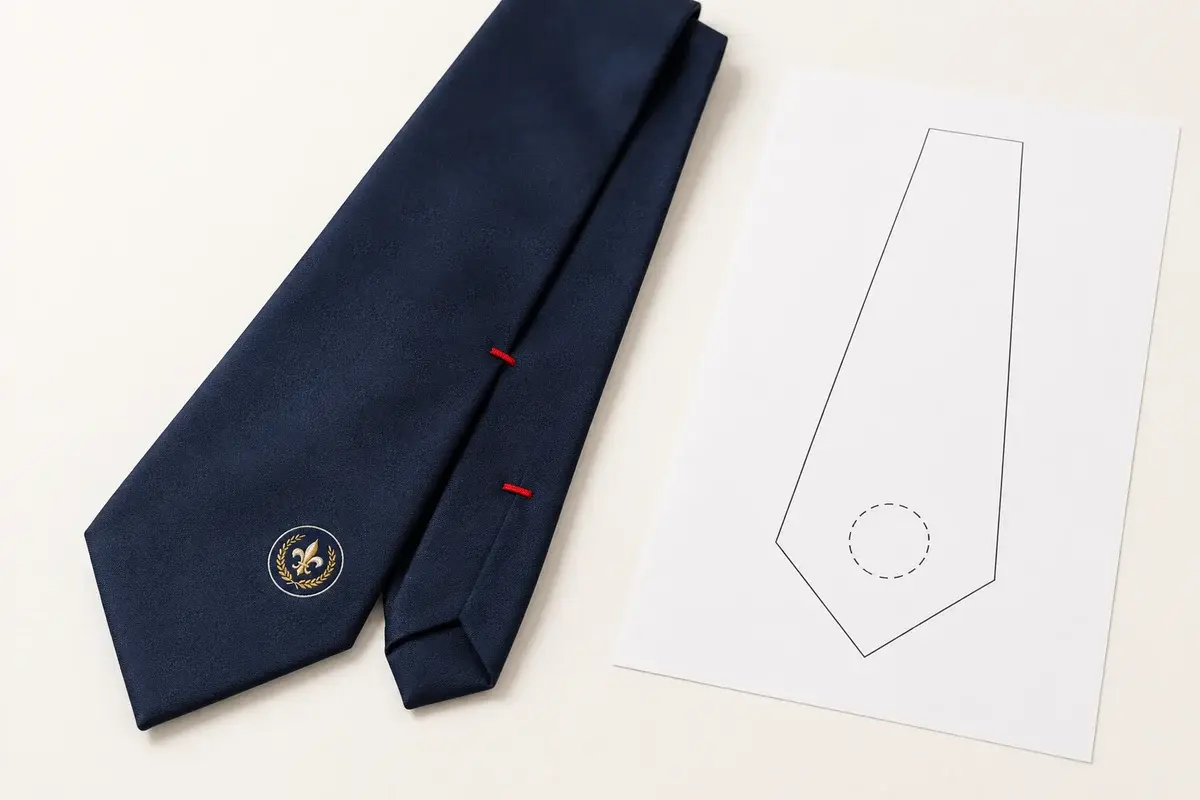
Positioned Logo Artwork
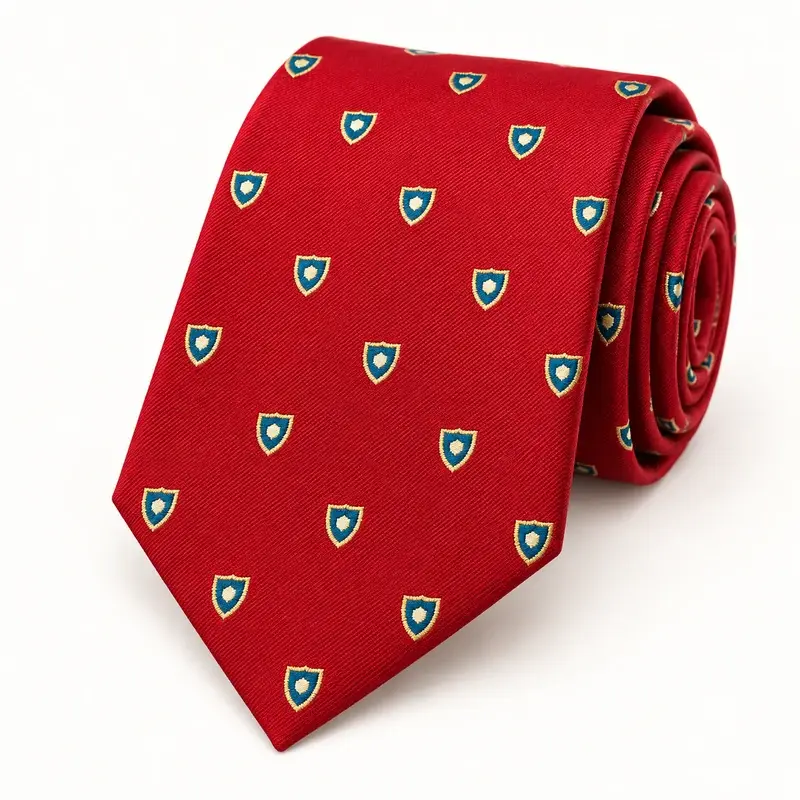
Place one logo, crest, or message in a defined blade area and check visibility relative to the knot, tip, and jacket line.
Discuss Logo Placement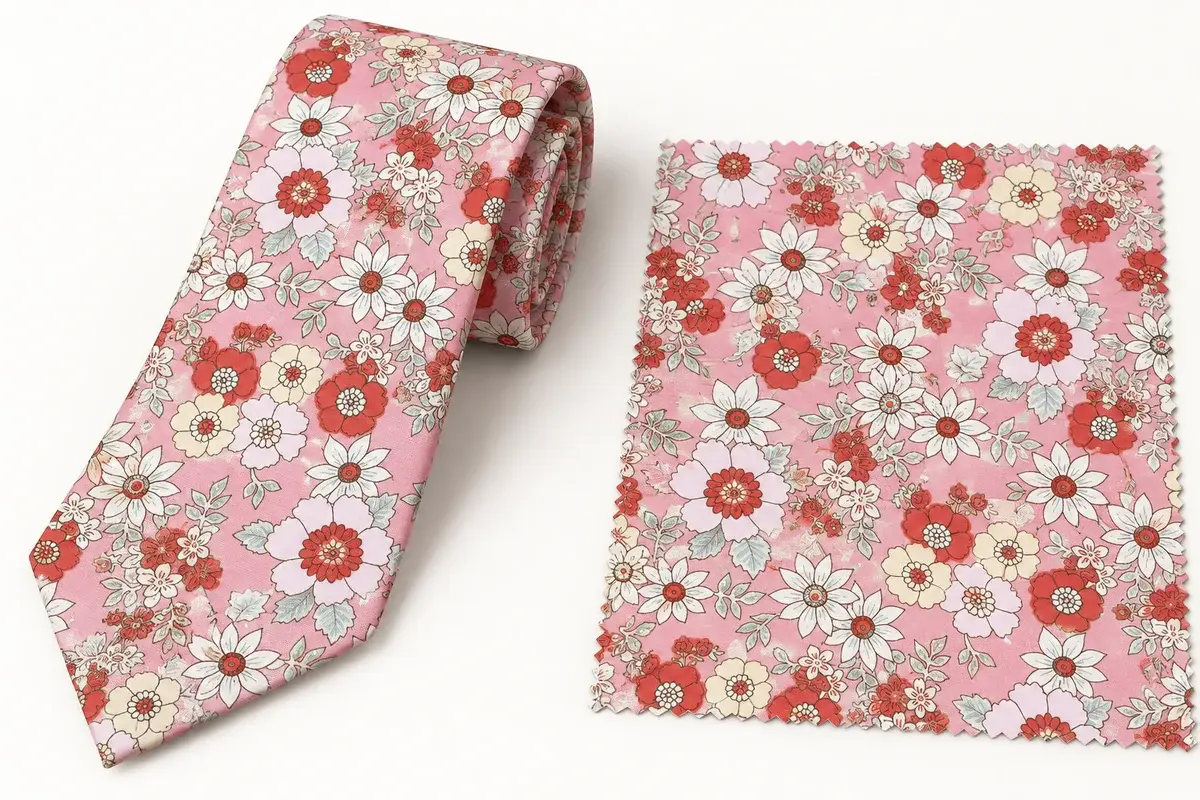
Seamless Repeat Patterns
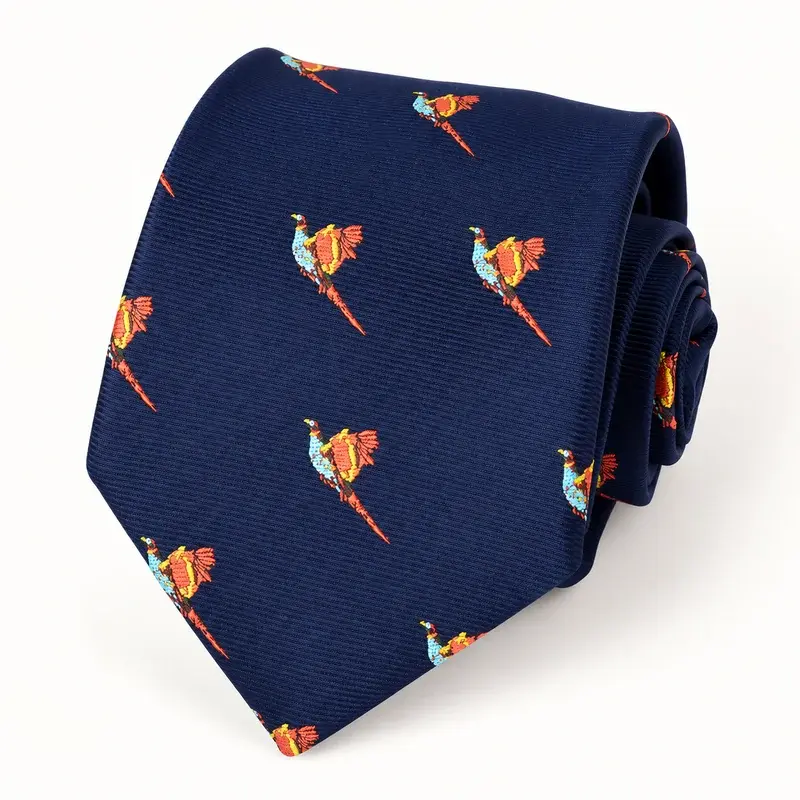
Build a repeat tile with controlled motif size, spacing, direction, joins, and acceptable crop behavior across the tapered shape.
Discuss Repeat Patterns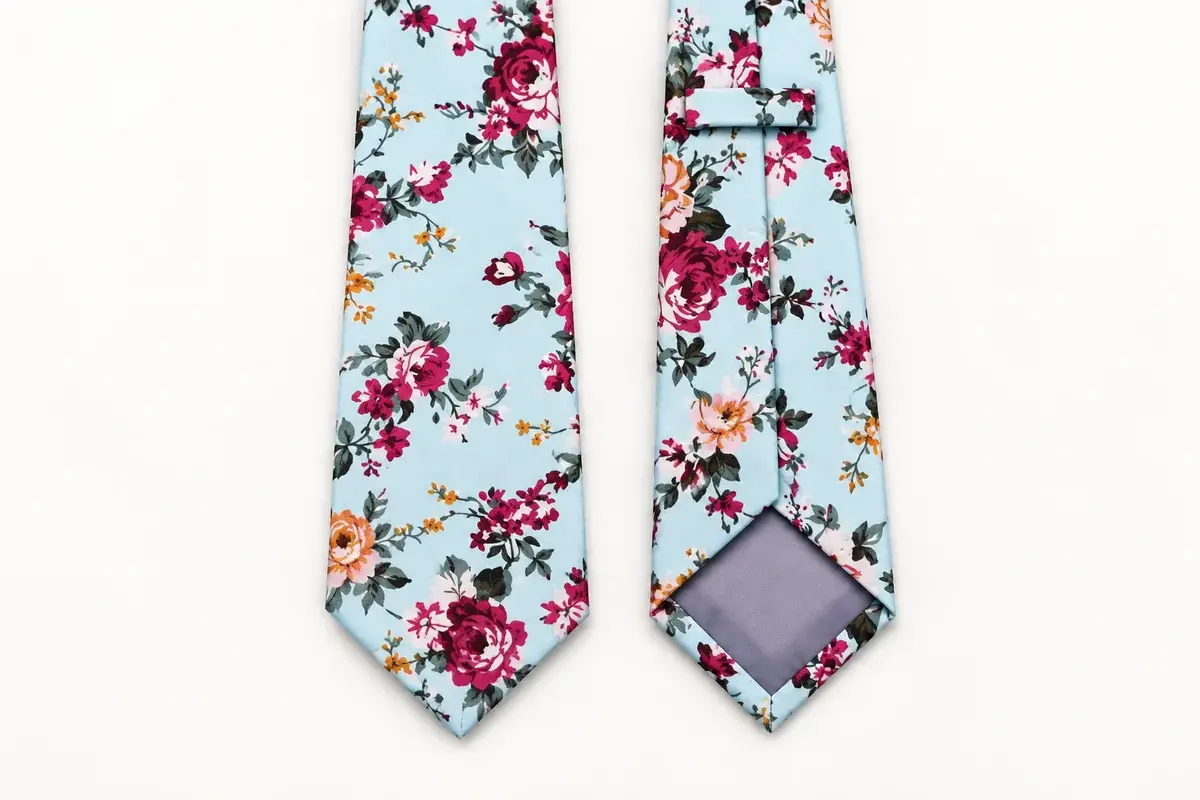
Full-Coverage Artwork
Use broad color, gradients, illustration, or photographic detail across the printable area, with material and print-route compatibility confirmed first.
Discuss Full-Coverage Printing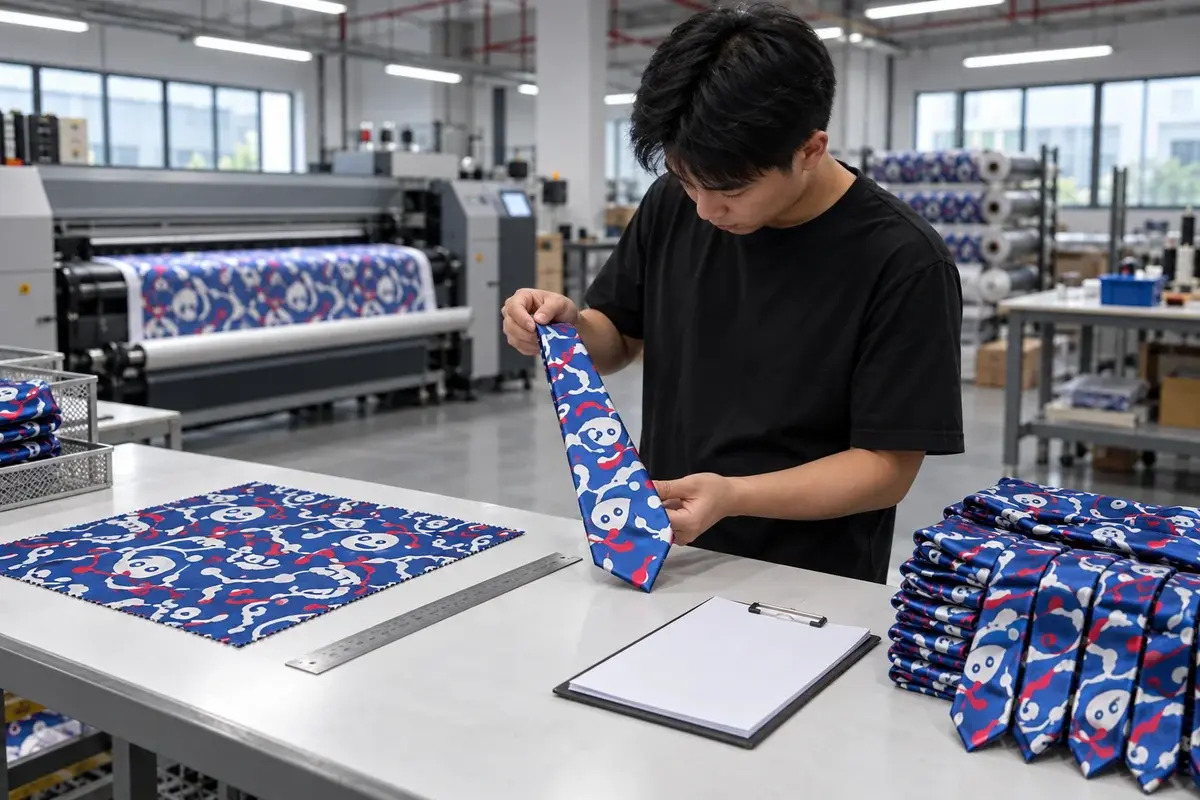
Printed Tie Production and Quality Checks
LuxoTie reviews artwork and print-route requirements, uses internal screen and digital printing resources, and completes cutting, interlining, sewing, pressing, labeling, inspection, and packing. IQC, IPQC, and FQC check material, print clarity, color direction, scale, placement, dimensions, construction, appearance, and packaging against the approved reference.
Start Your Custom Printed Tie Project
Send your printed tie requirements and estimated quantity.
Request a Custom Quote