
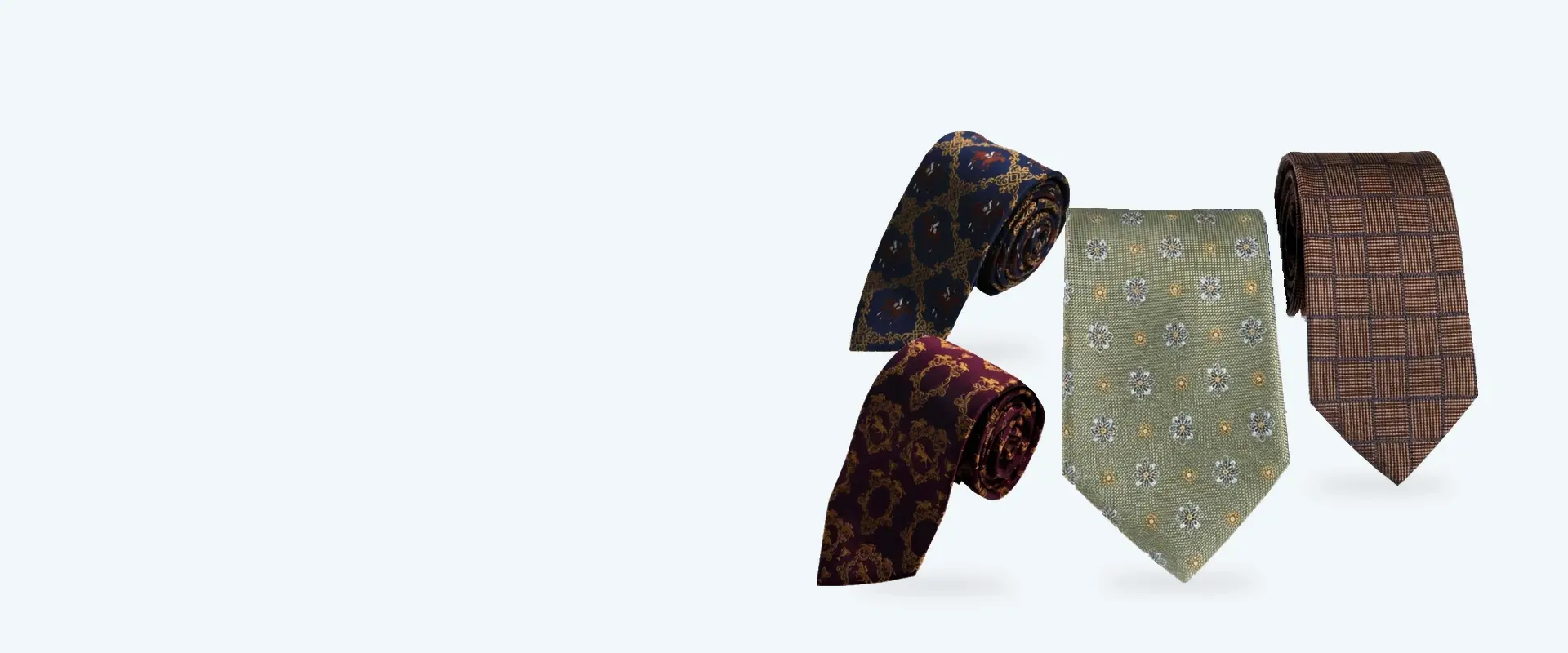
Custom Silk Ties
Compare woven, jacquard, printed, and seven-fold silk ties by artwork method, dimensions, construction, branding, and packaging needs.
- ✓ 100% Mulberry Silk
- ✓ Artwork & Construction Options
A Production Partner for Custom Silk Ties
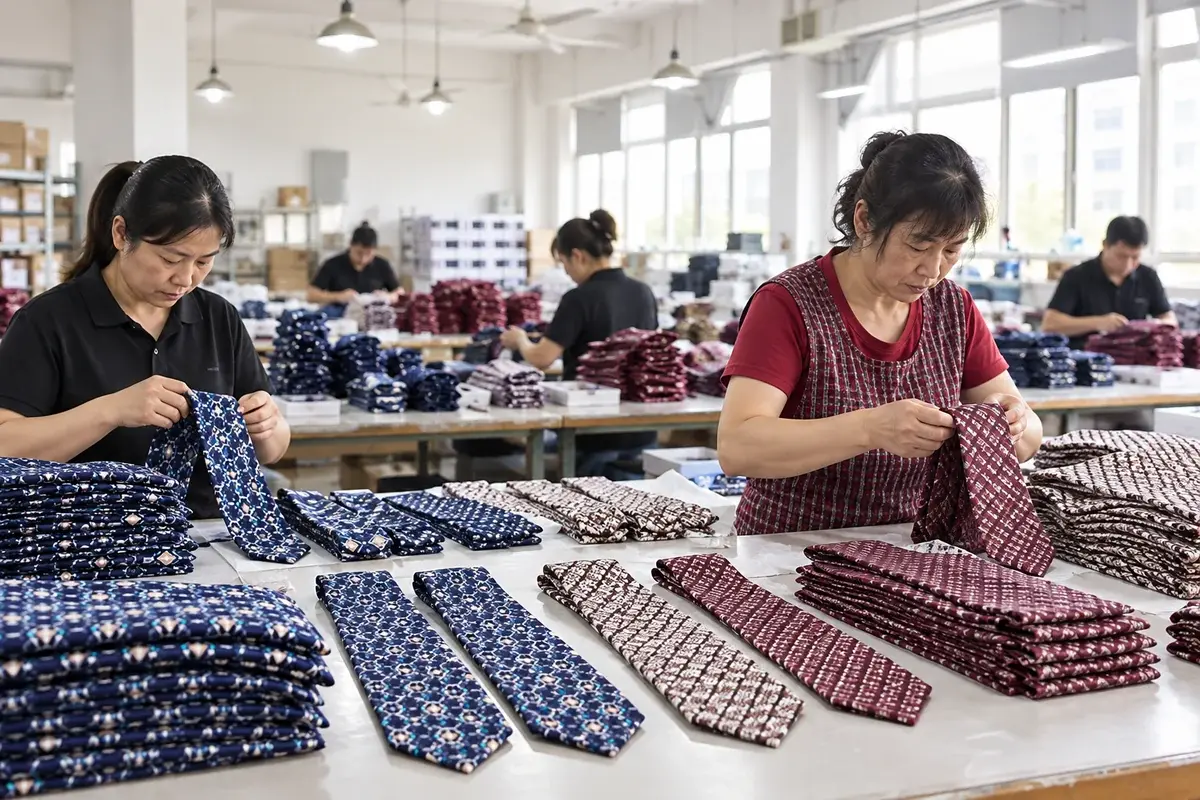
LuxoTie reviews artwork and specifications, coordinates silk and specialist jacquard inputs, and completes core cutting, printing, interlining, sewing, pressing, inspection, labeling, and packing work for approved brand and business programs.
Six Decisions to Define Your Silk Tie
Confirm these points before sampling so material, artwork, proportions, construction, branding, and inspection follow one approved standard.

1. Silk Material Control
Confirm 100% mulberry silk, color, hand feel, and finish against the approved sample before bulk production begins.

2. Woven or Printed Artwork
Match woven texture to repeating motifs and printed surfaces to detailed, multicolor, or gradient artwork.

3. Proportion and Fit
Choose a width from 6 to 10 cm and a standard or special length for the intended wearer and styling.

4. Construction Choice
Select 3-fold, 5-fold, 7-fold, half-lined, or unlined construction according to drape, weight, and budget.

5. Brand Finish
Coordinate brand labels, care labels, tipping, hang tags, wrapping, and presentation boxes with the approved specification.

6. Three-Stage Inspection
Check material, dimensions, stitching, artwork placement, appearance, and packing through incoming, in-process, and final inspection.
Compare Four Custom Silk Tie Routes
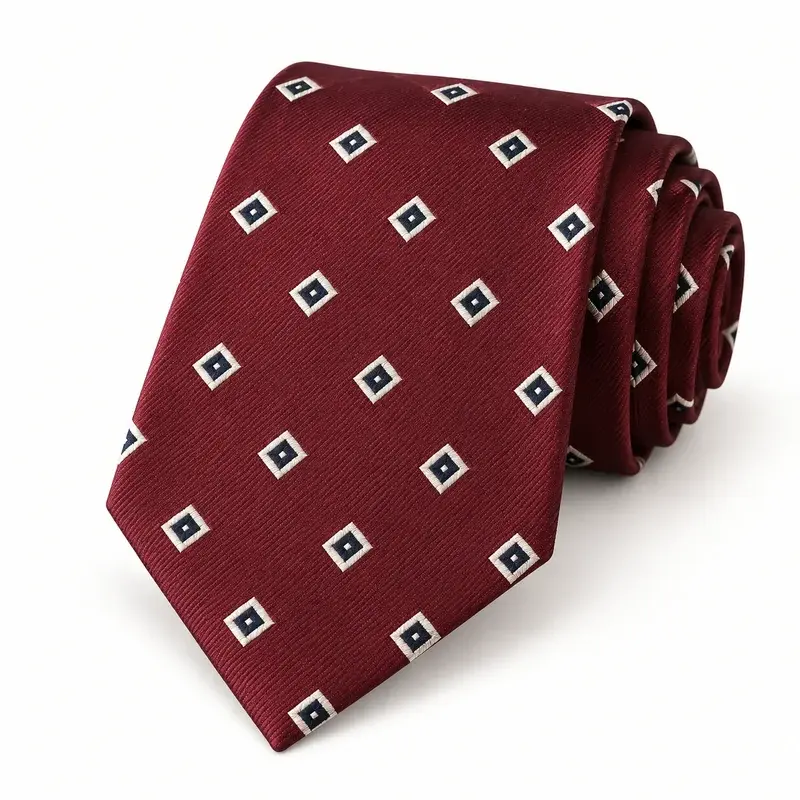
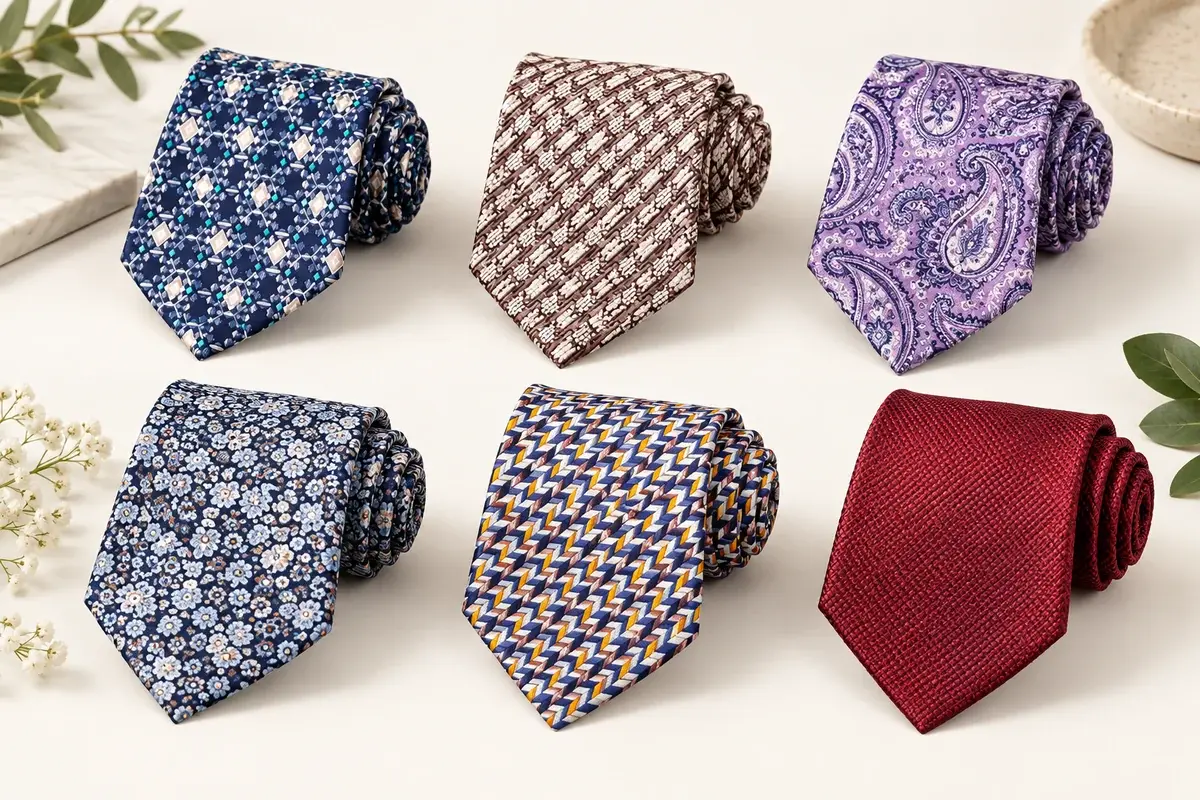
Choose a product by artwork method, collection scope, or internal construction. A seven-fold tie can still use a woven or printed surface, so confirm the surface method and construction separately.
Match Your Artwork to the Surface Method
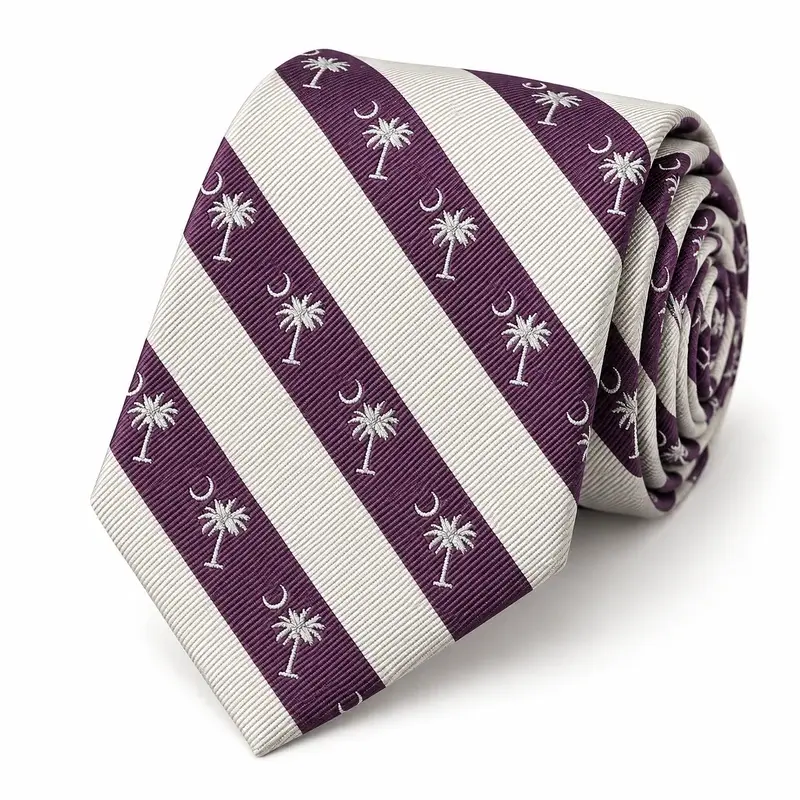
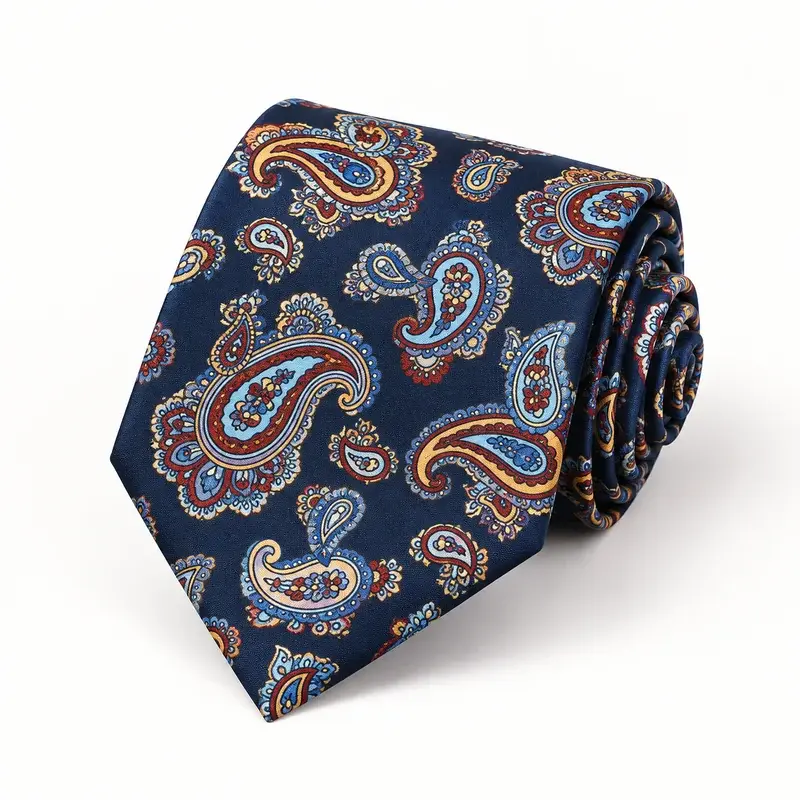
Start with the visual result. Repeating motifs and logos can be woven into the silk, while printing supports detailed, multicolor, or gradient artwork.
- Woven-In Logos
Use jacquard for repeating logos, stripes, or motifs where visible texture is part of the design. - Printed Artwork
Use printing for illustrations, fine lines, multiple colors, gradients, or less repetitive layouts. - Scale and Color
Supply artwork, dimensions, Pantone references, and the intended repeat or placement for technical review. - Approved Reference
Confirm color, artwork scale, placement, silk appearance, and hand feel on the agreed sample or swatch.
Set Width, Length, and Internal Construction
Proportions and internal construction affect appearance and drape. Confirm them based on the wearer, styling, silk weight, and product positioning.
- Blade Width
Choose 6, 7, 8, 9, or 10 cm, then confirm the exact finished width in the specification. - Tie Length
Select 135, 140, 145, 150, or 155 cm, with child or special lengths reviewed separately. - Folding Structure
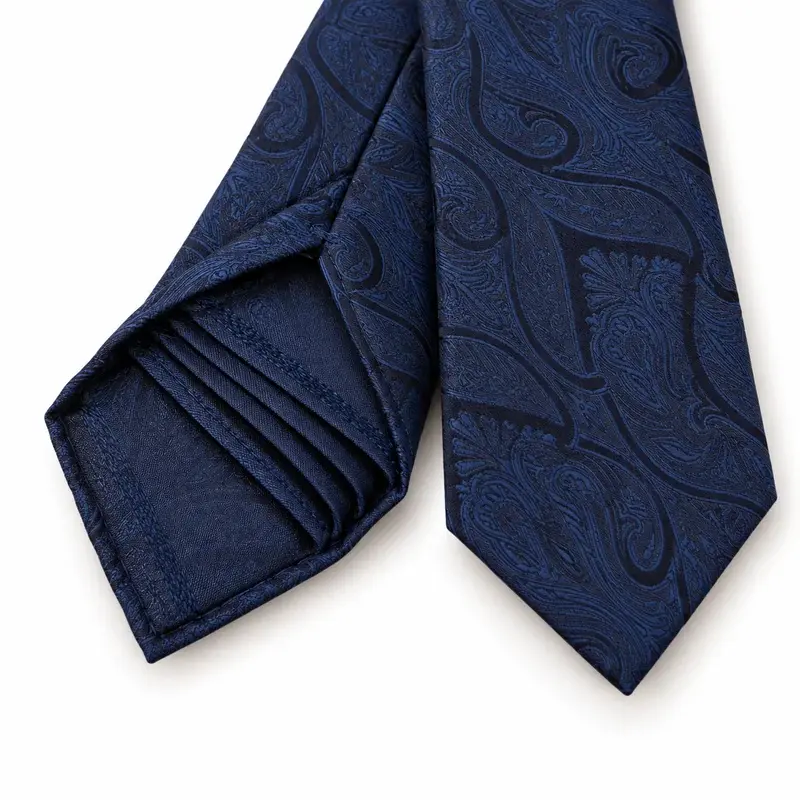
Compare 3-fold, 5-fold, and 7-fold construction by drape, material use, complexity, cost, and timing. - Interlining and Lining
Confirm the intended hand feel, interlining, tipping, half-lined, or unlined details before the sample is made.
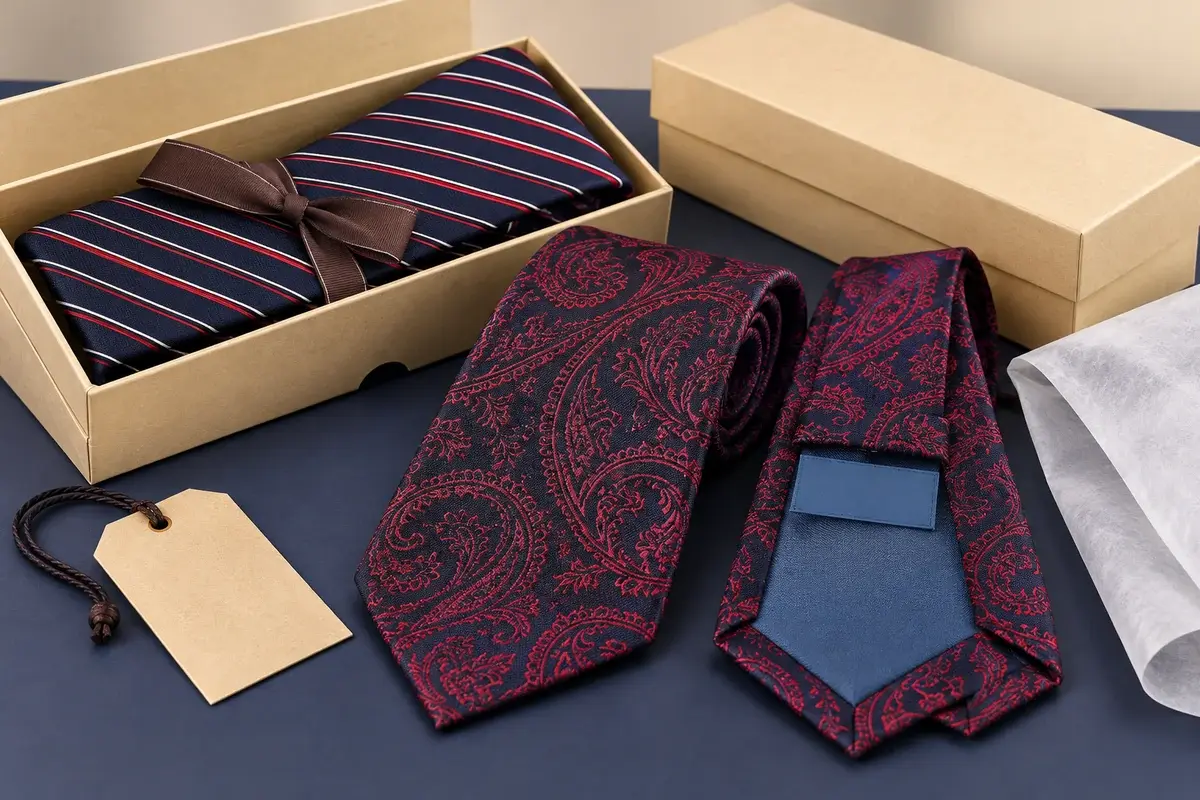
Plan Labels, Tipping, and Packaging
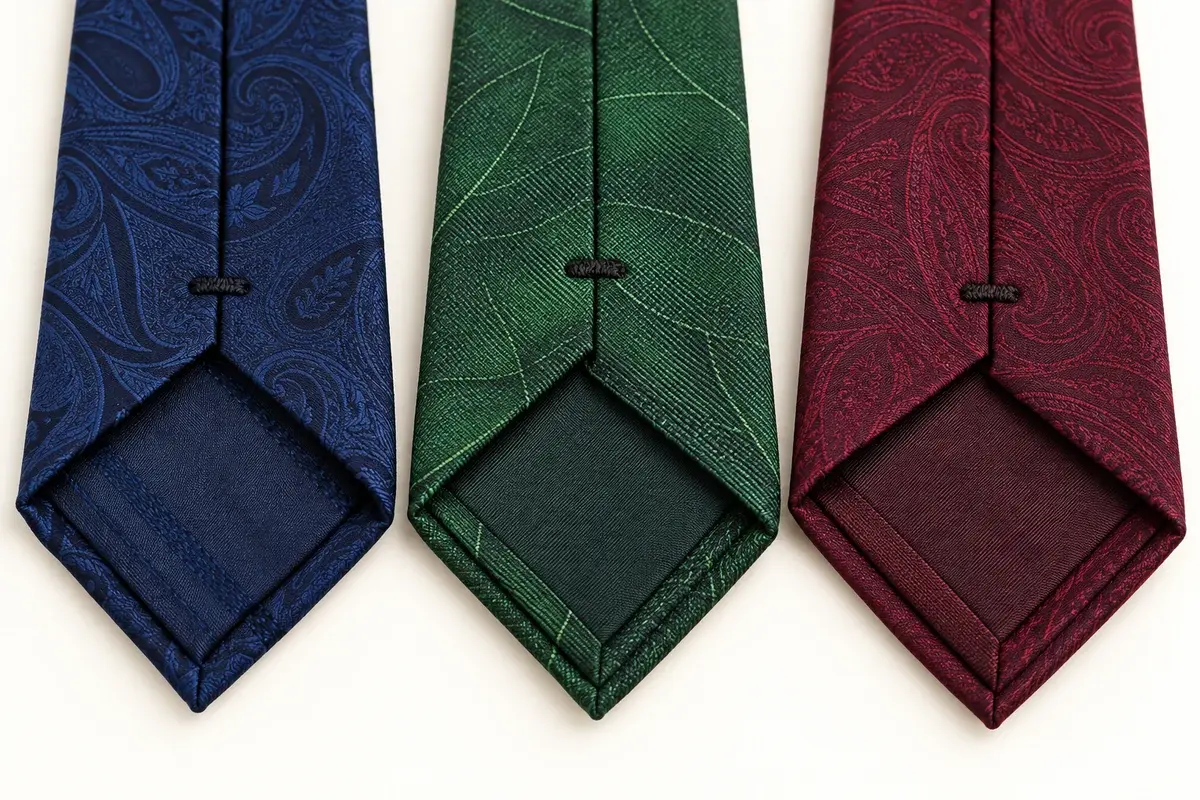
Private label details should be approved with the tie. Confirm wording, placement, materials, and packing quantities before production.
- Brand Labels
Confirm label artwork, dimensions, wording, material, color, fold, and sewing position. - Care and Origin Details
Supply the required care or origin wording and confirm its final placement for the project. - Tipping and Finishing
Choose tipping, lining, stitching, and finishing details that match the approved construction. - Retail Presentation
Define hang tags, individual wrapping, boxes, carton quantities, and shipping marks before packing.
Three Silk Tie Production Routes
Woven and printed options apply to the surface design, while seven-fold applies to the internal construction.
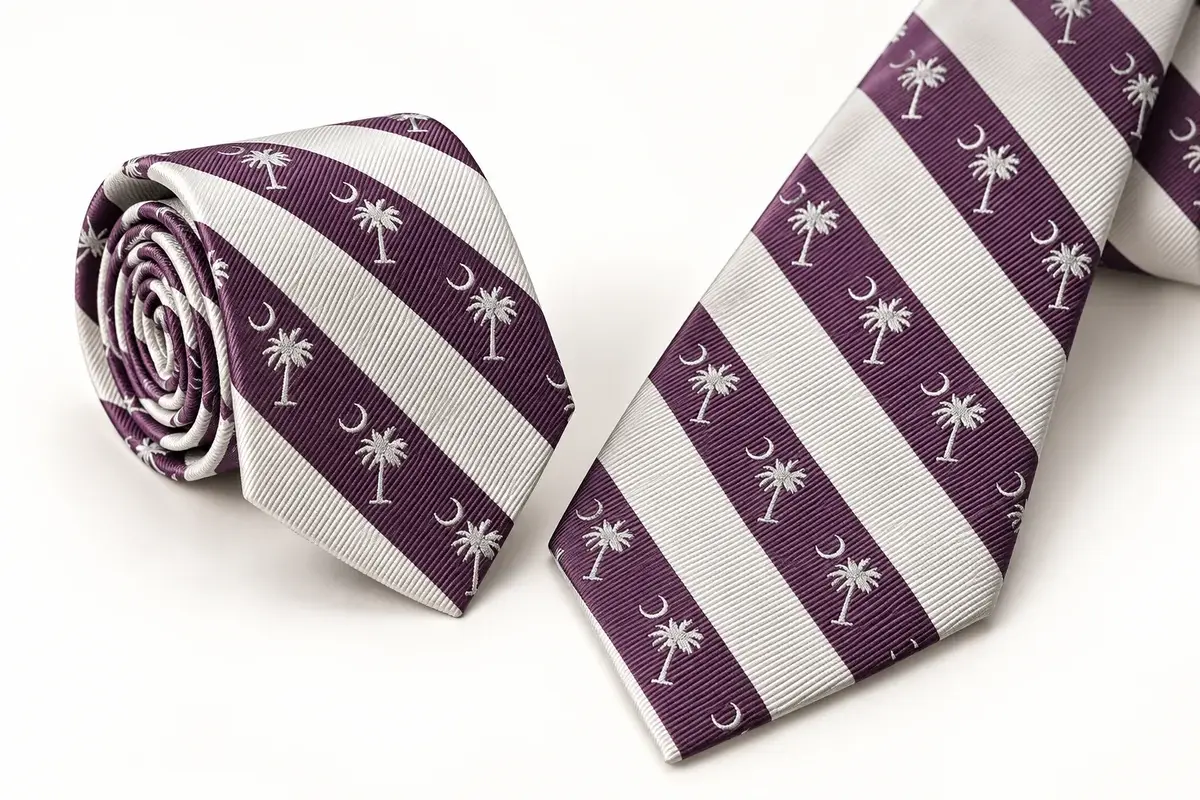
Silk Jacquard and Woven Designs
Woven patterns add texture and suit repeating logos, stripes, motifs, and coordinated private label collections.
Discuss Woven Silk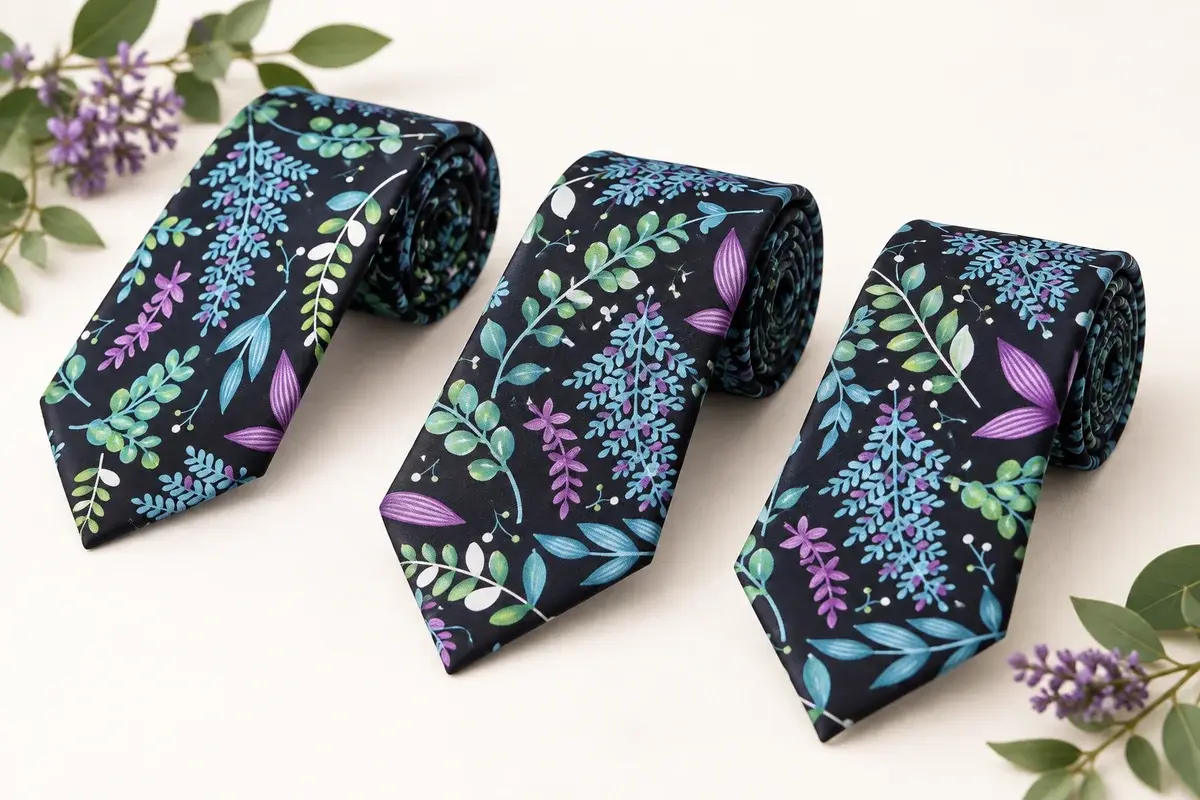
Printed Silk Designs
Printing supports detailed artwork, fine lines, multiple colors, gradients, and freer placement across the silk surface.
Discuss Printed Silk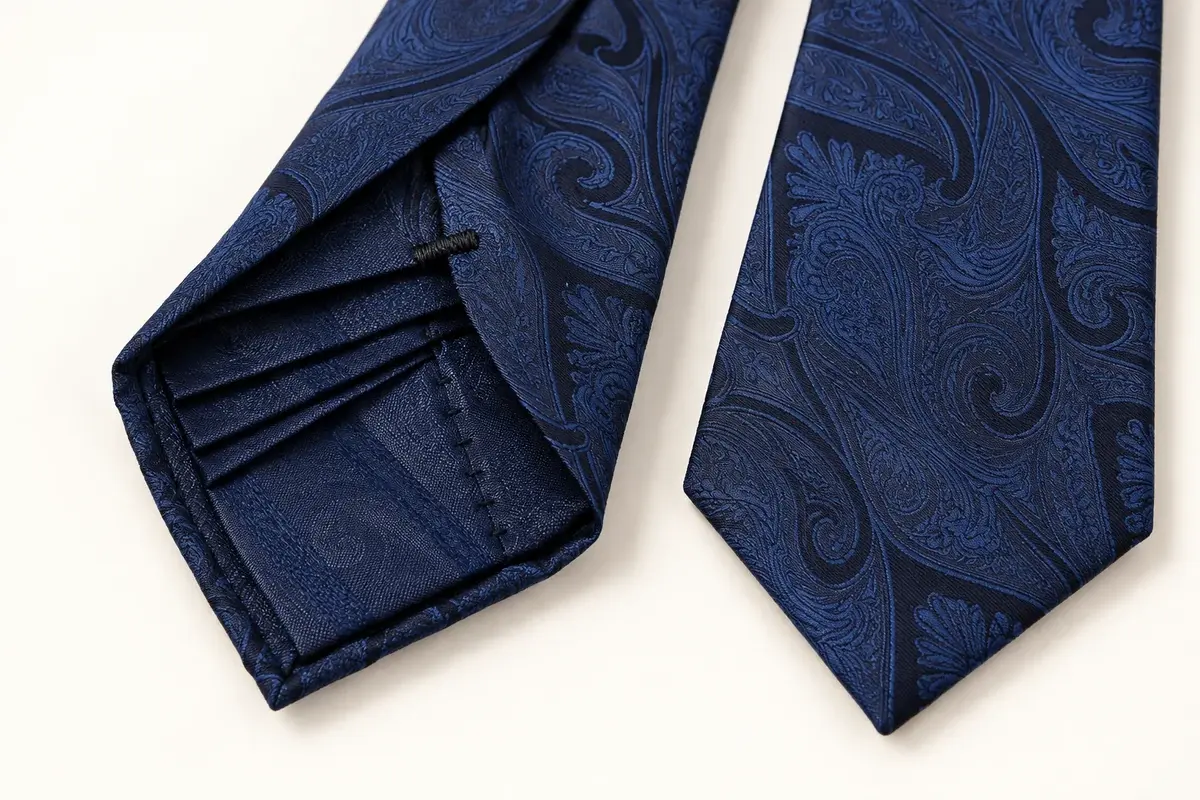
Seven-Fold Silk Construction
Seven-fold changes the internal construction and material use, not the artwork method. Confirm its woven or printed surface separately.
Discuss Seven-Fold Ties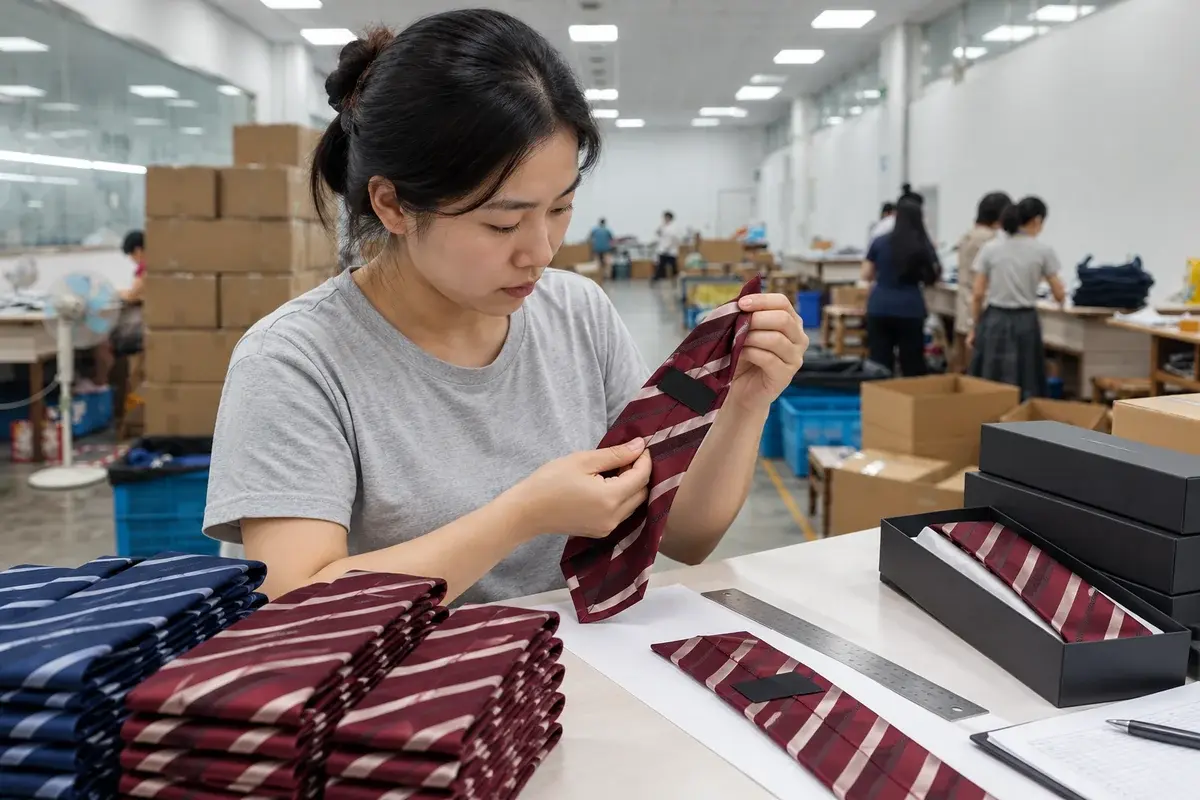
Silk Tie Production and Quality Checks
LuxoTie manages specifications, material receipt, cutting, printing, interlining, folding, sewing, pressing, labeling, and packing. Approved suppliers may support specialist jacquard fabric. IQC, IPQC, and FQC check silk, color, dimensions, construction, artwork placement, appearance, and packaging.
Start Your Custom Silk Tie Project
Send your silk tie requirements and estimated quantity.
Request a Custom Quote