
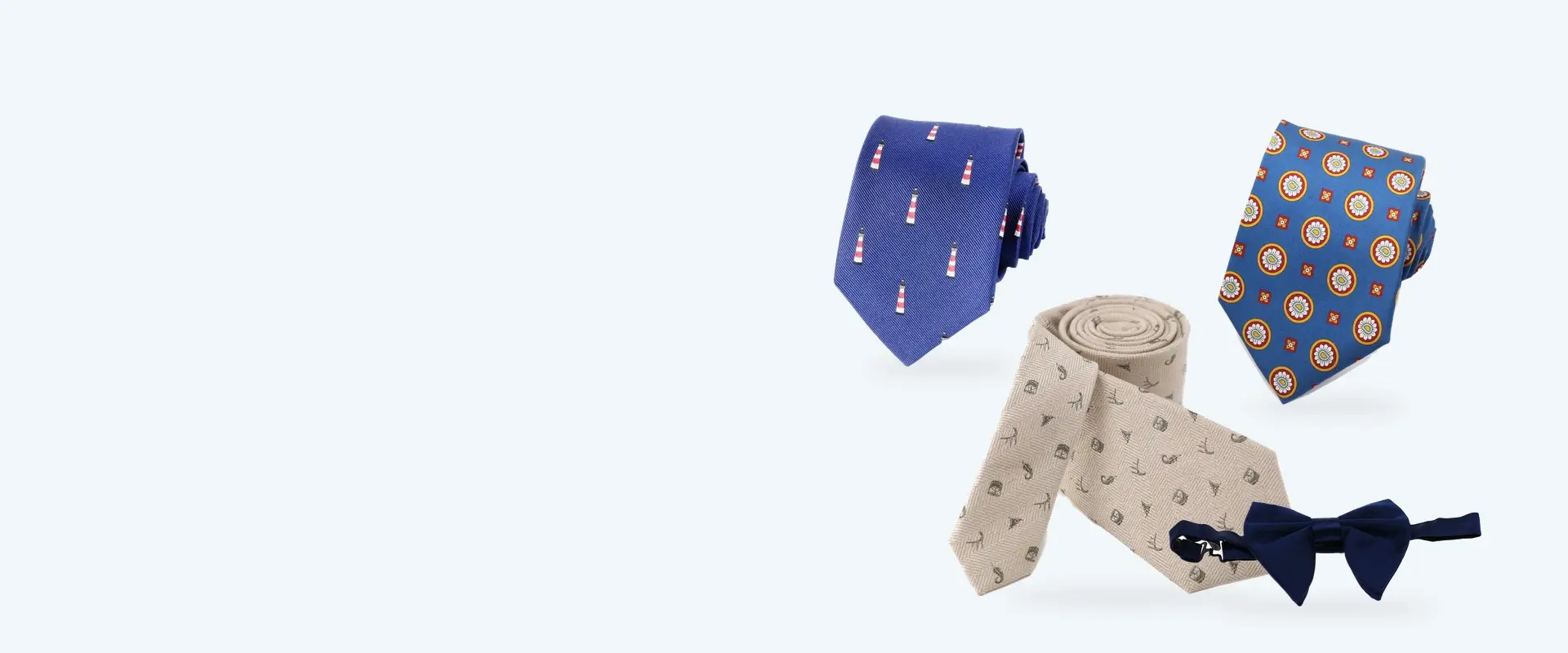
Private Label Ties
Build a coordinated line of silk, woven, printed, and bow ties with approved product specifications, brand labels, packaging, samples, and reorder records.
- ✓ Four Coordinated Product Routes
- ✓ MOQ 100 with Sample Approval
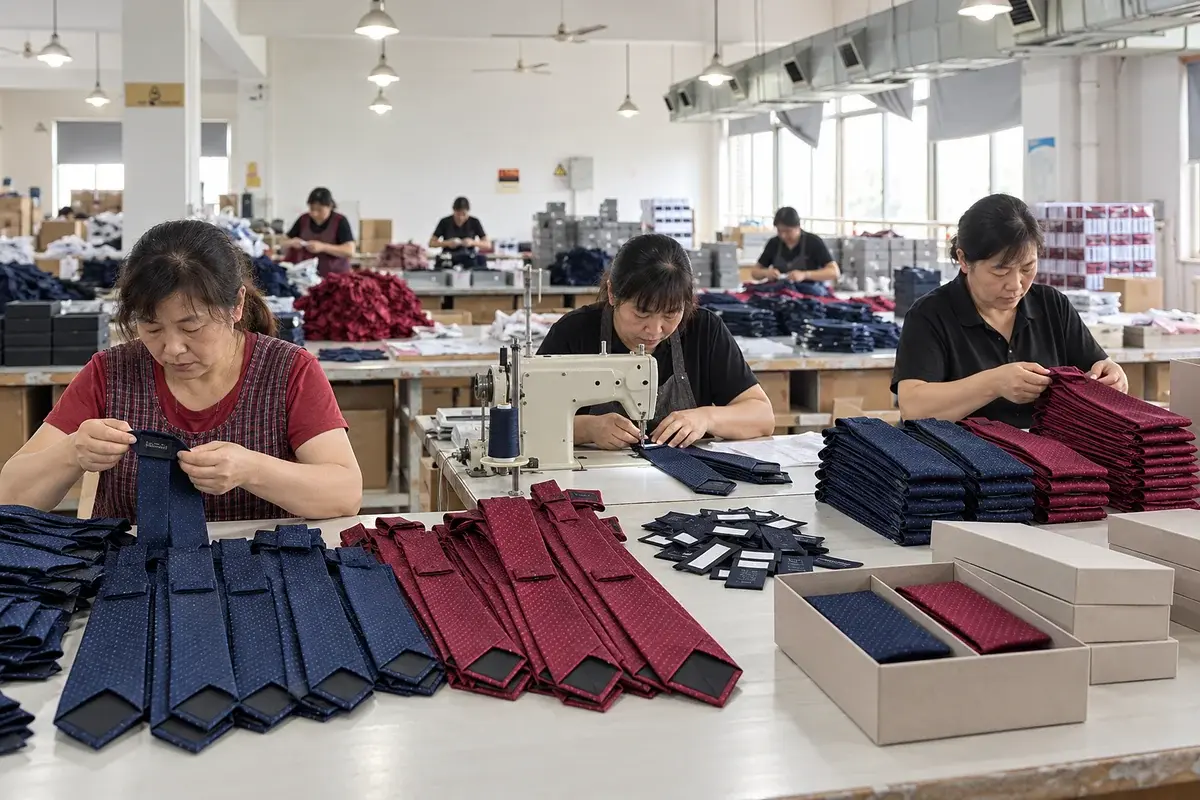
An OEM Partner for Private Label Tie Programs
LuxoTie helps brands define products, materials, artwork, sizing, construction, labels, packaging, samples, and inspection requirements, then manages production to the approved private label specifications.
Six Decisions to Define Your Private Label Line
Set the range structure and shared brand rules before sampling so every product and variant stays within one controlled collection.

1. Brand and Customer Brief
Define the target customer, product position, use, visual language, expected range size, and launch or replenishment purpose before selecting products.

2. Product Range Architecture
Choose silk, woven, printed, and bow tie routes, then list each style and its color, size, construction, and quantity variants.

3. Material and Construction
Match silk, polyester, or a project-specific blend with the required hand feel, surface, dimensions, interlining, folding, or bow tie structure.

4. Artwork and Color System
Provide artwork and Pantone or physical color references, then approve the woven or printed result on the selected material.

5. Labels and Packaging
Coordinate brand, size, and care labels with hang tags, individual wrapping, boxes, cartons, and variant identification for the approved range.

6. Master Sample and Records
For each approved variant, record its specification, artwork version, labels, packaging, physical sample, quantity, and written reorder changes.
Build Your Private Label Tie Range
Choose one route or combine several. Each product needs its own material, artwork, dimensions, construction, labels, packaging, quantity, and approved sample reference.
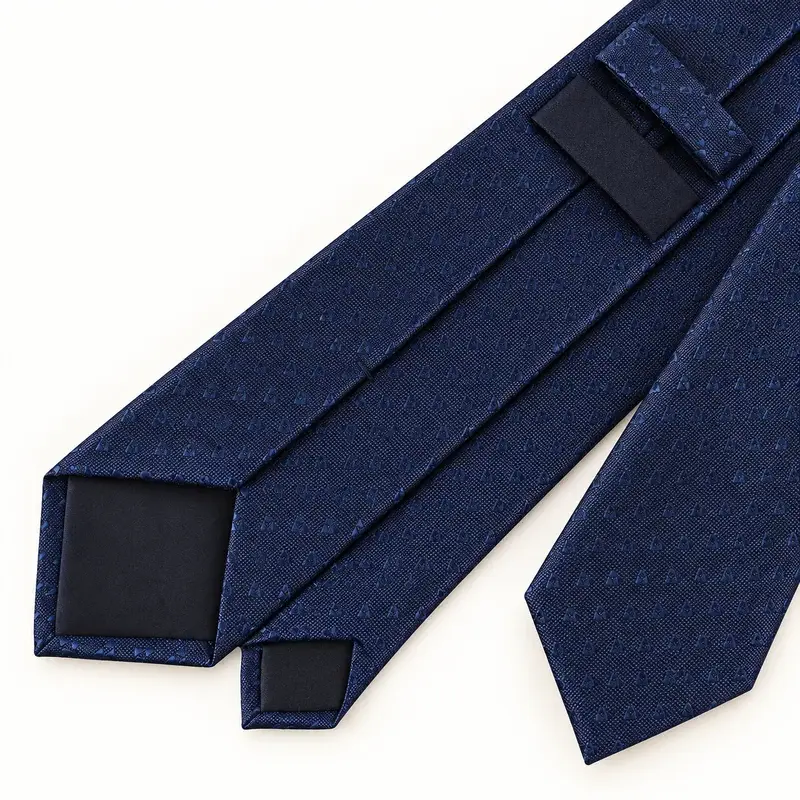
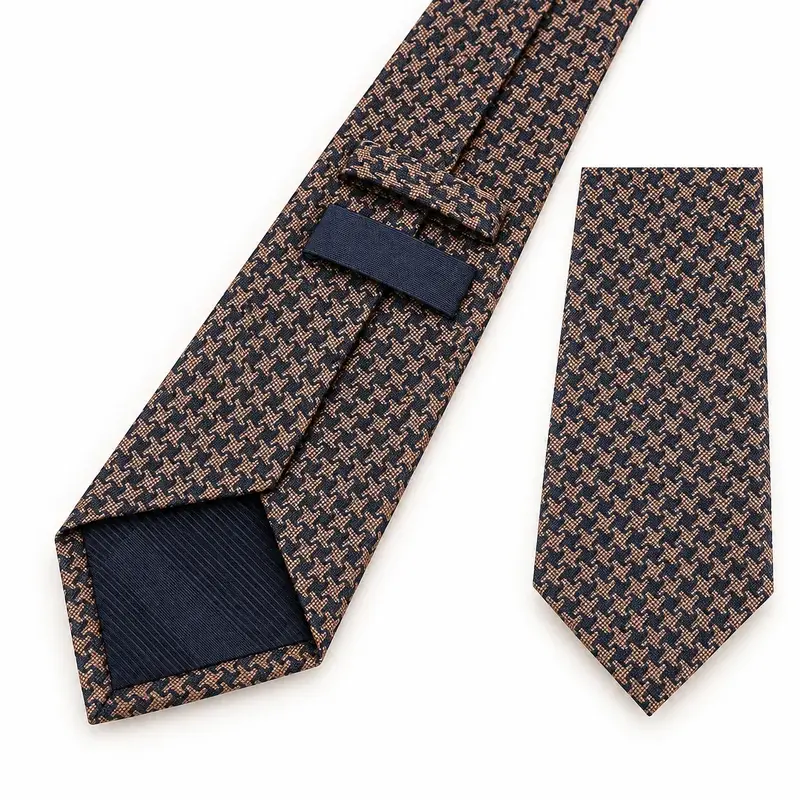
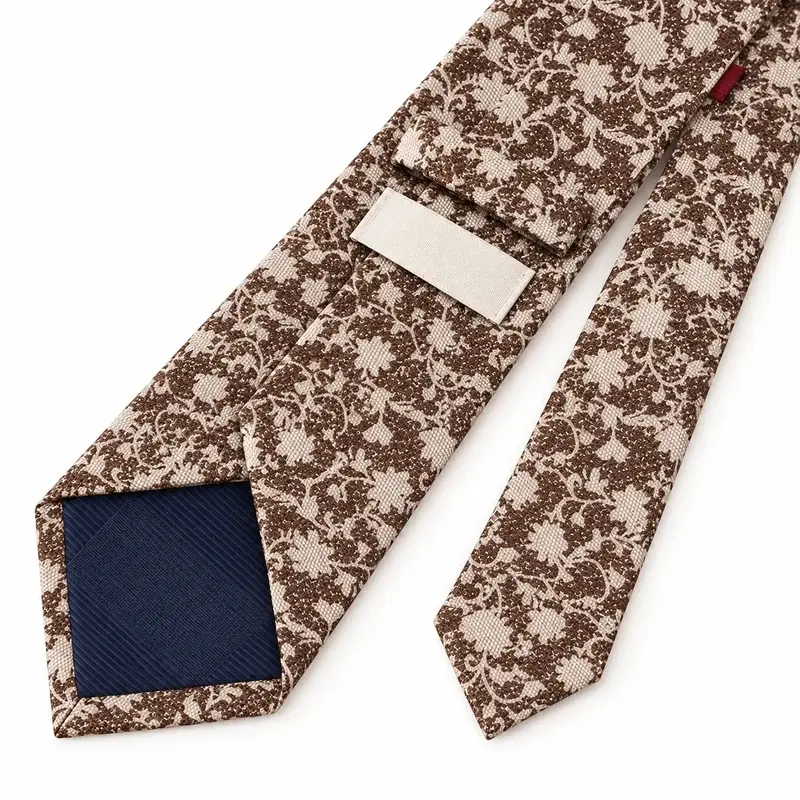
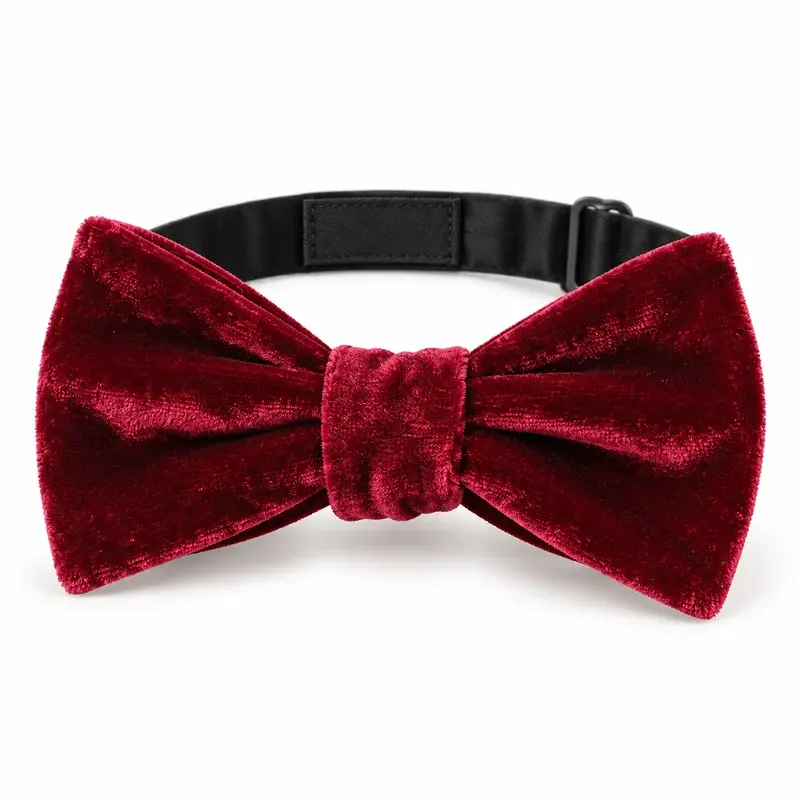
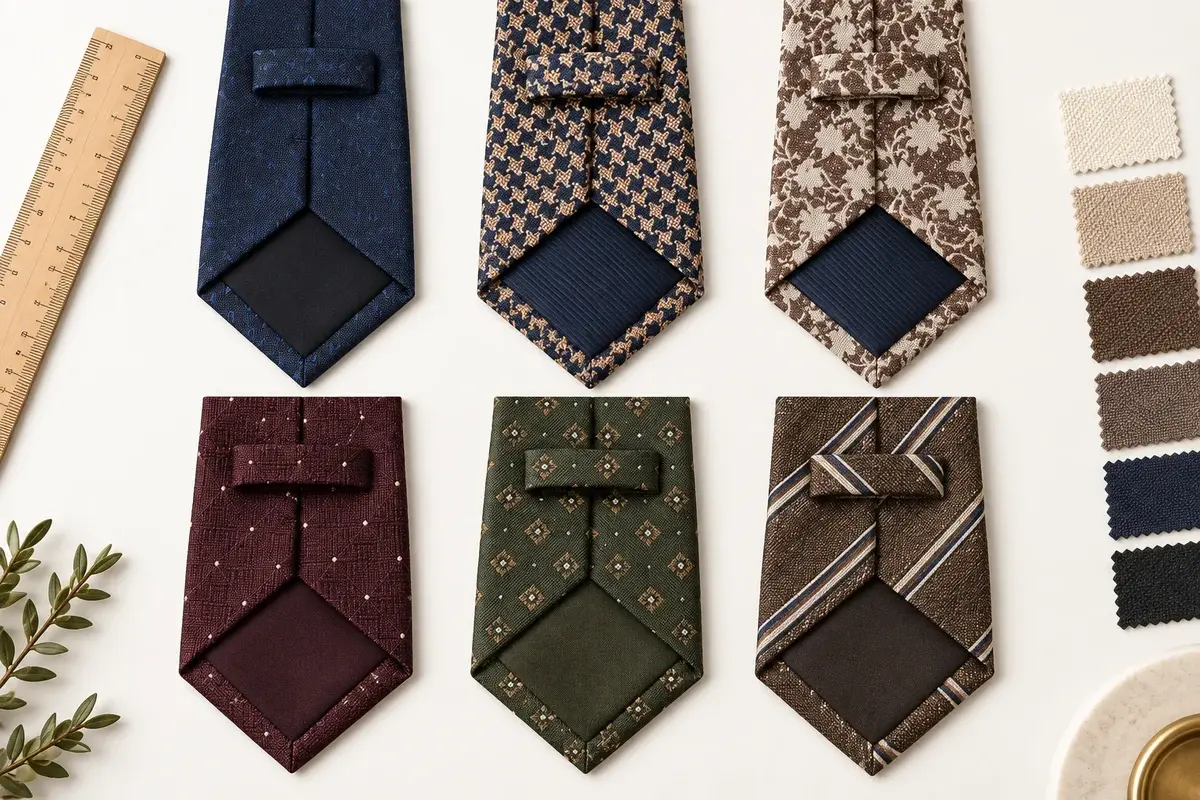
Build the Master Product Specification
Turn the brand brief into one production reference per product, linking the physical tie to its artwork, labels, packaging, and approved sample.
- Define the Product Identity
Record the product route, style name, intended customer, use, material direction, and buyer-assigned variant name or code. - Lock Dimensions and Construction
For each product, confirm width, length, blade proportion, interlining, folding, stitching, or bow tie format and finished shape. - Control Artwork and Color
Save the approved artwork revision, motif scale, repeat, placement, direction, and Pantone or physical color references. - Approve the Complete Sample
Check the material, hand feel, artwork, dimensions, construction, labels, and packaging against the exact physical sample used for bulk inspection.
Plan the Assortment and Variant Matrix
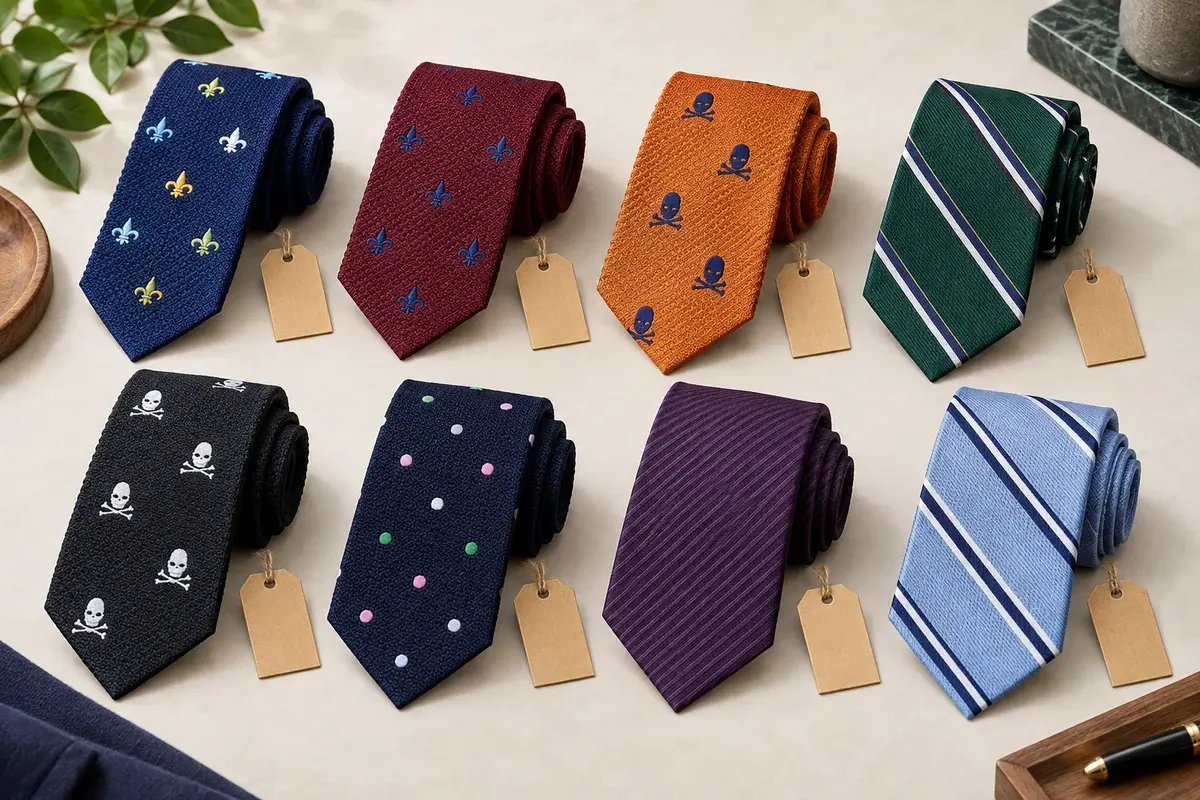
A clear assortment shows which products lead the range, which variants support them, and how quantities are distributed before quoting, sampling, and production.
- Select the Core Product Route
Choose silk, woven, printed, or bow ties as the main line according to material position, artwork, customer, and use. - Add Supporting Products
Add another material, design route, or bow tie format only when it gives the customer a distinct choice. - Name Every Variant Clearly
Give each combination of product, color, pattern, size, construction, label, and packaging a clear name or code. - Allocate Quantity by Variant
List quantities for each approved version and packing group so MOQ, pricing, sampling, and production can be reviewed accurately.
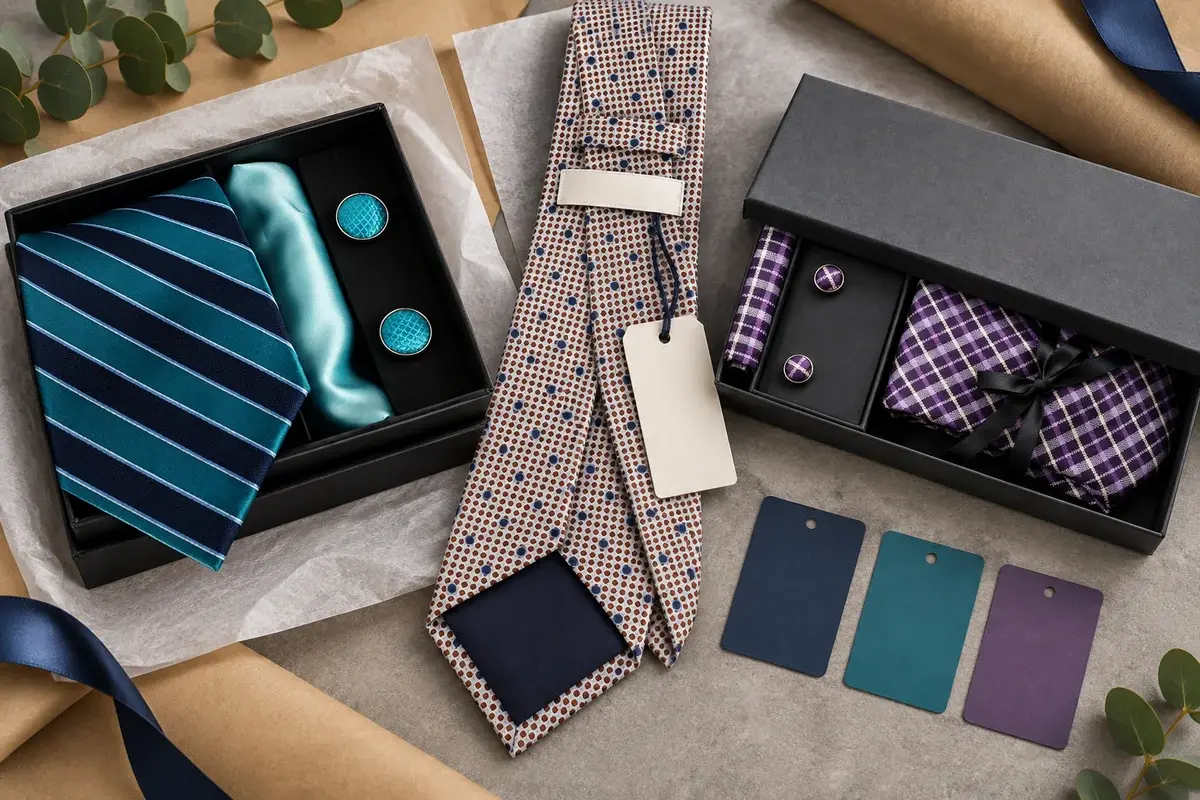
Control Labels, Packaging, and Reorders
Apply the same version control to the tie, its labels, and its packaging. Approve each label and packaging component for the product it belongs to.
- Approve Brand Labels
For each brand label, confirm artwork, wording, dimensions, material, fold, color, sewing position, and applicable product variants. - Confirm Size and Care Text
Supply the required size, care, fiber, origin, or other buyer-approved wording and confirm its placement for each product. - Match Packaging to the Range
Approve hang tags, OPP bags, paper cards, color boxes, gift boxes, display boxes, cloth bags, cartons, quantities, and group marks. - Record Every Reorder Change
Reference the previous specification and sample, then list any changes to products, colors, artwork, labels, packaging, quantities, or timing in writing.
Three Ways to Structure a Private Label Range
Use one route or combine several around a clear customer and price position. Each product variant still needs its own specification and approved sample.
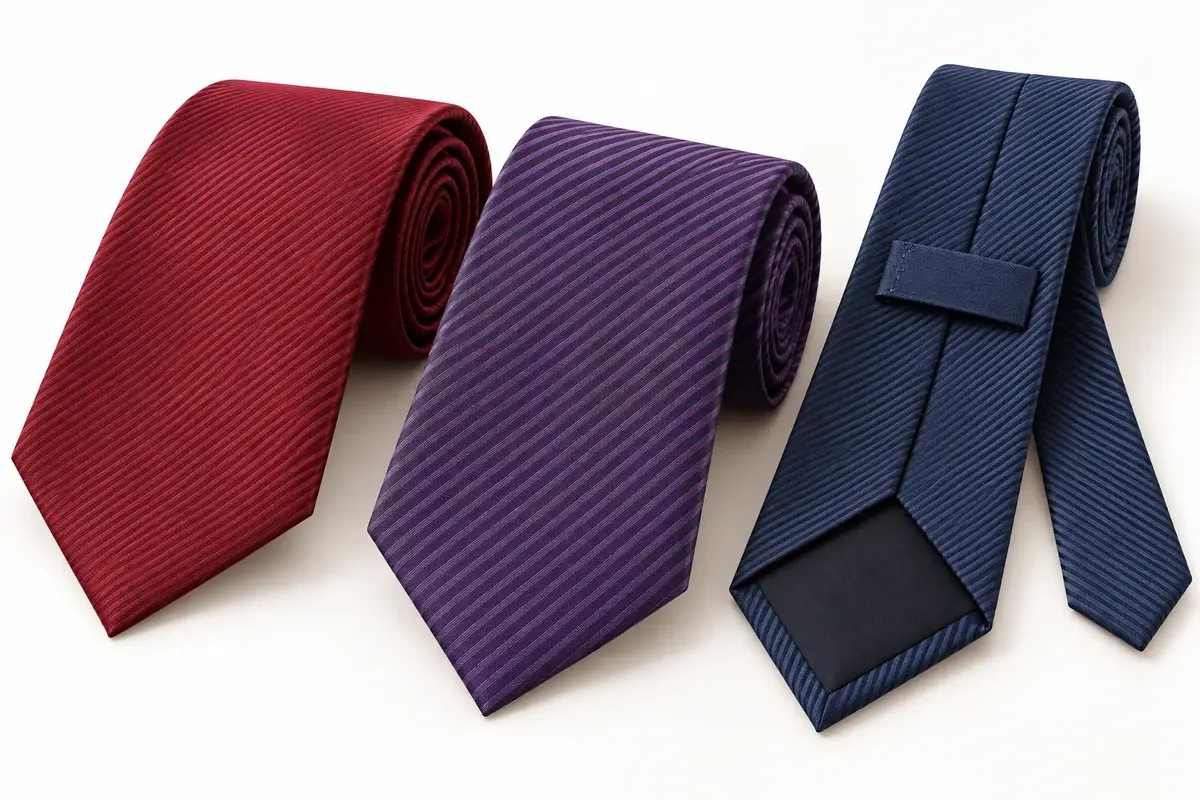
Silk Statement Line
Uses silk where material, sheen, drape, construction, and a more formal product position lead the brand story.
Discuss Private Label Silk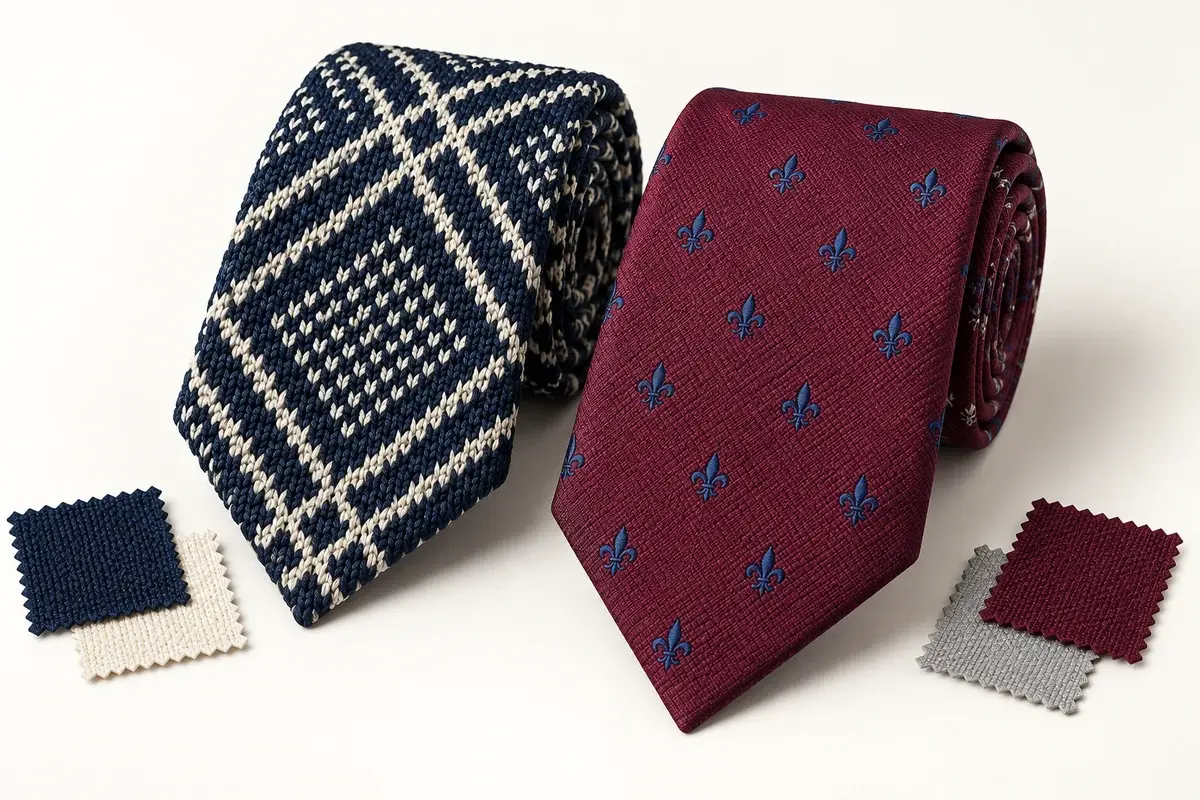
Woven or Printed Core Line
Use woven texture or detailed printed artwork for the core tie range, with separate color, pattern, and sample records for each variant.
Plan a Core Tie Line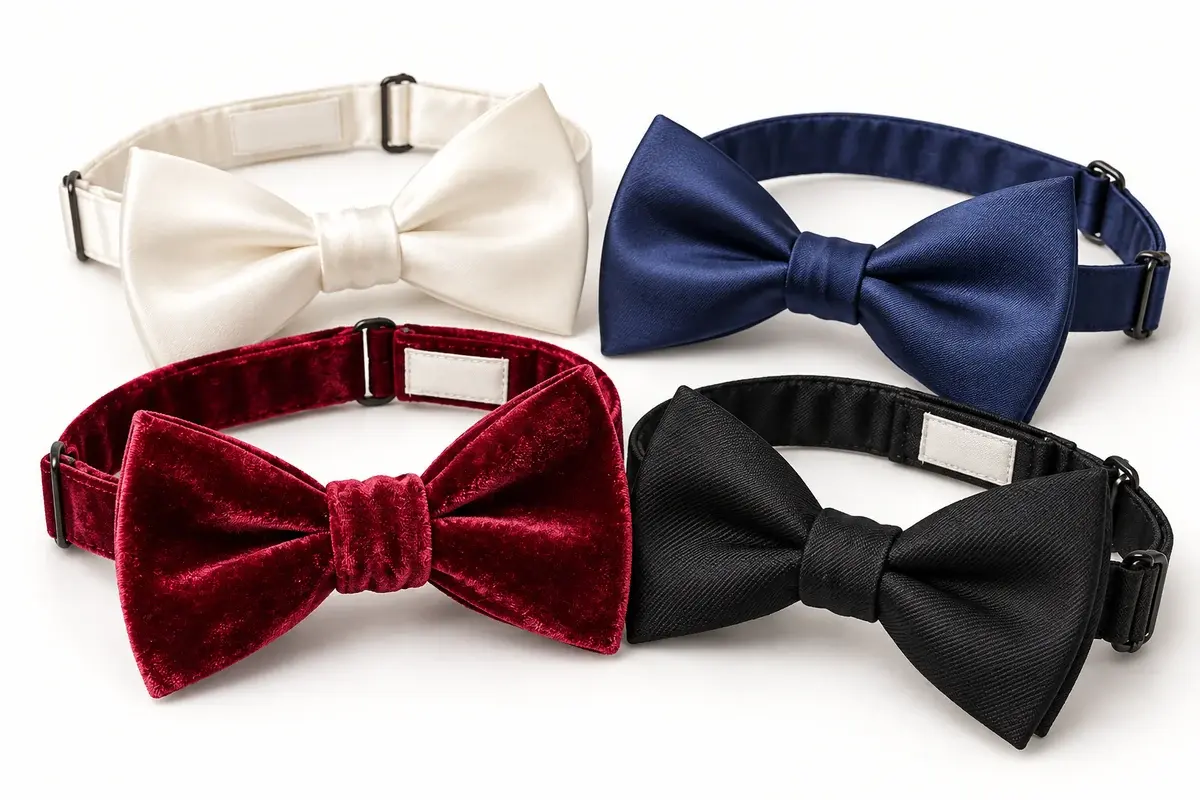
Bow Tie Capsule Extension
Add a distinct formalwear shape for events, gifts, or seasonal capsules, with its own wearing format, dimensions, neck fit, labels, and packaging.
Add Private Label Bow Ties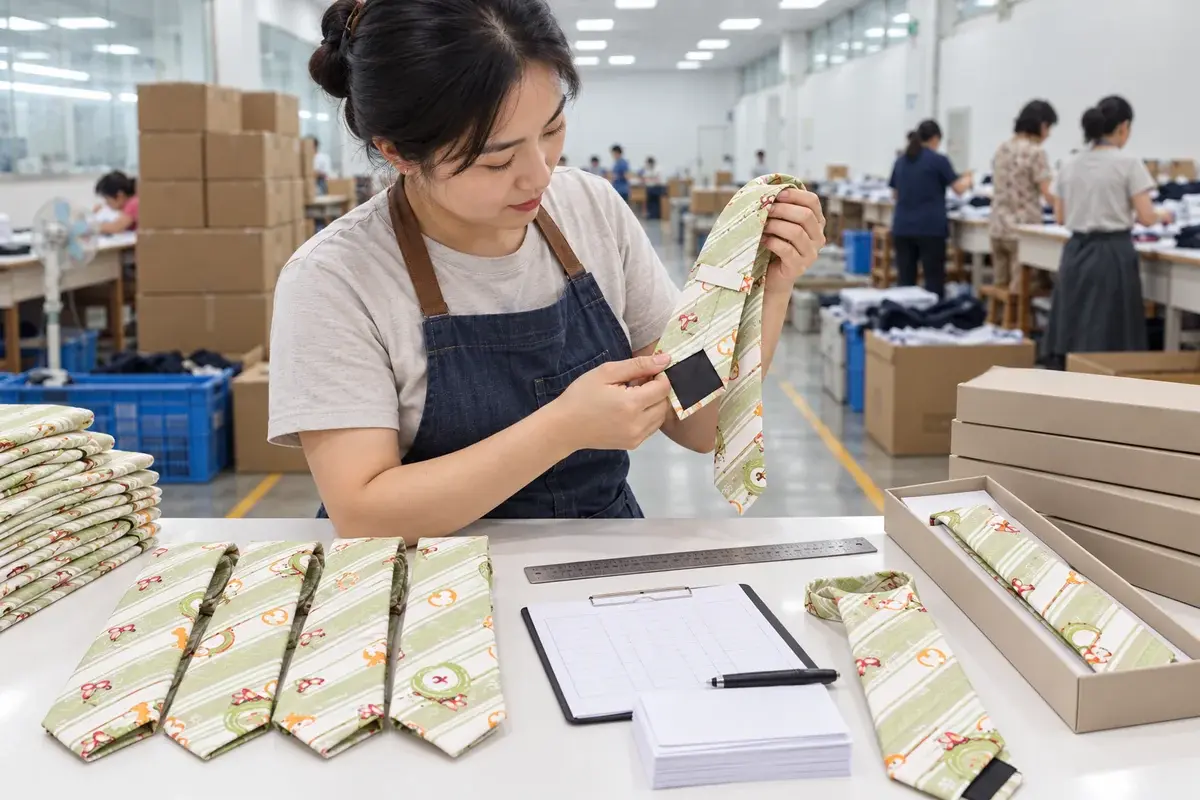
Private Label Production and Specification Checks
LuxoTie manages woven or printed development, cutting, interlining, folding, sewing, bow tie forming, pressing, labeling, inspection, and packing. IQC, IPQC, and FQC compare materials, artwork, dimensions, construction, approved variants, labels, and packaging with the project references.
Start Your Private Label Tie Program
Send your private label tie requirements and estimated quantity.
Request a Custom Quote