
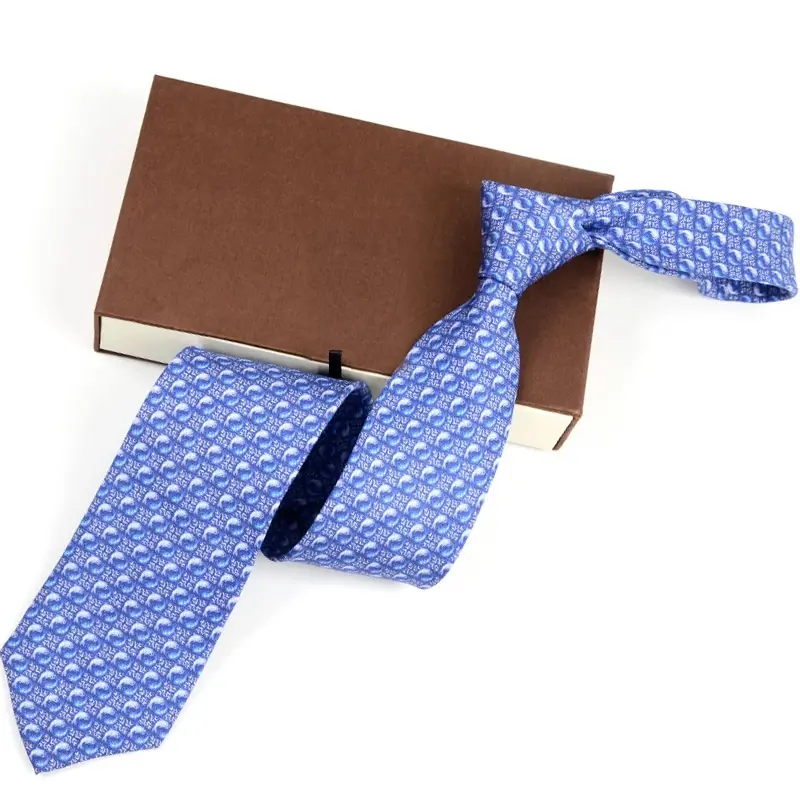
Private Label Printed Ties
Private label printed ties can use multicolor artwork, gradients, illustrations, or repeats with an approved print method, placement, labels, and retail packaging. Approve the printed fabric and complete tie before bulk production.
- Materials: Polyester or silk-polyester blend
- Print Methods: Screen, heat transfer, or digital direct print
- Artwork: Multicolor, gradients, illustrations, or repeat patterns
- Dimensions: 6–10 cm widths and 135–155 cm lengths
- Private Label: Labels, hang tags, and retail packaging
The material, print route, color, placement, sample cost and schedule are confirmed for each project.
Request a Printed Tie Quote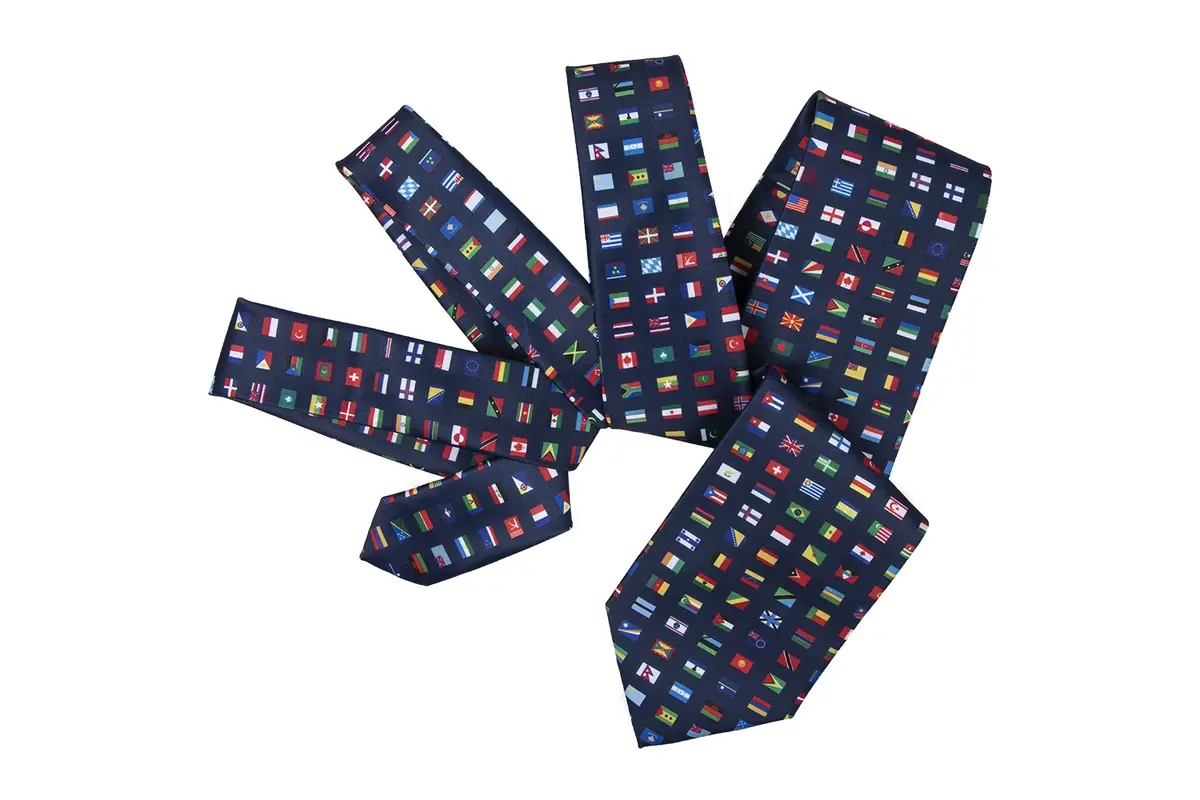
Map the Artwork to the Finished Tie
Review artwork across the main blade, knot, neck, small blade, folds, and seams. Check motif visibility after cutting, sewing, hanging, and wear before approval.
Private Label Print and Presentation
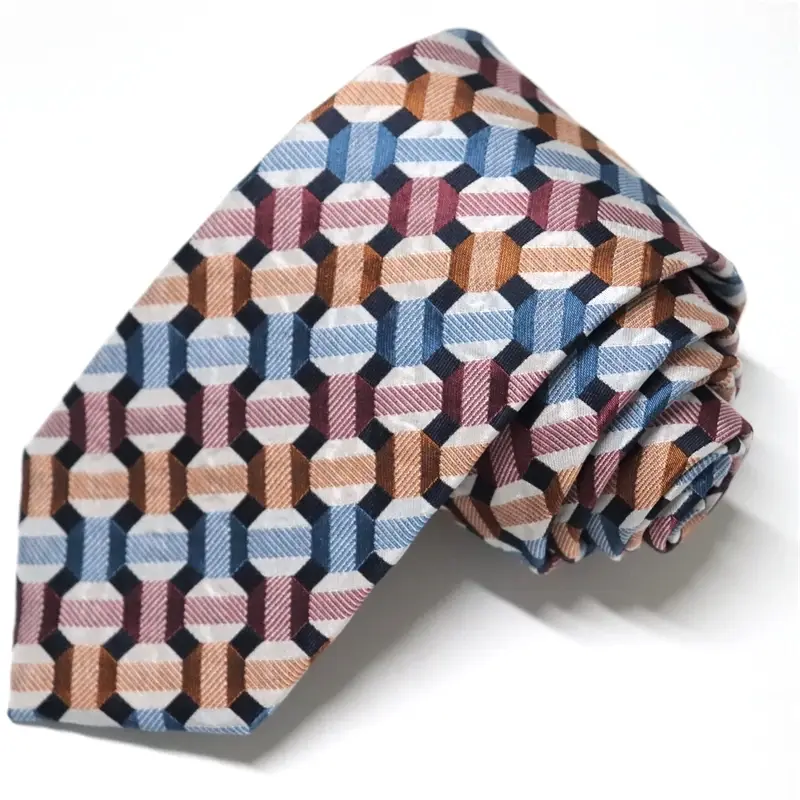
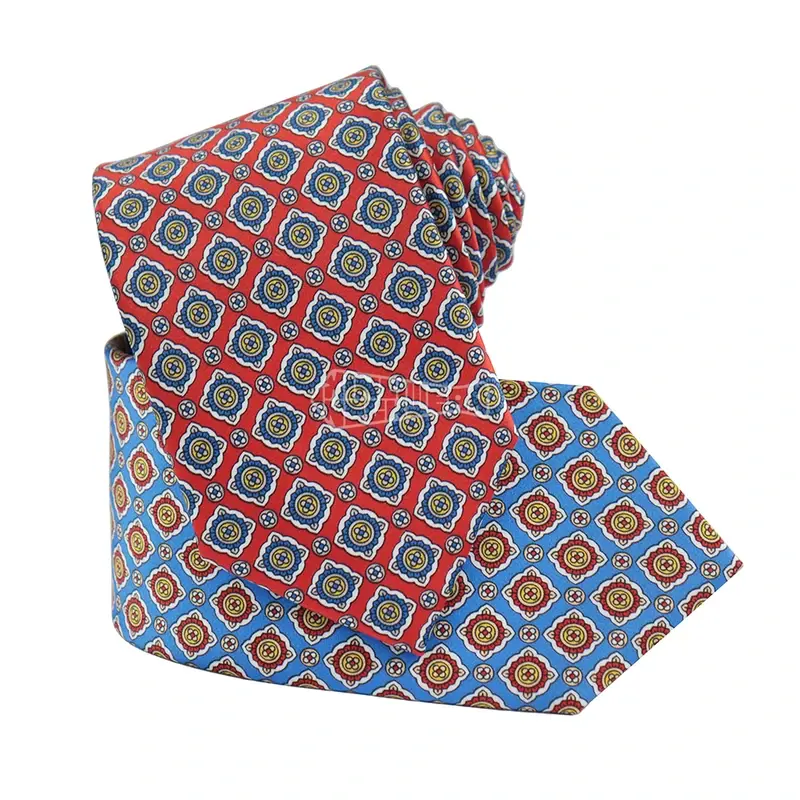
Custom artwork can extend from the tie surface to its labels and packaging. Each pattern or colorway forms a distinct retail version.
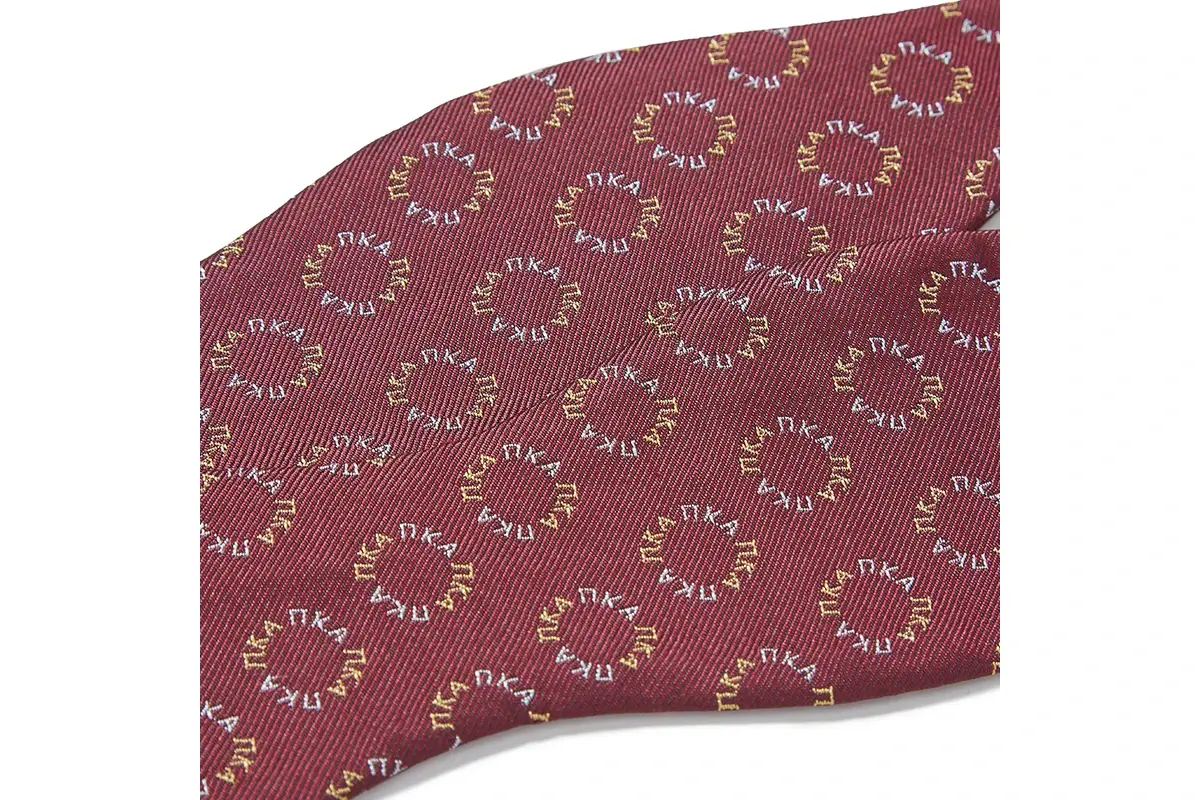
Original Printed Artwork
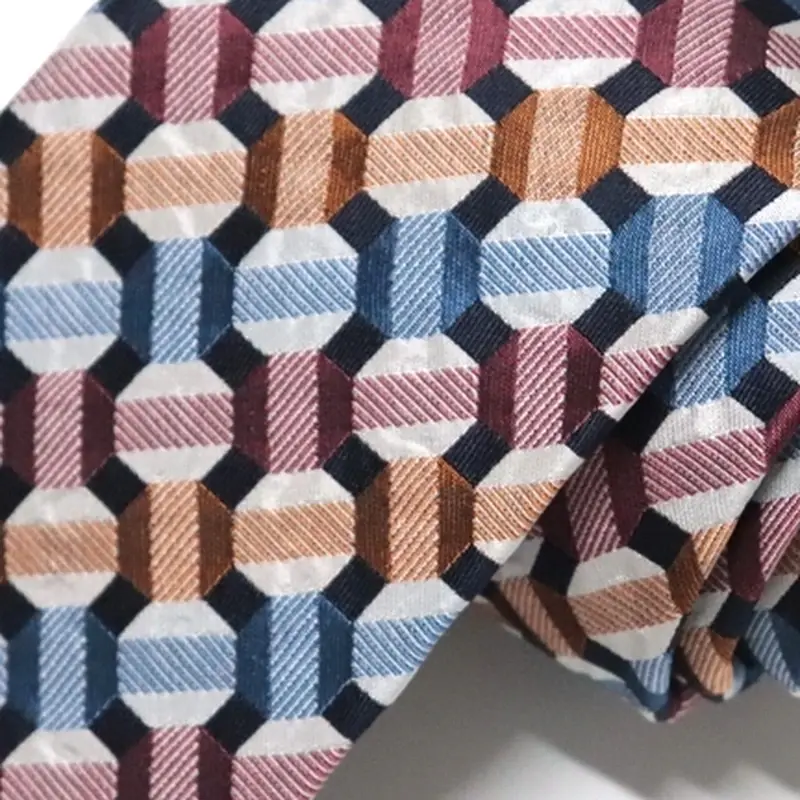
Screen or digital printing can reproduce brand patterns and graphic designs on suitable fabric. Scale, direction and color are developed for the finished tie layout.
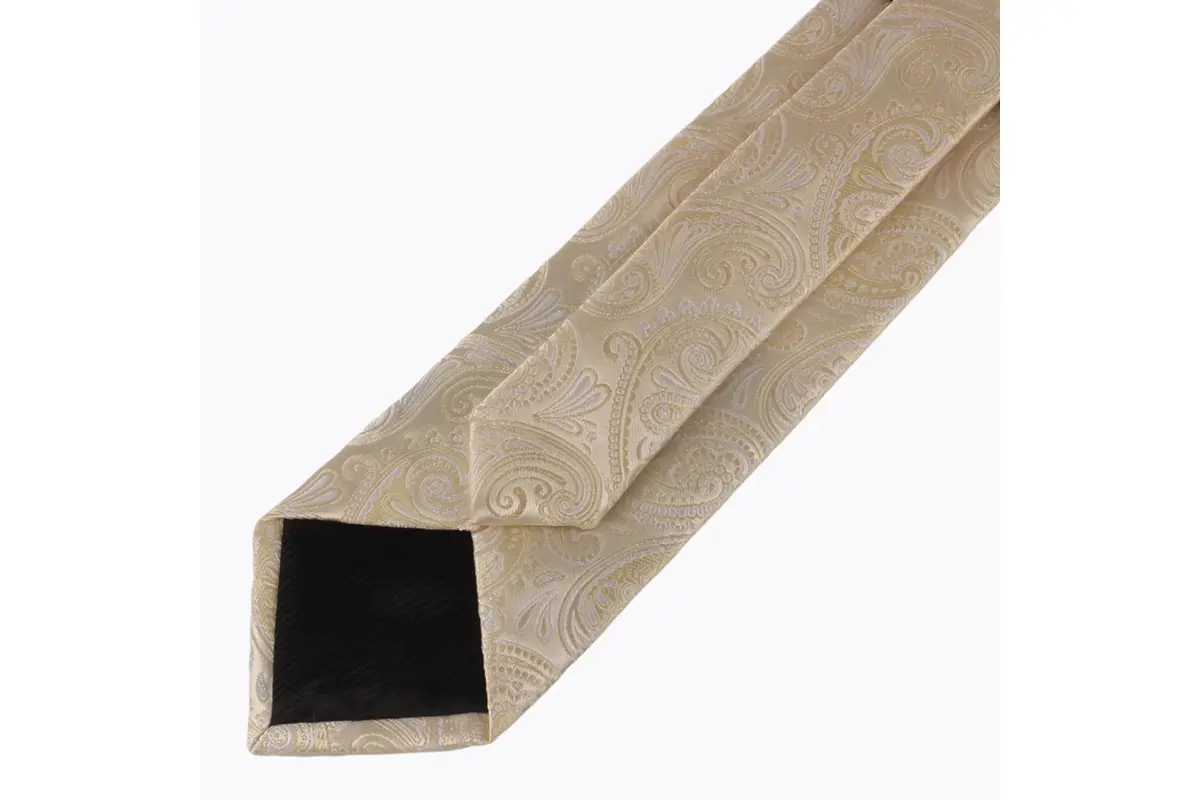
Cutting and Sewn Finish
The layout accounts for folds, edges and the knot area. Cutting and sewing turn the printed fabric into the selected tie dimensions and construction.
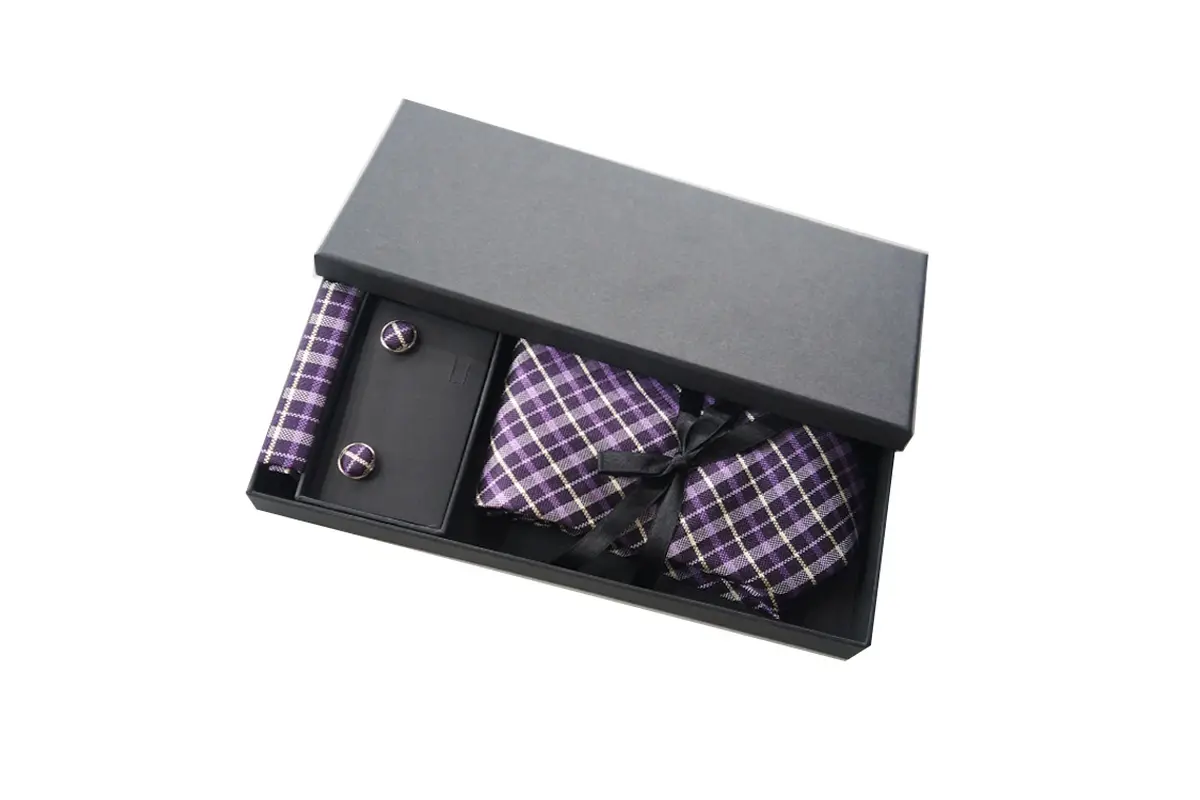
Labels, Hang Tags, and Packaging
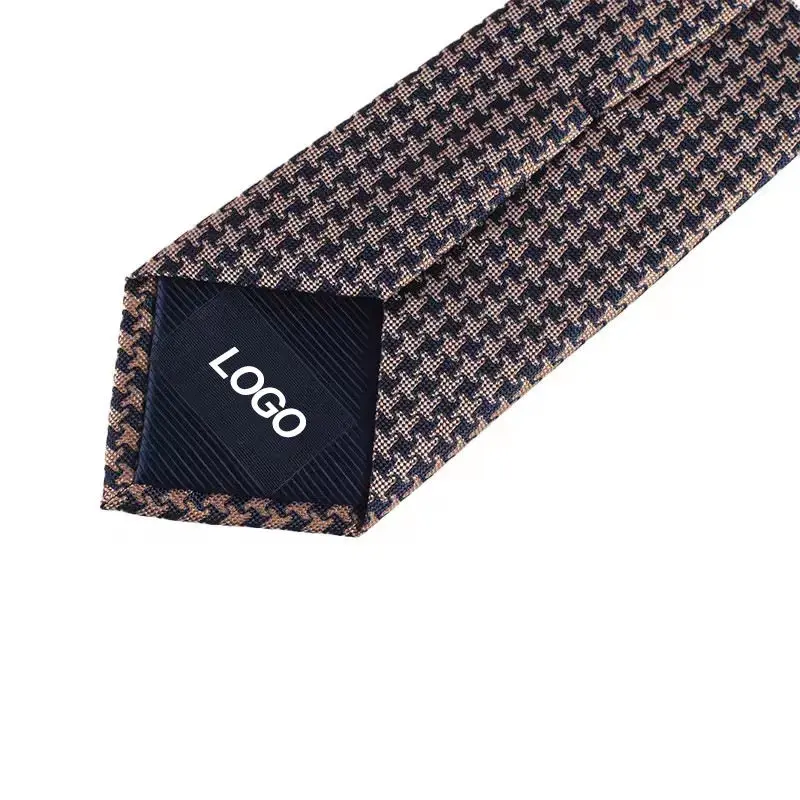
Main labels, care labels, hang tags and packaging carry the private label identity. Each combination can be identified as a separate product version.
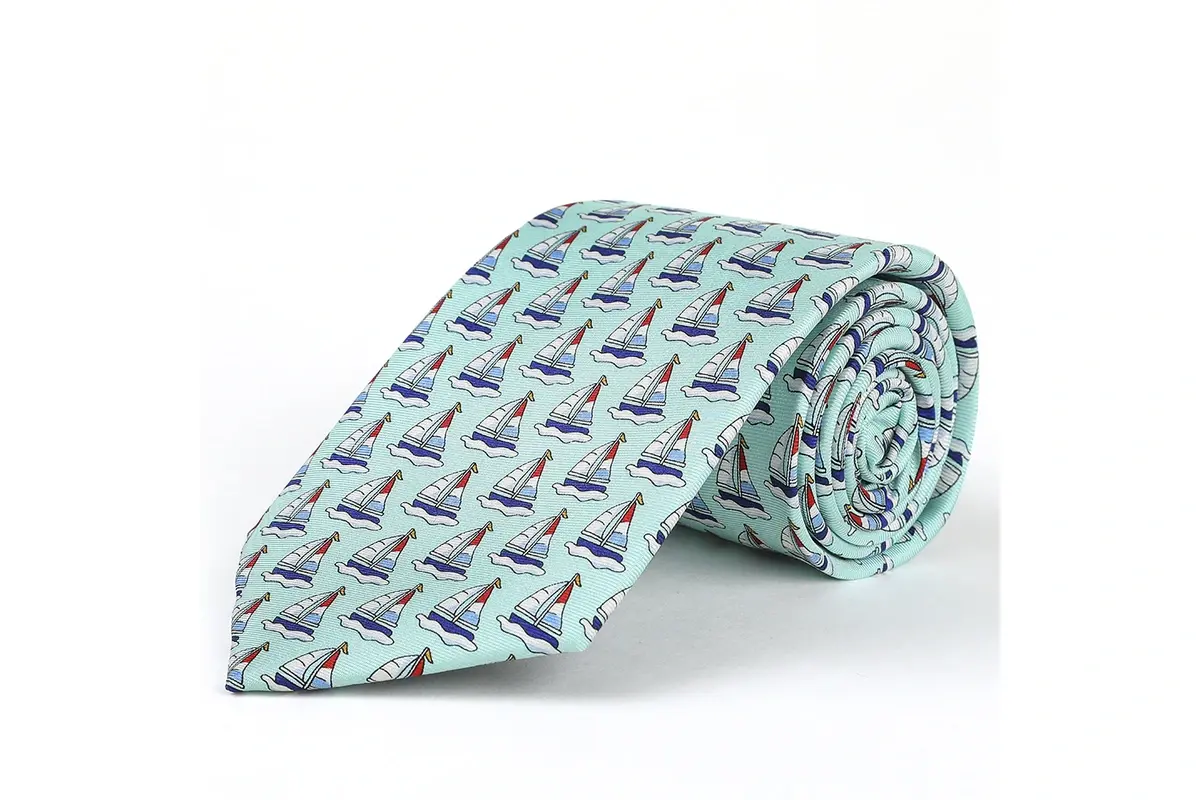
Printing Methods
Choose the print method based on the artwork, material, color behavior, detail and intended surface. Approve it on the selected fabric before locking the bulk version.
- Screen Printing
Approve color count, material suitability, physical scale, and the printed sample for graphics built from selected colors. - Heat Transfer
Polyester-led graphics or repeats need approval of material compatibility, heat response, color, and the finished sample. - Digital Direct Print
Check source-file quality, physical scale, color references, and output on the selected material for detailed multicolor, gradient, or illustrative artwork.
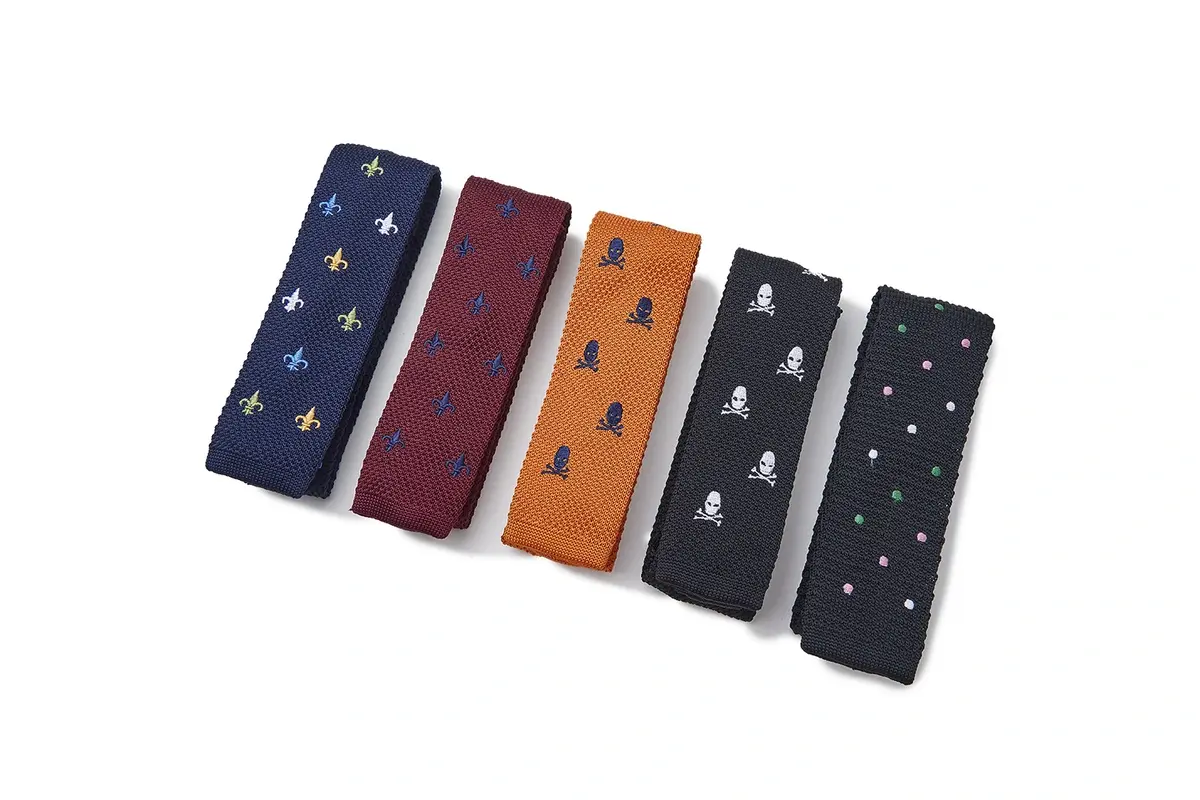
Choose the Printed Layout
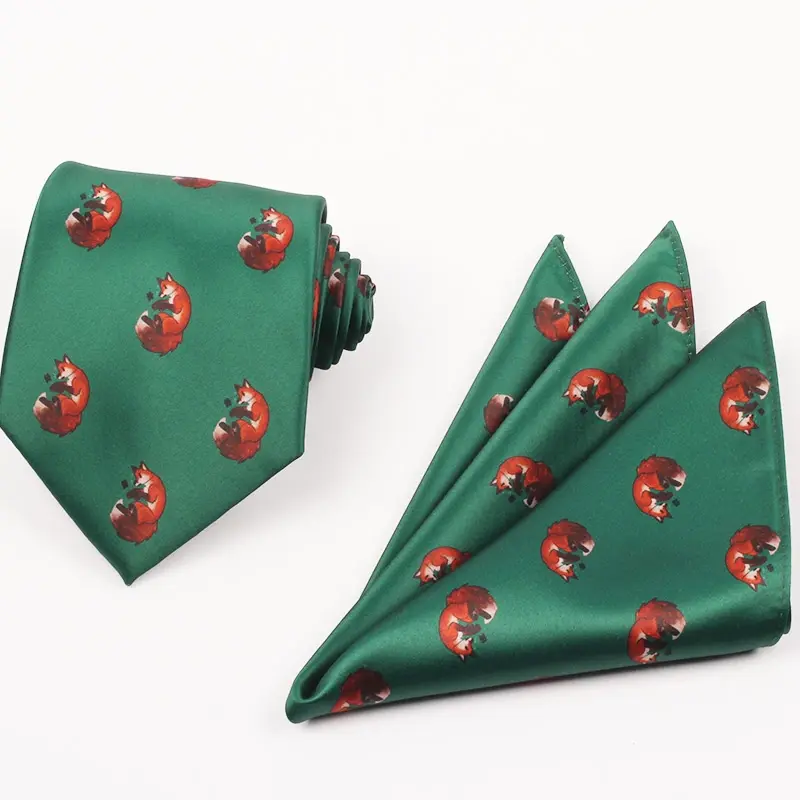
Define how the design should appear on the main blade, knot area, neck section and small blade. Approve its scale, direction, repeat and visible position on the finished tie.
- All-Over Repeat
Approve repeat size, spacing, direction, and motif positions at cutting boundaries for a continuous pattern across the tie. - Placed Front-Blade Artwork
Check the visible position of logos, illustrations, or focal graphics after cutting, folding, knotting, and normal wear. - Stripe or Directional Pattern
Approve the top-to-bottom orientation of diagonal stripes or directional artwork on the finished tie as well as the flat printed fabric. - Coordinated Main and Small Blade
Specify whether artwork on the two visible ends matches, contrasts, or uses separate approved placements.
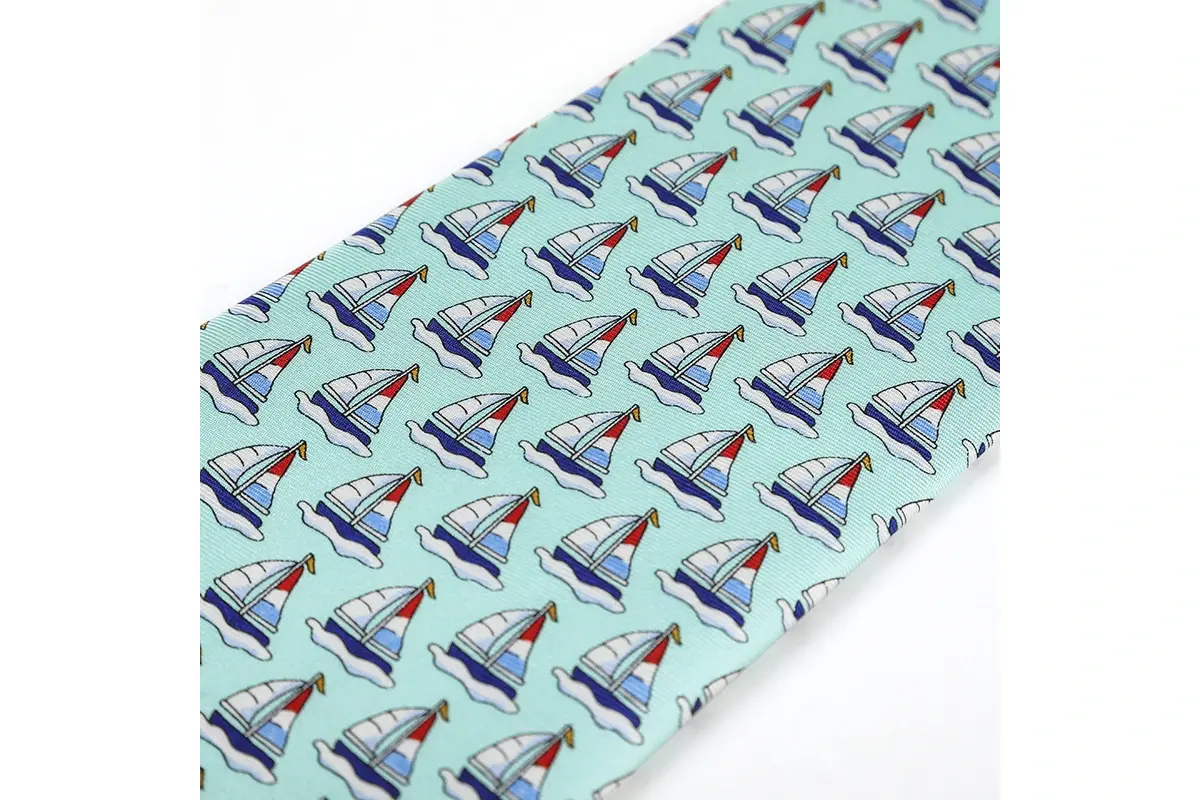
Prepare Production-Ready Artwork
Supply editable artwork and supporting reference files, then link colors, dimensions and edge treatment to the approved tie template. Final print preparation depends on the selected material and print route.
- Editable Master File
Keep AI, PDF, PSD, or CDR production artwork editable and identify the final revision for sampling. - Raster Image Support
Check that JPG or PNG reference quality and physical size suit the intended print area. - Color References
Supply Pantone references or a physical sample for brand or collection colors, then approve the result on the selected material. - Print Boundary and Bleed
Extend backgrounds or motifs to the approved template and project cutting allowance. Confirm the final boundary before production.
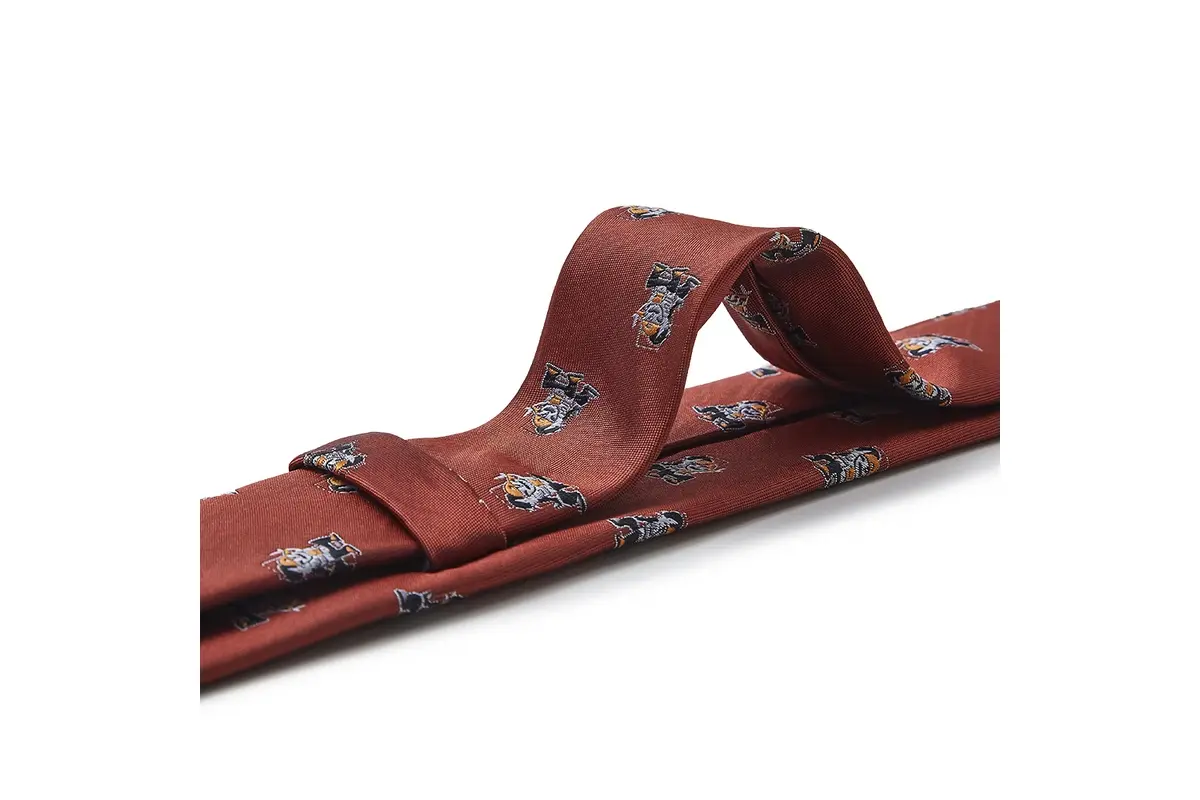
Map Artwork Through Cutting and Construction
Check key motifs on the cutting and construction layout to confirm their appearance after angled cutting, folding, sewing, and knotting.
- Main Blade
Approve focal artwork scale and position on the finished front blade at the selected width. - Knot and Neck Area
Check directional artwork continuing above the blade when tied, including details that may be hidden in the knot. - Small Blade
Specify whether artwork continues, changes, or stops for secondary branding, coordinated graphics, or a clean reverse end. - Edge, Fold, and Seam Allowance
Keep critical text and motifs away from uncertain fold or seam areas. Approve coverage at constructed edges on the sample.
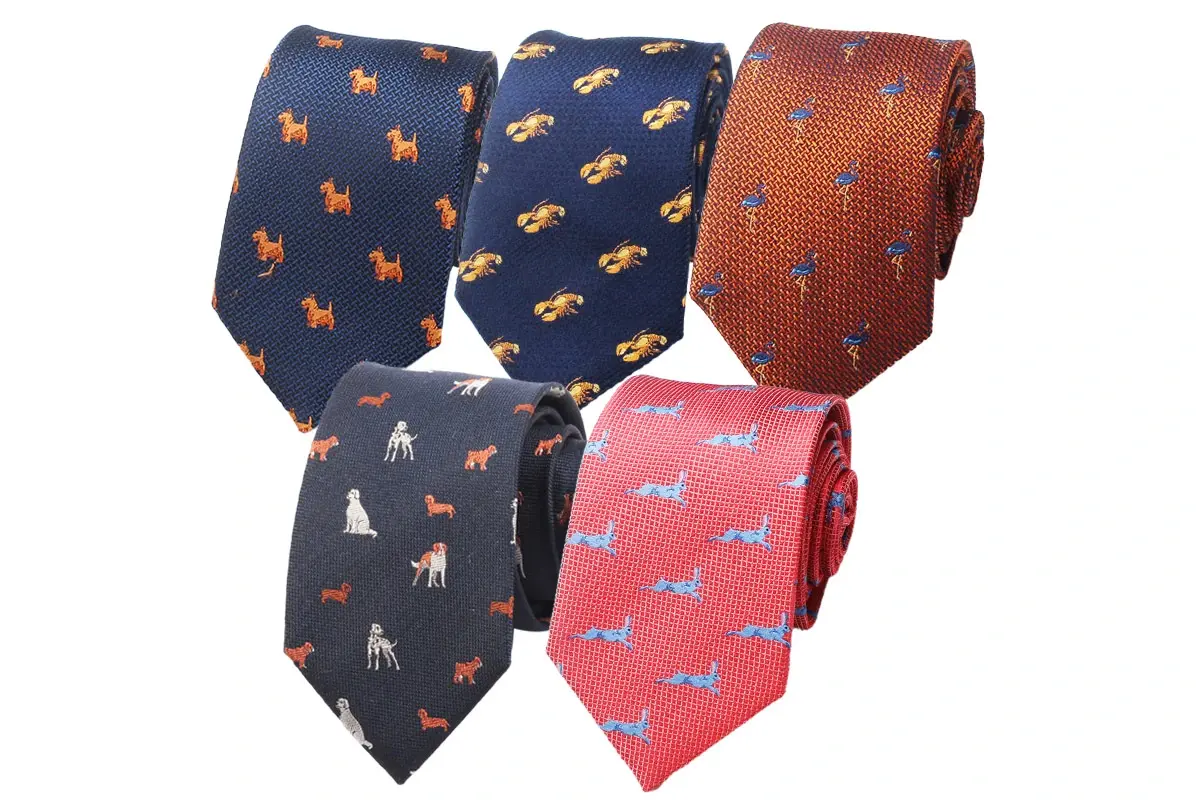
Artwork, Size, and Packaging Versions
Give each printed tie variant one record linking its artwork revision, material, colors, dimensions, labels, packaging and approved sample. Use the same record for production, receiving and repeat orders.
- Artwork Revision
Assign the exact approved file revision to each product code when managing multiple patterns or seasonal updates. - Material and Colorway Code
Link material and physical color approval to each variant when artwork is shared across colors or fabrics. - Finished Dimensions
Select confirmed widths and lengths for narrow, standard, wider, adult, or youth assortments. Verify special sizes by project. - Label and Hang-Tag Set
Link brand, size, care, or retail-information label and hang-tag files to the correct tie variant before packing. - Retail Packaging Assignment
Define the packed unit and outer-carton requirements for each SKU and order using OPP, cards, boxes, display packs, or cloth bags.
Related Custom Products
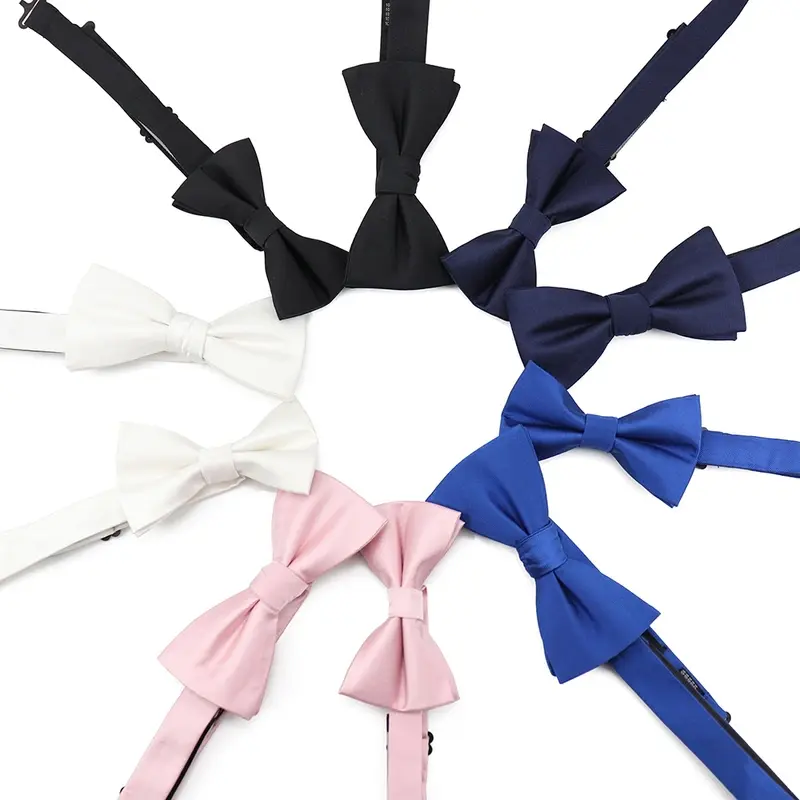
Compare private label silk, woven, and bow ties with custom pattern printed ties.
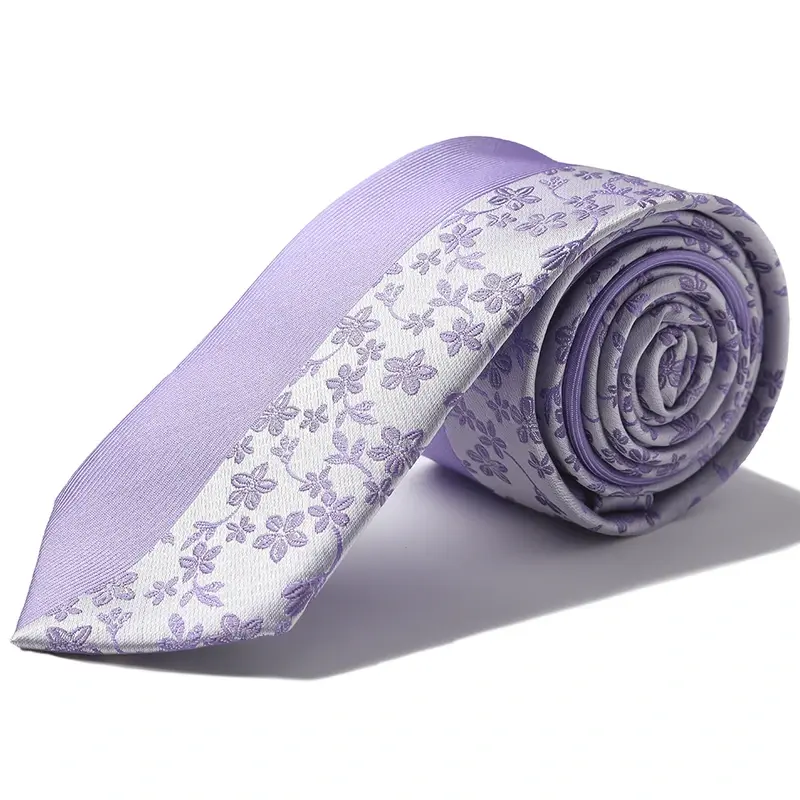
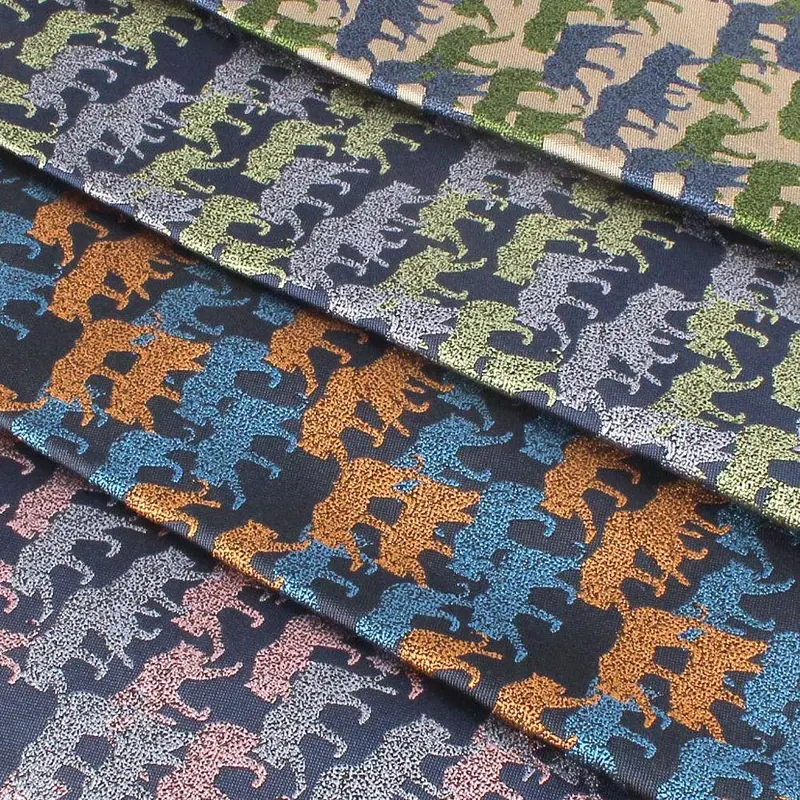
Approve the Printed Fabric and Finished Tie
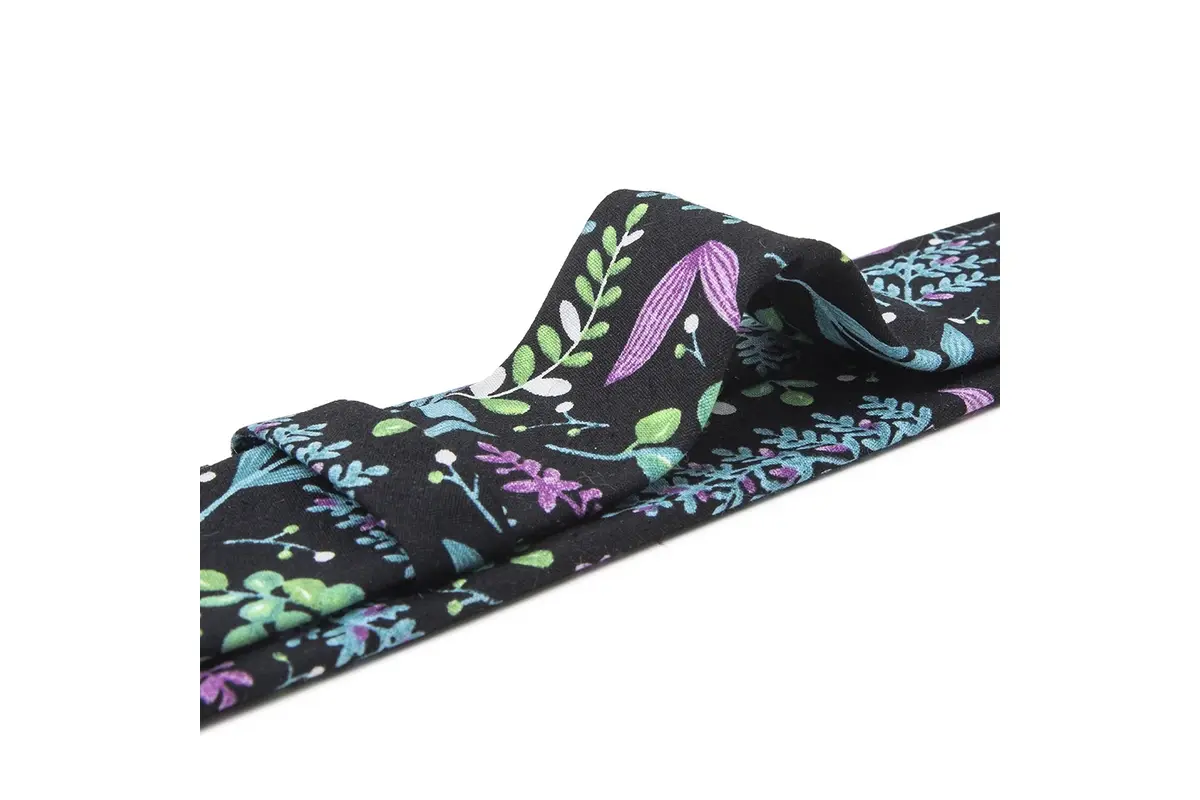
Use the physical print to check color, detail, repeat and material response. Then approve a complete tie for motif placement after cutting and folding, finished dimensions, construction, labels, hang tags and packaging before bulk production.
Send Your Printed Tie Brief
Send your private label printed tie requirements and estimated quantity.
Request a Private Label Printed Tie Quote