
LuxoTie

Custom Tie Factory

LuxoTie operates its own facility in Shengzhou, with in-house cutting, printing, sewing, pressing, inspection, and packing for custom ties and bow ties.
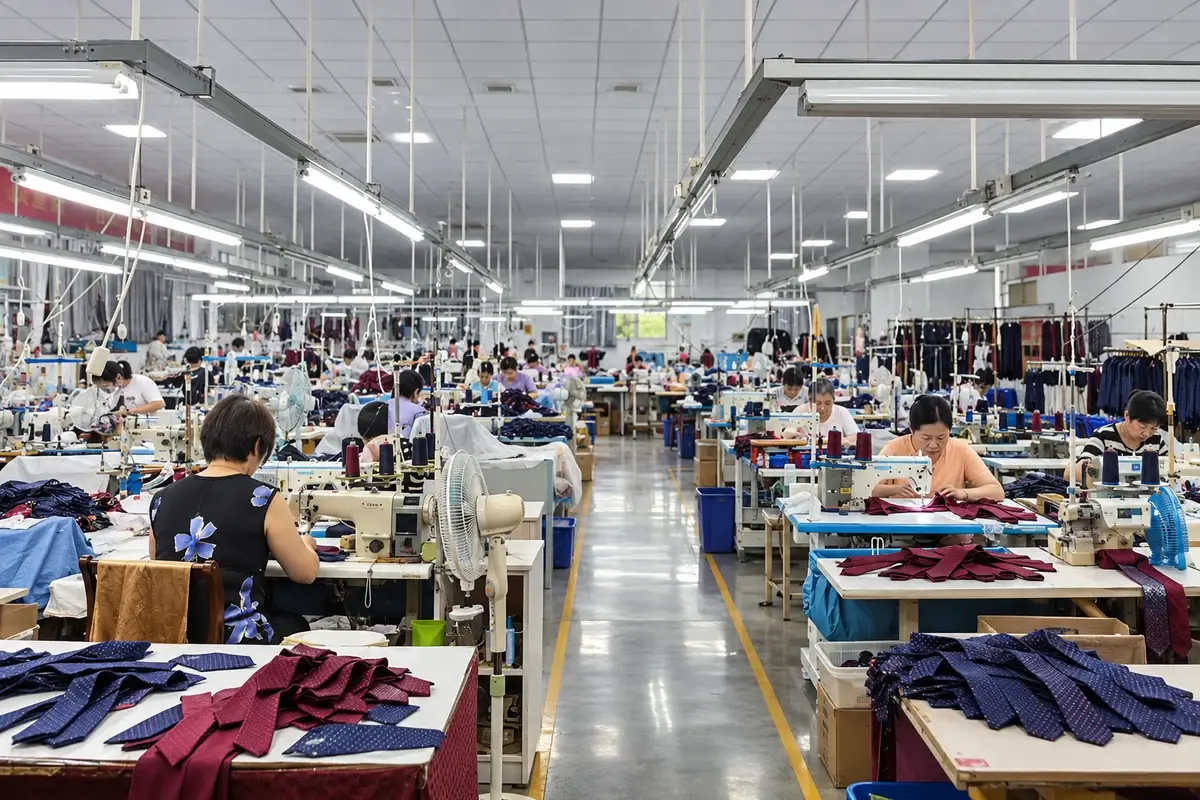
Workers sewing navy and burgundy ties across an organized production floor.
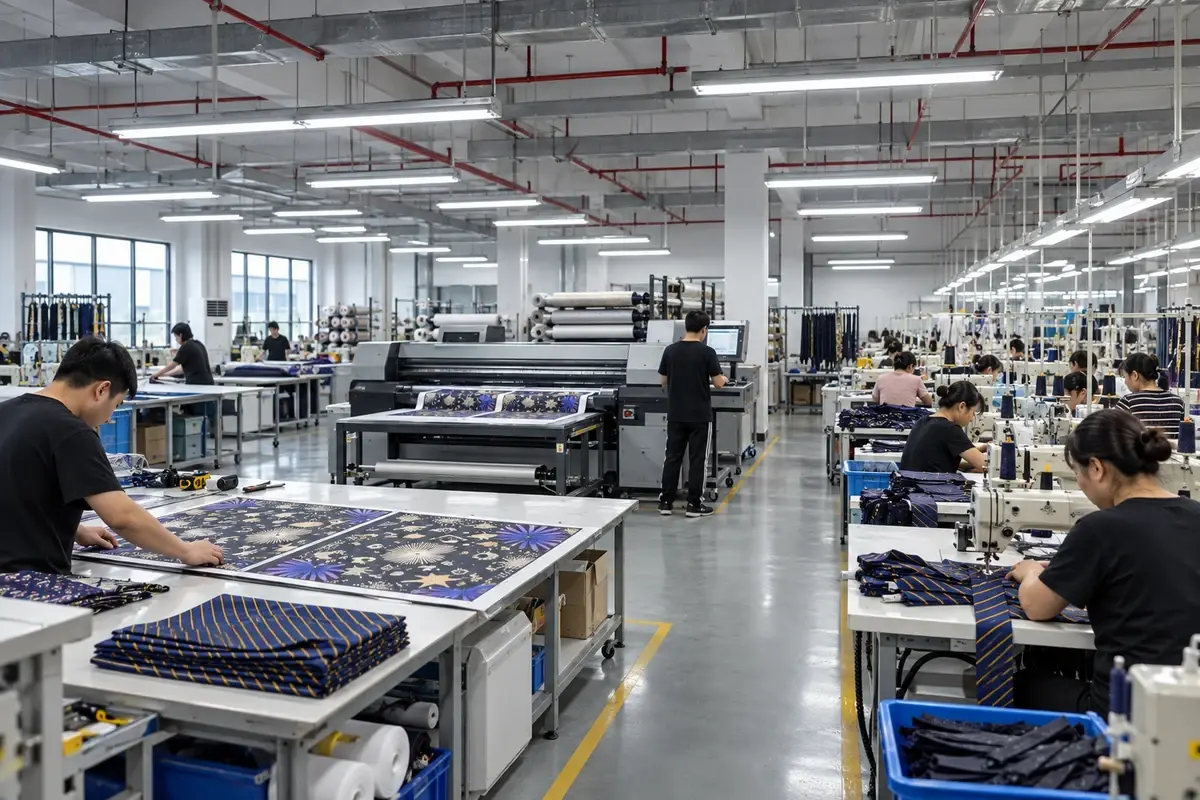
Tie fabric printing, cutting, and sewing areas inside a production workshop.

Inside LuxoTie's Shengzhou Factory

LuxoTie’s own facility combines core tie-making operations with controlled supplier support for selected specialist inputs.

  • Factory Role
    The Shengzhou facility produces custom ties and bow ties for OEM and private label projects. LuxoTie manages specifications, production, inspection, packing, and shipment preparation.
  • In-House Production
    Teams receive and inspect materials; cut fabric; handle screen, foil, and digital printing; prepare interlining; fold, sew, and press ties; then inspect, label, and pack them.
  • Controlled Supplier Work
    Approved suppliers may provide special jacquard fabrics, finishes, or packaging materials. LuxoTie controls this work through supplier qualification, sample approval, and incoming inspection.
Owned
Shengzhou Production Facility
30
Tie Sewing Stations
10
Cutting and Printing Machines
20,000–40,000
Approx. Pieces per Month

Production Capabilities for Custom Neckwear

Three capabilities connect material preparation, tie construction, decoration, and private label finishing for approved designs.

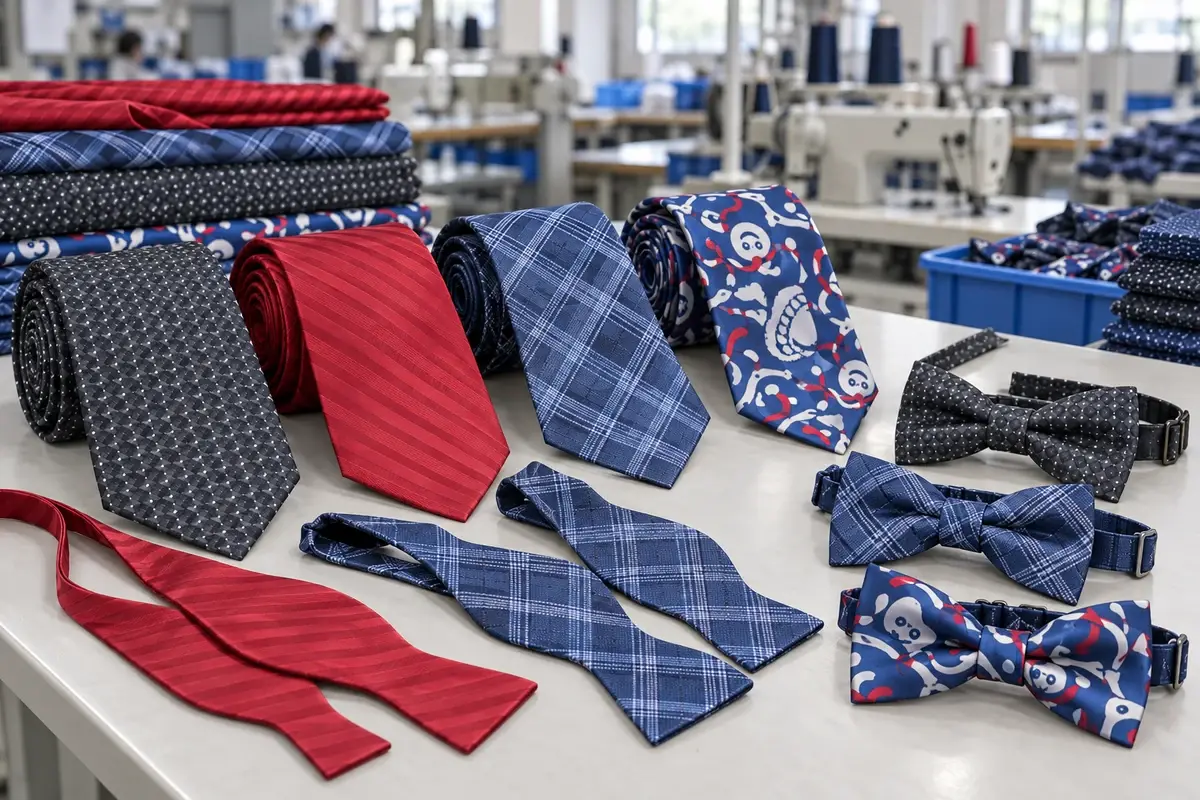
Finished patterned neckties and bow ties arranged on a factory workbench.

OEM Tie and Bow Tie Production

Dedicated sewing stations support silk, polyester, woven, and printed ties plus self-tie and pre-tied bow ties, with structure and dimensions confirmed for each project.
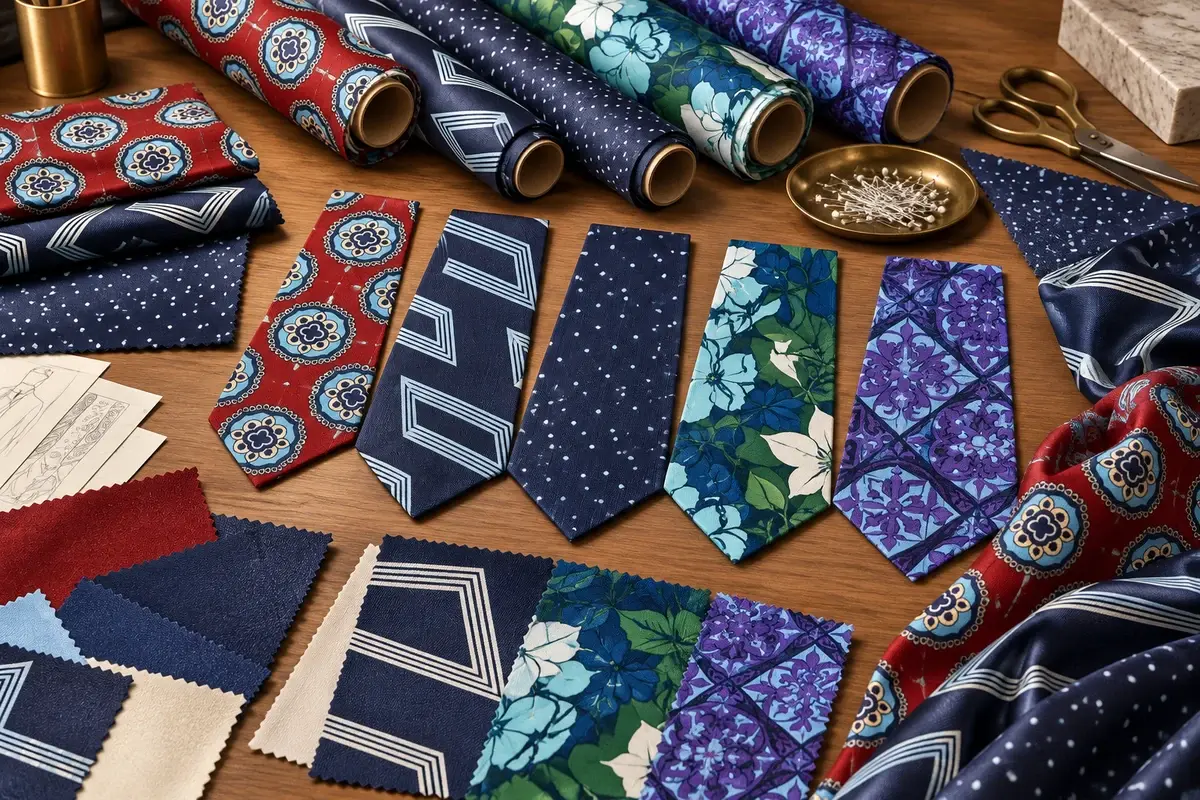
Patterned fabric rolls, swatches, and tie panels for material development.

Fabric and Pattern Development

Material sourcing and development cover mulberry silk, polyester, blends, wool blends, cotton, recycled polyester, and plain, striped, printed, or jacquard patterns.
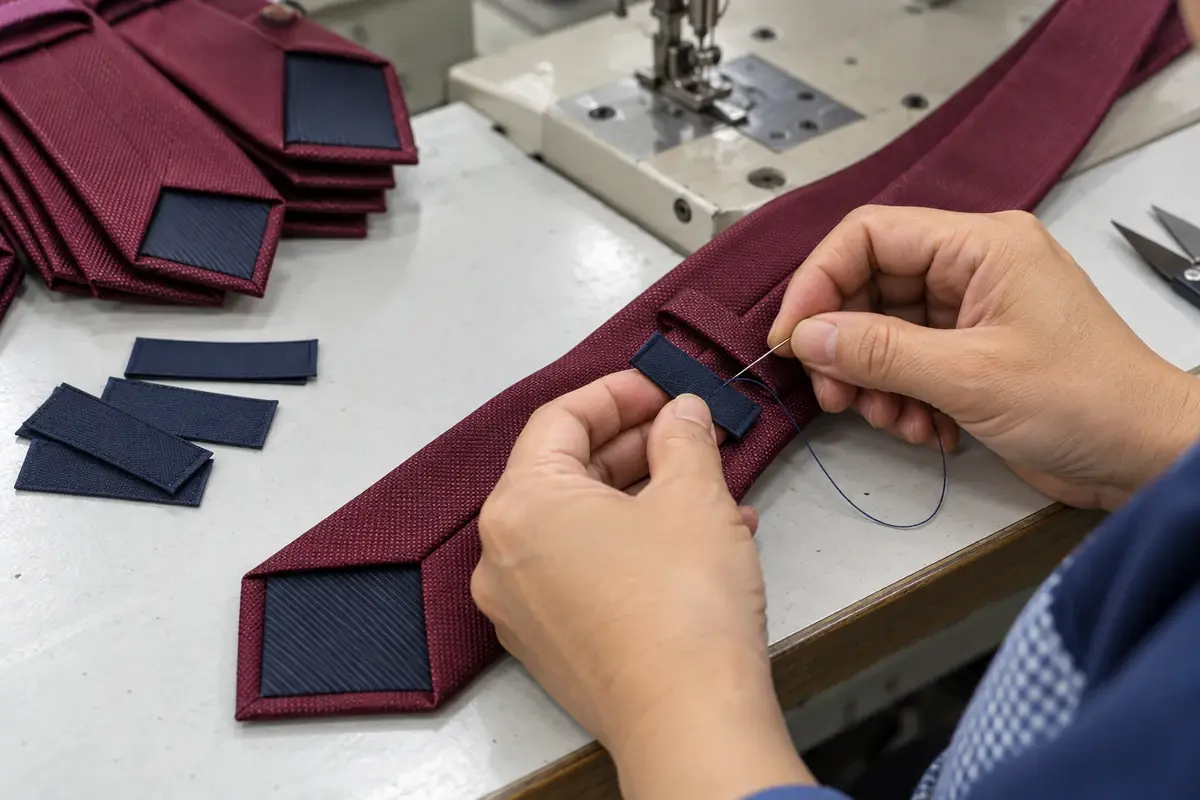
A worker hand-sewing a blank woven label onto the reverse of a burgundy tie.

Logo and Private Label Integration

In-house screen, foil, and digital printing are combined with approved supplier support for jacquard or other special inputs, along with labels and packaging for private label programs.
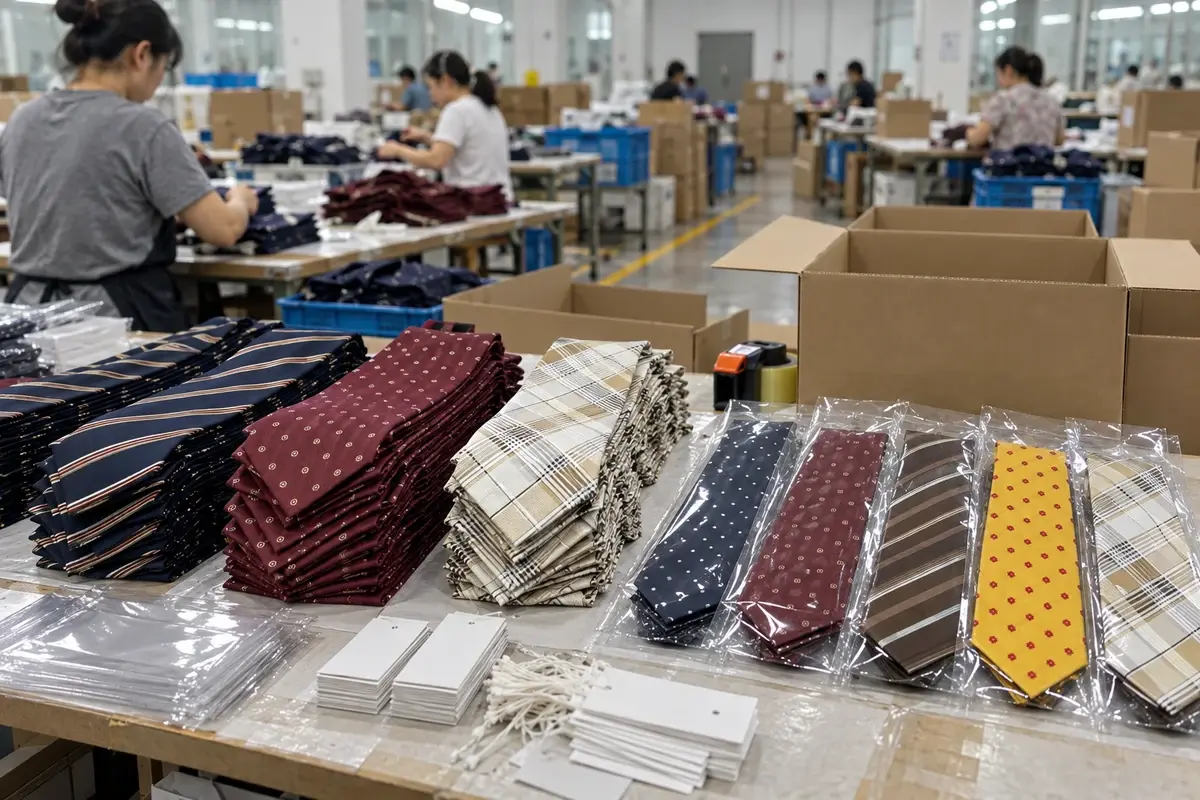
Finished ties, clear sleeves, blank tags, and cartons on a packing workbench.

From Material Receipt to Shipment Release

Each approved order follows five controlled stages from material receipt to packed-goods release.
  1. Receive and Verify Materials
    Materials are received, identified, and checked for fabric condition, specifications, trims, and color before production begins.
  2. Confirm Production Requirements
    Approved specifications, dimensions, colors, artwork, and sample details are locked before cutting, printing, or supplier-supported jacquard work begins.
  3. Cut, Decorate, and Assemble
    Fabric is cut, decorated as required, paired with interlining, folded, sewn, and pressed. Operators check key details during production.
  4. Inspect Finished Goods
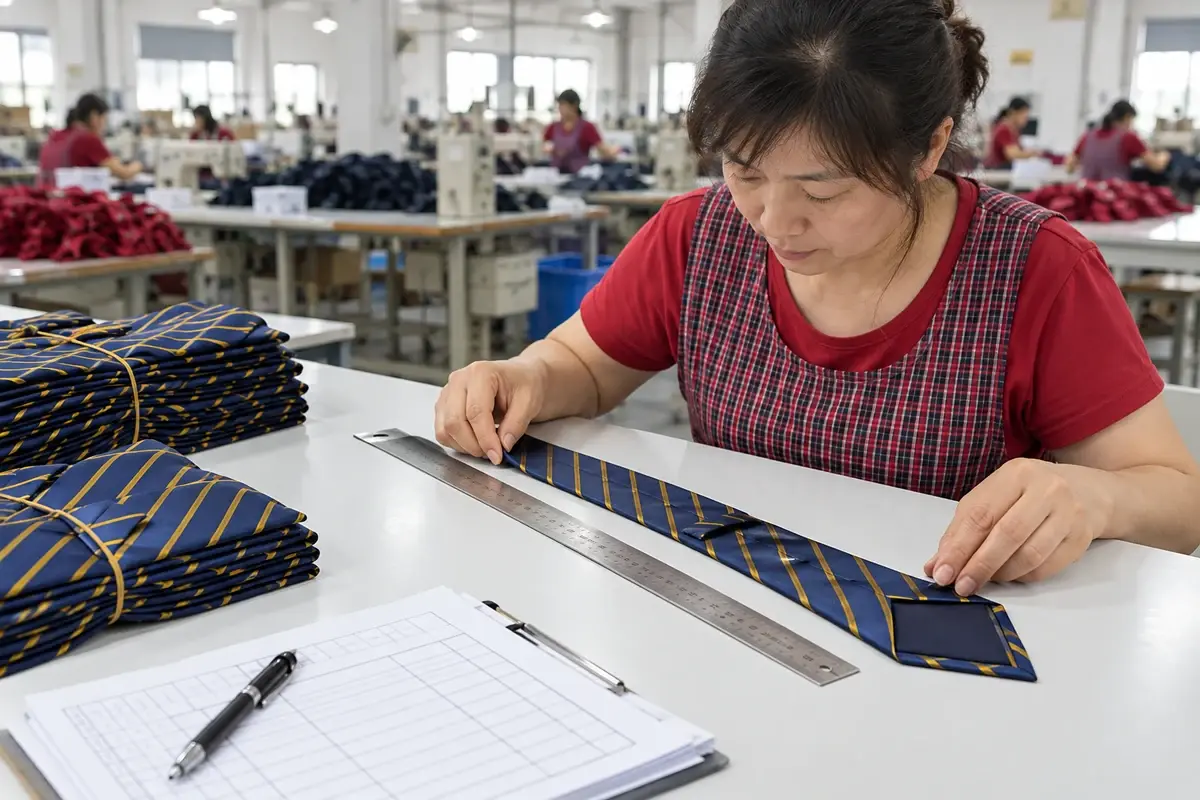
    Quality control reviews appearance, dimensions, stitching, logo or pattern placement, and packaging against approved requirements, with results recorded.
  5. Label, Pack, and Release
    Approved ties receive labels and packaging. Quantities and carton condition are checked and recorded before shipment release.
A factory inspector measuring a striped tie and checking construction.

Three-Stage Quality Control and Records

Material, process, and final checks create records that can support buyer review before shipment.

  • Incoming Quality Control
    Fabric, specifications, trims, and color are checked at receipt, and the material inspection result is recorded before production.
  • In-Process Quality Control
    Cutting, sewing, print or weave position, interlining, and pressing are reviewed during production, with process inspection records retained.
  • Final Quality Control
    Appearance, dimensions, packaging, quantity, and carton condition are checked before release. Final inspection reports and packing records are retained.
View Certifications and Compliance

Verify the Factory Before or During Production

Buyers can review current production evidence remotely, visit by appointment, or arrange independent inspection for a specific project.

Photos and Production Video

Factory and production-line photos, recorded production video, or a live video tour can be provided according to the project and areas being reviewed.

Scheduled Factory Visits

Buyers can schedule an on-site visit to the Shengzhou facility. Timing and accessible production areas are confirmed in advance.

Third-Party Inspection and Files

SGS or Bureau Veritas inspections can be arranged for a specific project, and relevant quality-control or test documents can be shared when needed.

Discuss Your Production Requirements

Send your custom tie requirements and estimated quantity.

Contact LuxoTie
Project-Based Samples
Recorded Quality Checks
Visits by Appointment

Factory Questions from Custom Tie Buyers

LuxoTie operates its own production facility at No. 7, Lingdaiyuan 4th Road, Shengzhou, Zhejiang, China. The site handles custom tie production under the LuxoTie brand.
In-house work includes material receipt and inspection, color checking, cutting, screen printing, foil printing, digital printing, interlining preparation, folding, sewing, pressing, quality checks, labeling, packing, and shipment preparation.
Yes. Approved suppliers may handle special jacquard fabrics, special wrinkle- or stain-resistant finishes, and special packaging materials. LuxoTie controls this work through supplier qualification, sample approval, and incoming inspection.
Monthly capacity is approximately 20,000–40,000 pieces, depending on style and complexity. The standard MOQ is 100 pieces; materials, processes, quantities, and scheduling are confirmed for each project.
IQC checks materials, specifications, trims, and color. IPQC checks production details. FQC checks appearance, dimensions, packaging, quantity, and cartons. Related inspection and packing records are retained.
Yes. Buyers can request photos, a production video, a live video tour, an on-site visit by appointment, or a project-based SGS or Bureau Veritas inspection. Access and documents are confirmed in advance.