
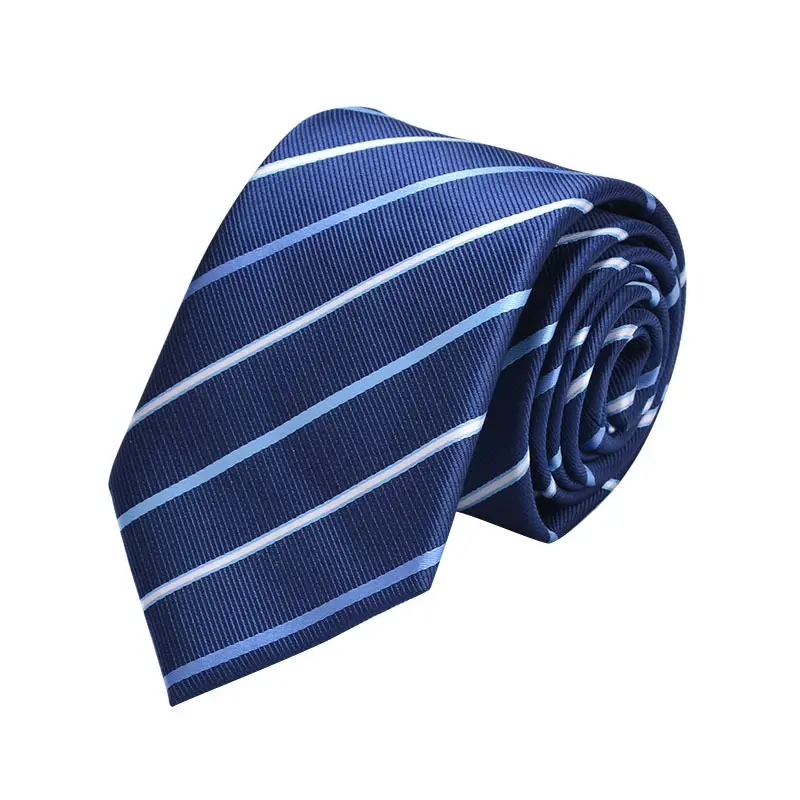
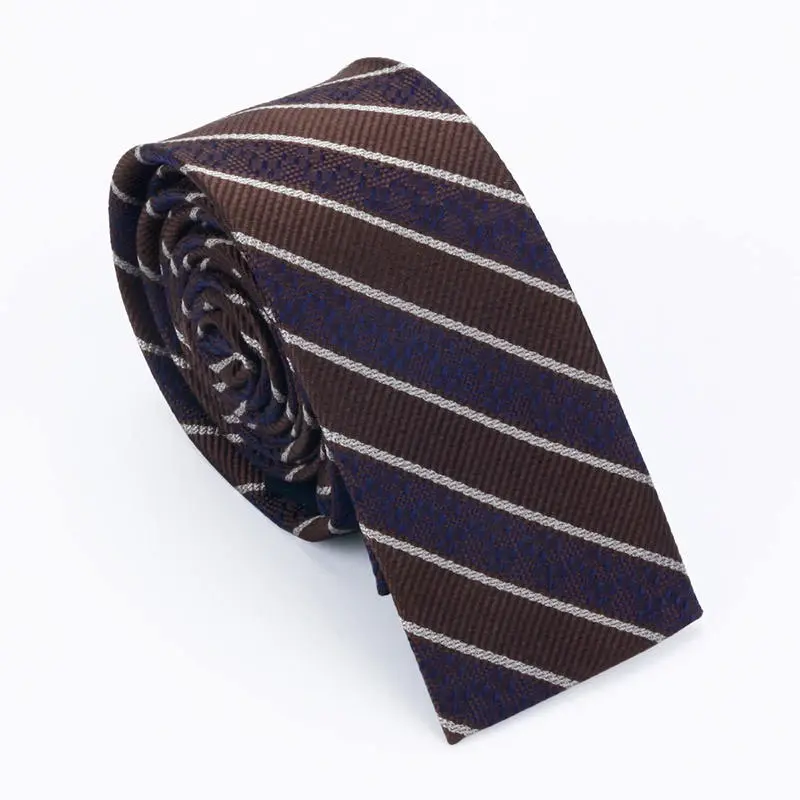
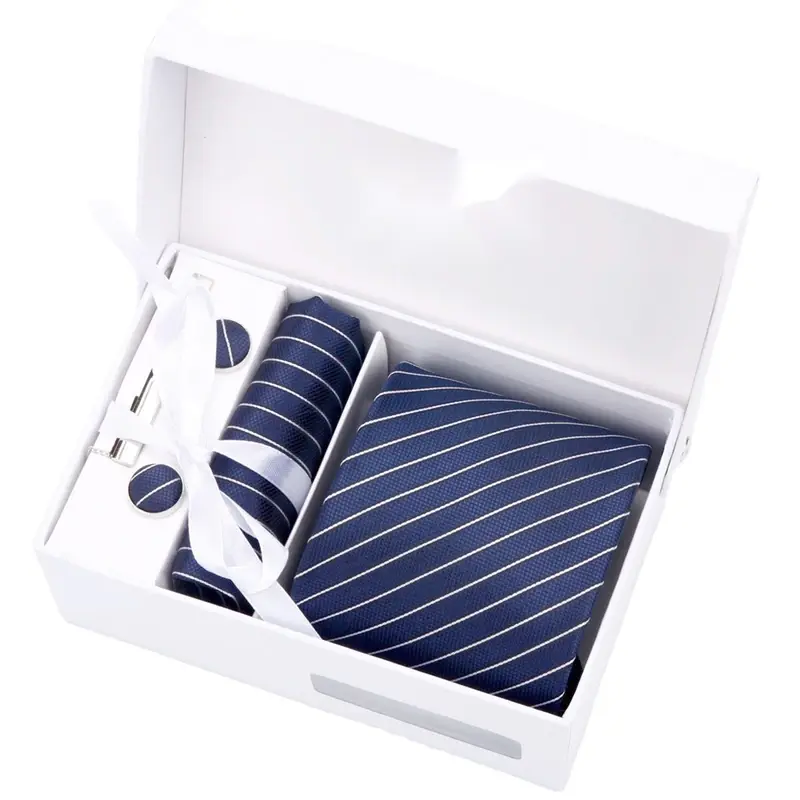
Custom Striped Woven Ties
Define stripe direction, width, spacing, repeat, and yarn color order, then confirm tie dimensions and any woven logo before sampling.
- Stripe Design: Direction, width, spacing, repeat, and yarn color order
- Materials: Polyester, Silk-Polyester Blend, or Pure Silk
- Dimensions: 6–10 cm wide and 135–155 cm long; special sizes by project
- Brand Details: Woven logo, text, or crest; interlining, labels, and hang tags
- Packaging: OPP bag, paper card, box, cloth pouch, and outer carton options
Timing depends on stripe artwork, yarn and material availability, sample approval, quantity, branding, packaging, and production scheduling.
Send Stripe Details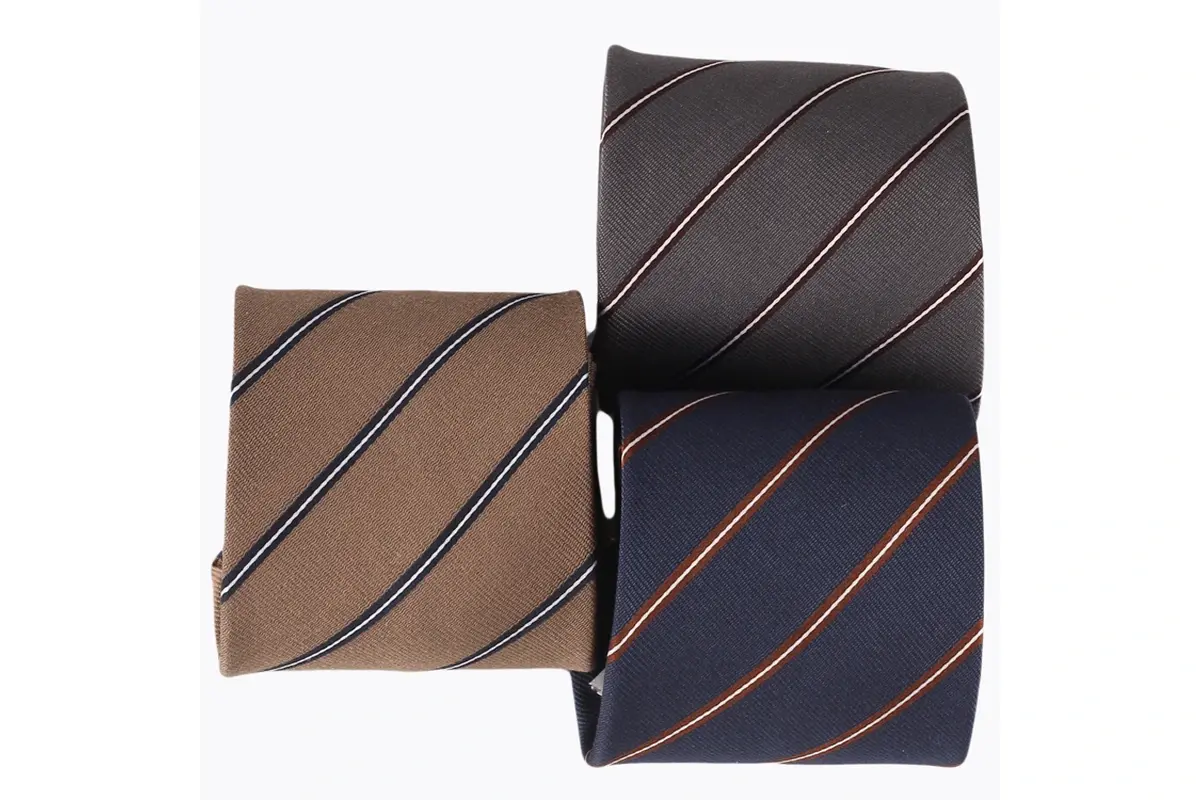
Approve the Stripe Map Before Weaving
LuxoTie converts the brief into a stripe map showing direction, band widths, accent lines, spacing, repeat, and exact color order. The map is checked against the selected tie width, and the approved weaving or finished sample becomes the bulk-production reference.
Woven Stripe and Construction Details
Yarn colors and stripe proportions define the pattern; sewing and reverse finishing shape the finished tie.
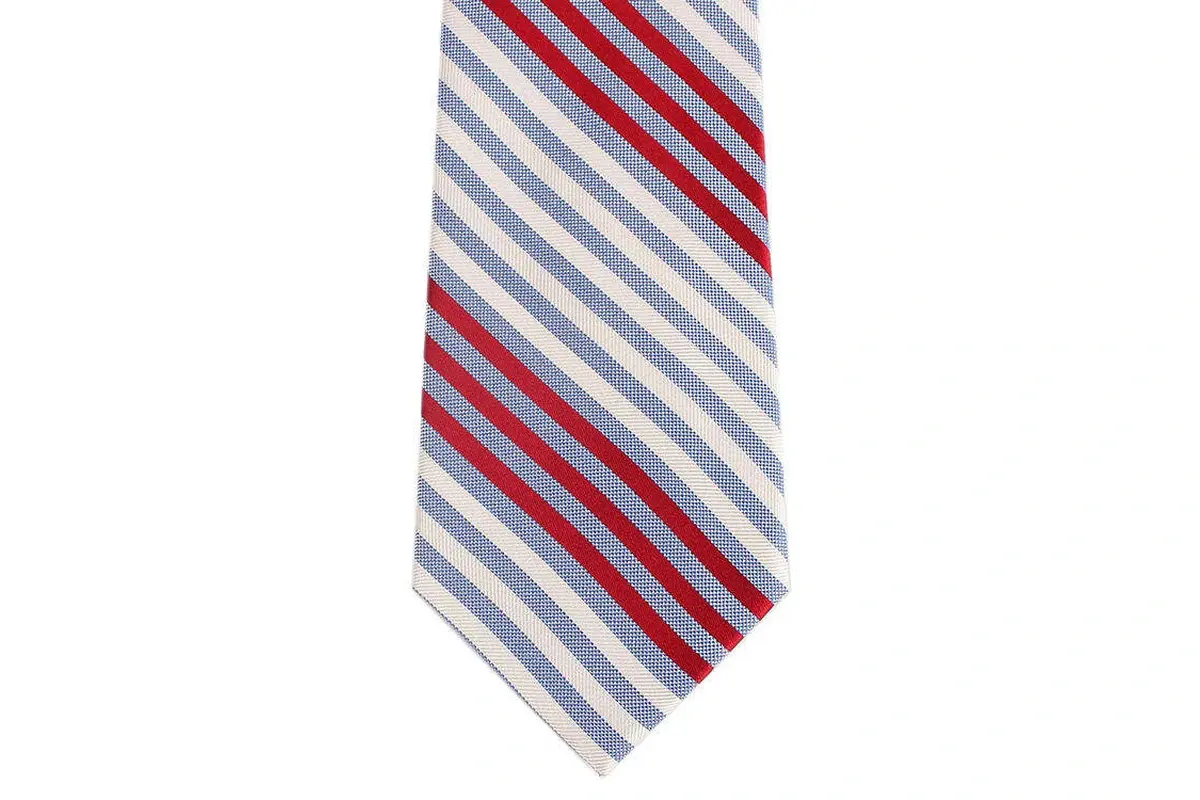
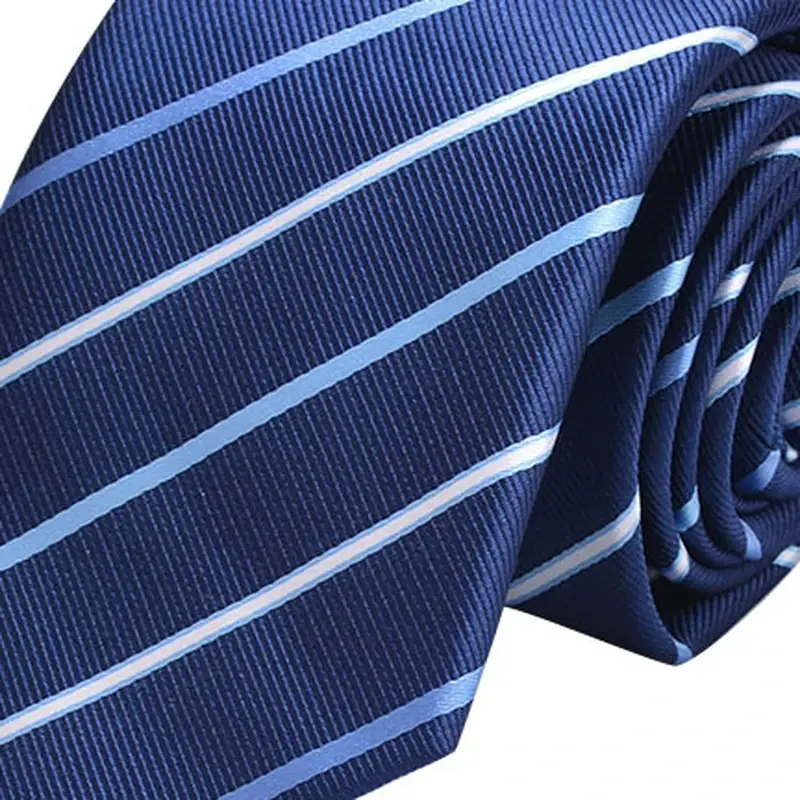
Stripe Weave
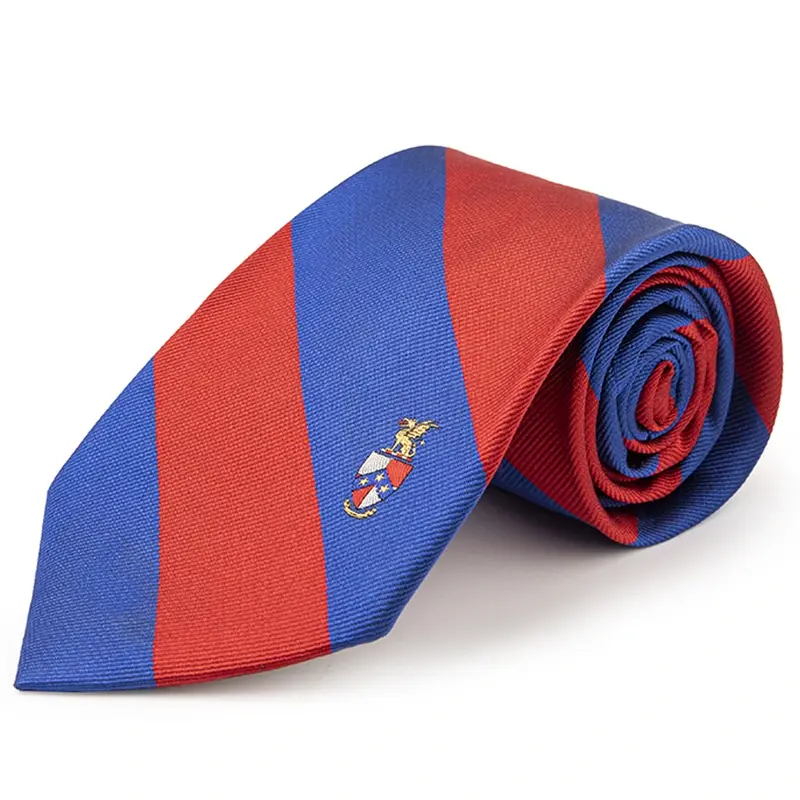
The stripe sequence is formed in the woven fabric. Band widths, accent lines and repeat spacing determine the balance of the design.
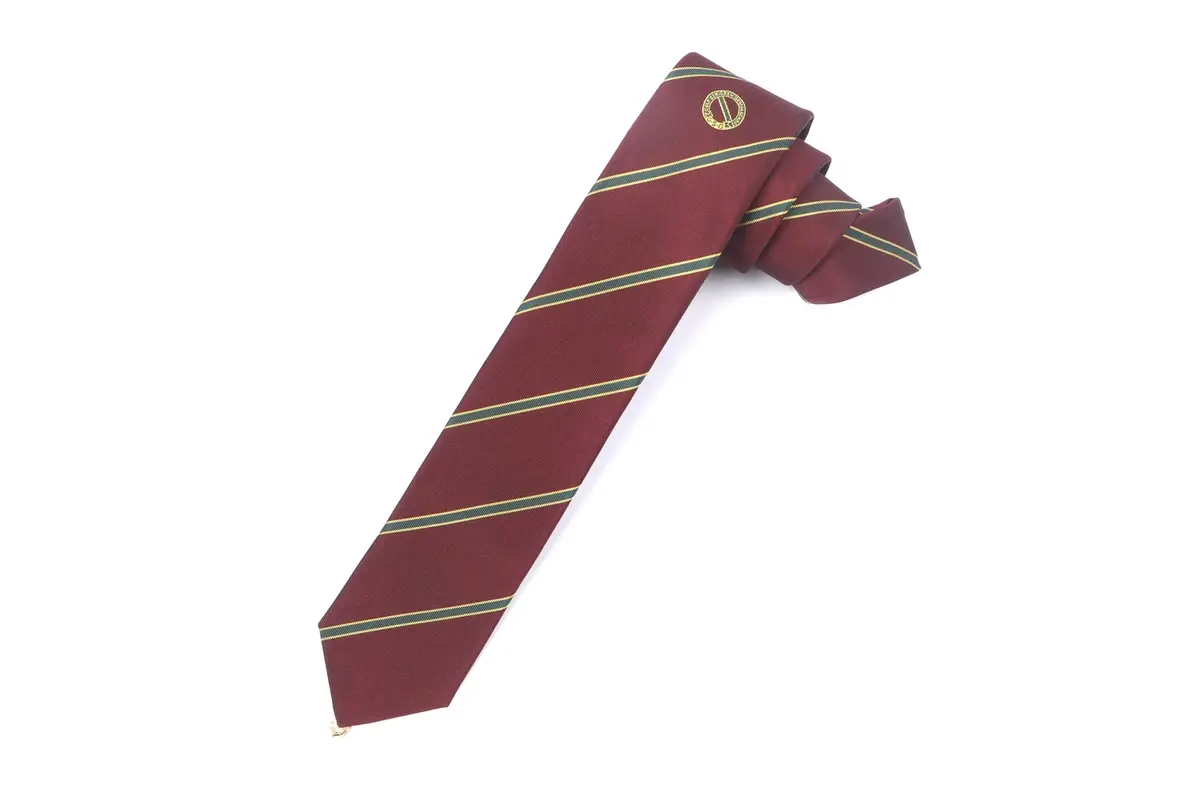
Color and Identity Detail
Yarn colors can follow corporate, school or club references. A woven crest or logo can be incorporated where the design and scale allow.
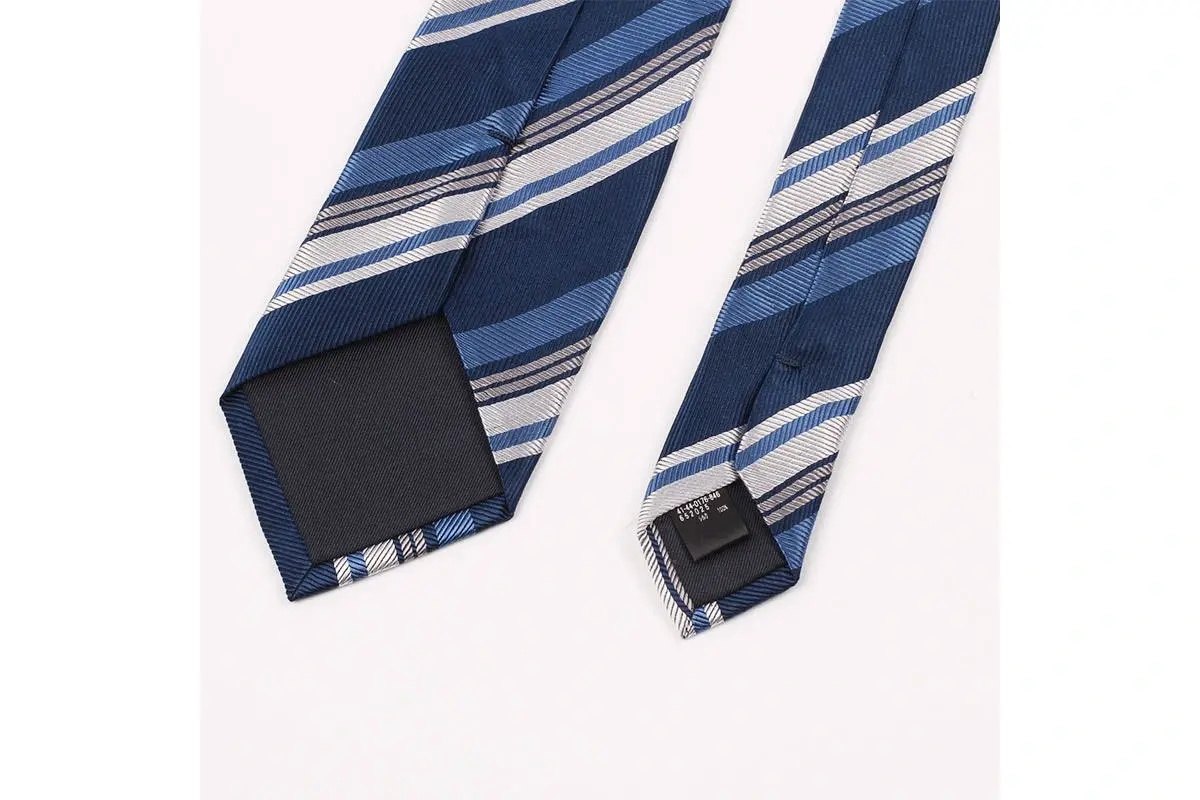
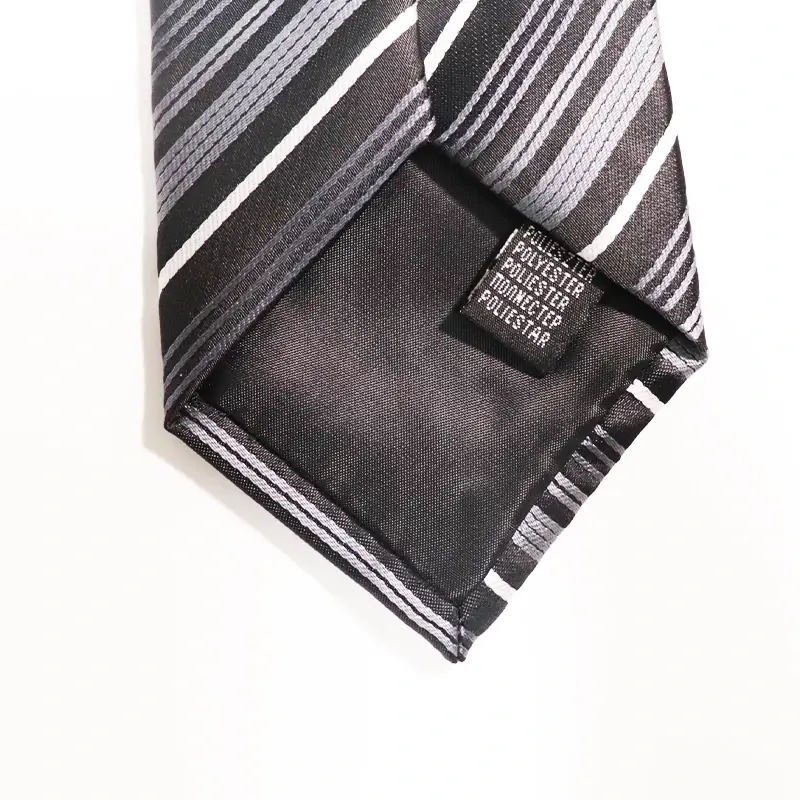
Sewn Shape and Reverse
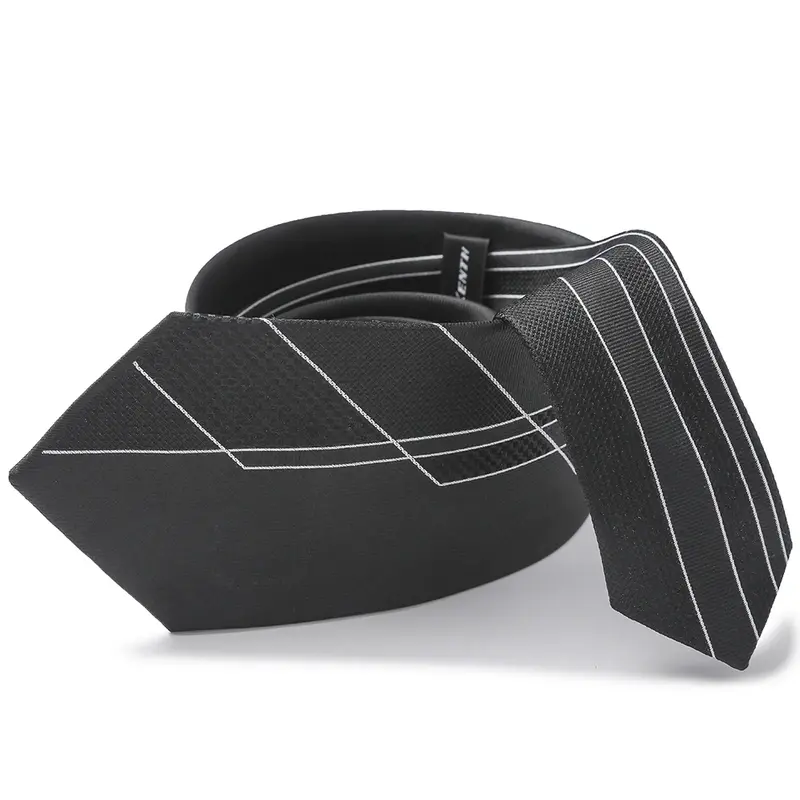
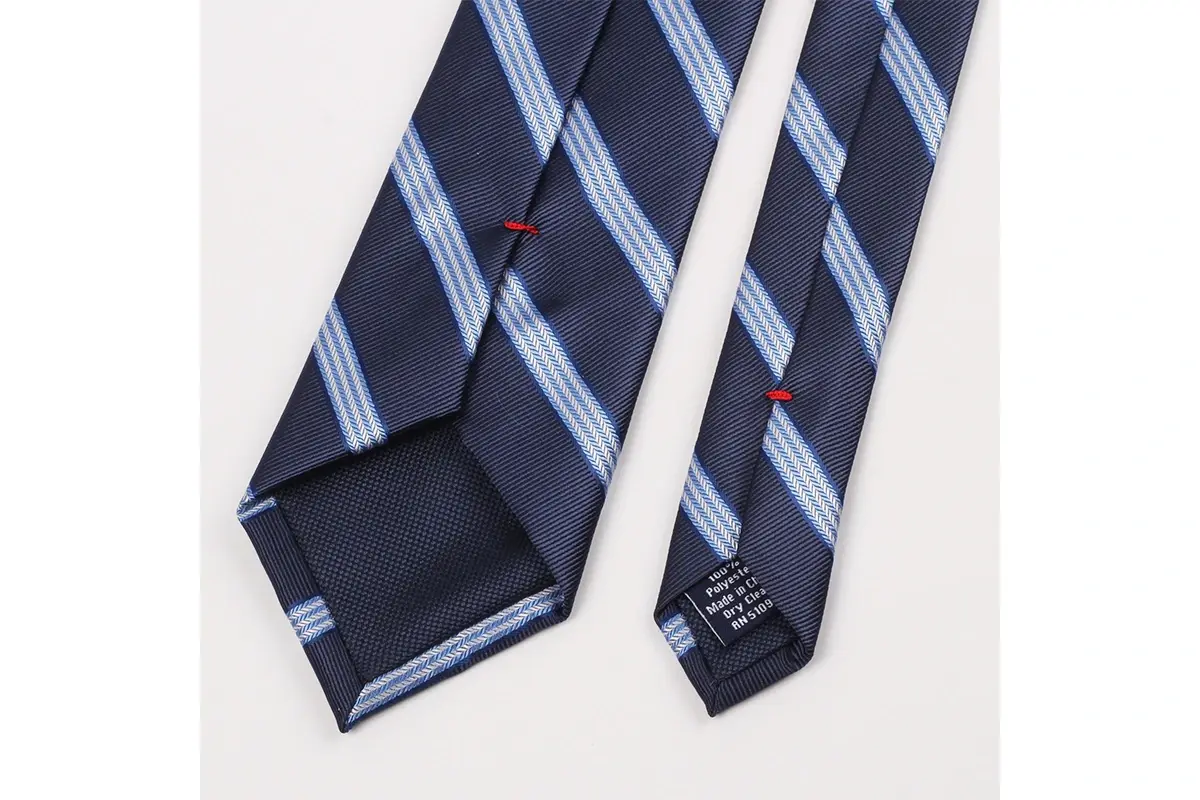
Cutting, interlining and folding shape the blade and knot area. Stitching, keeper placement and labels complete the reverse-side finish.
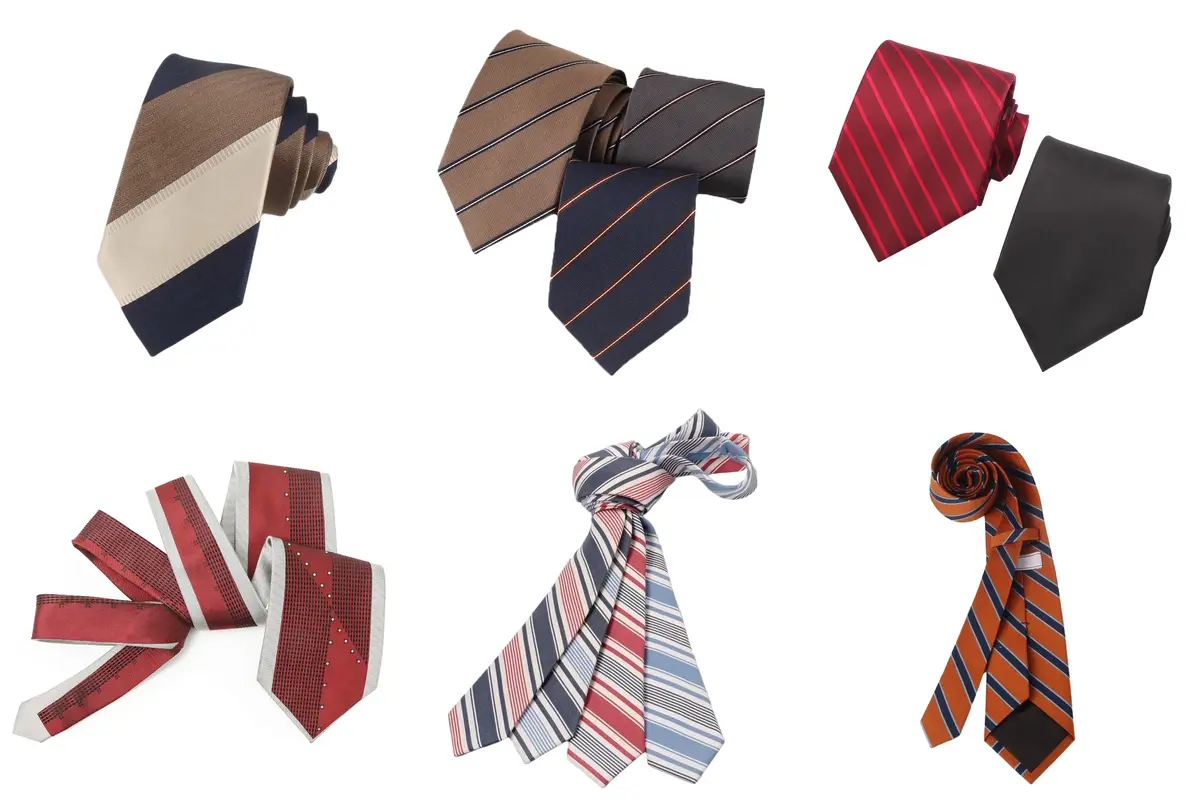
Define the Complete Stripe Specification
Record stripe direction, widths, spacing, repeat, and color order in one design reference for checking the woven fabric and finished blade.
- Stripe Direction
Mark the established corporate, club, or association stripe direction on the artwork, or supply a physical reference tie. - Main Stripe Width
If one brand or club color is dominant, state the actual band width and review its proportion on the selected tie blade. - Accent Line Width
Specify each narrow contrast line separately so it is not mistaken for a gap between the main bands. - Spacing and Repeat
Consistent uniforms and reorders need agreed distances between bands and a complete repeat before sampling. - Color Sequence
List corporate, club, or association colors in order, marking where the sequence starts and repeats.
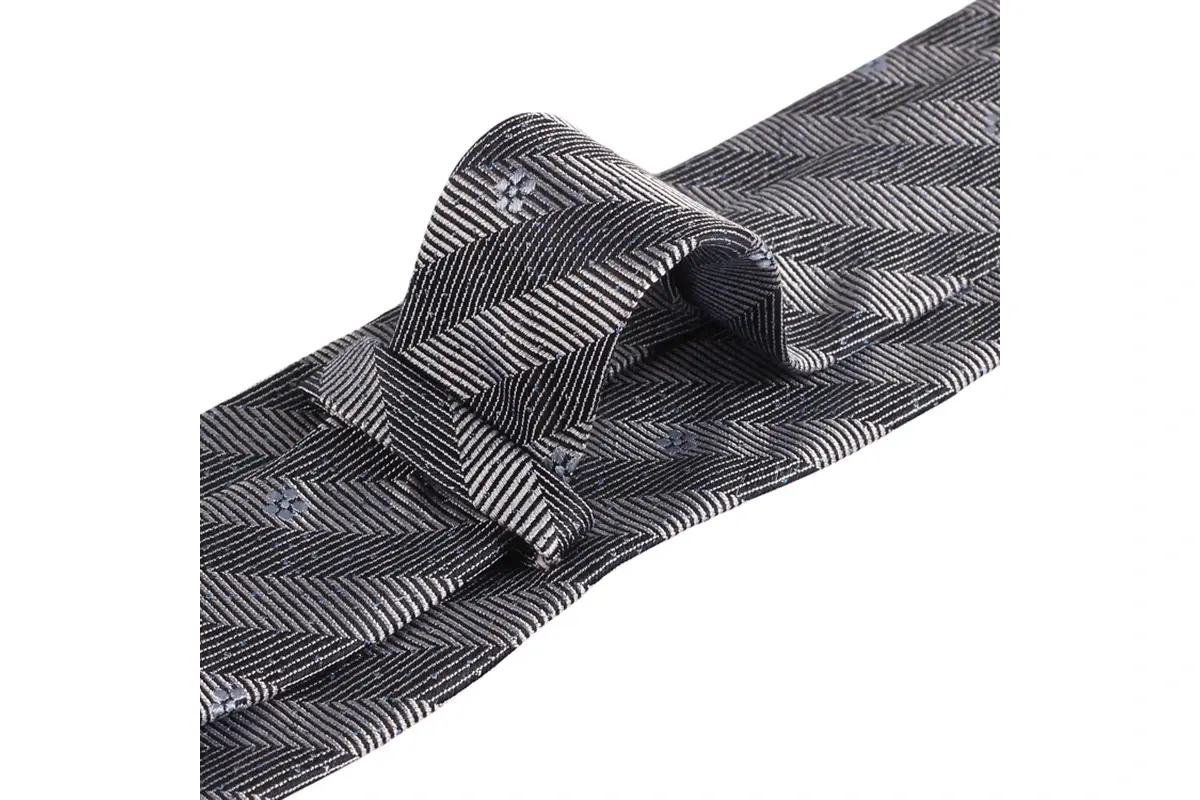
Choose Material for the Intended Use
Material affects hand feel, surface character, project cost, and yarn color appearance. Review the stripe sample in the selected material instead of relying on a digital layout alone.
- Polyester
For corporate, uniform, club, and higher-volume programs, confirm the yarn colors and stripe definition in the final construction. - Silk-Polyester Blend
Compare the sample’s feel, surface, and stripe appearance against the intended market and budget. - Pure Silk
For executive, club, anniversary, or gifting programs specifying silk, review the woven texture, yarn color, and finished-tie sample before bulk production.
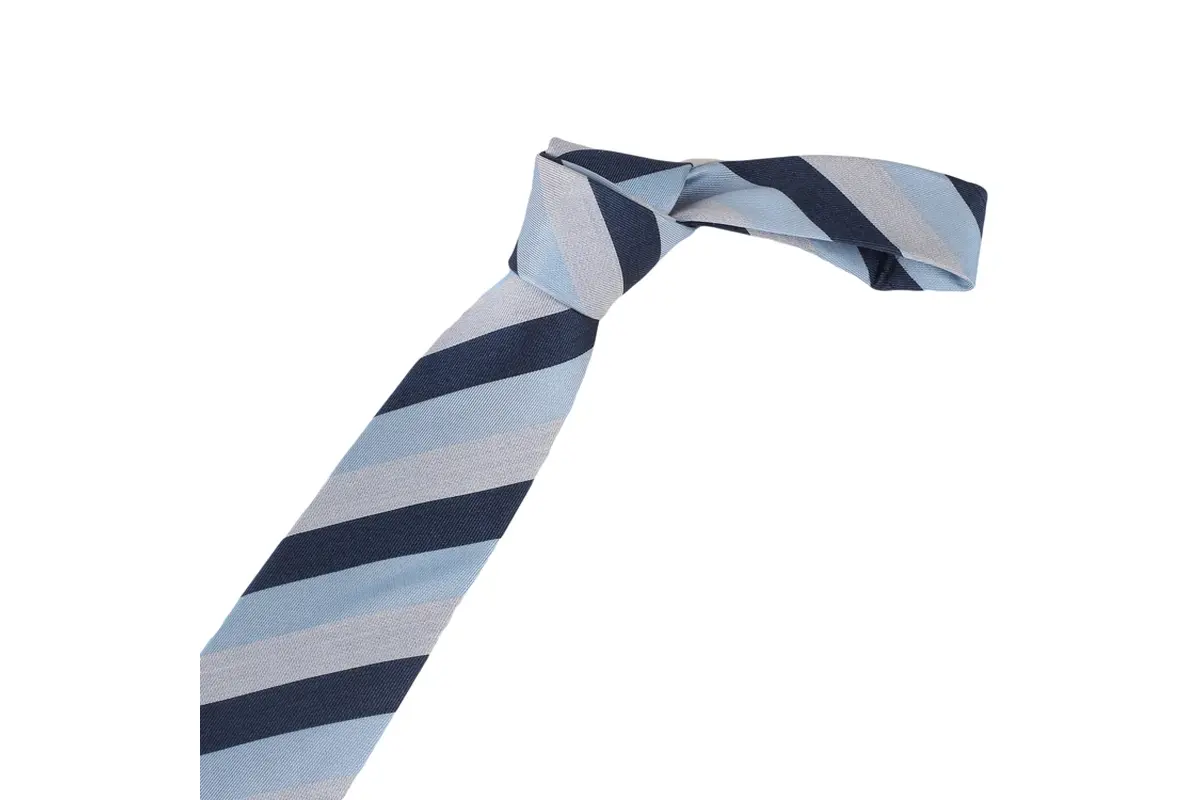
Set Tie Dimensions Before Finalizing the Repeat
Tie width changes how much of the stripe repeat appears across the blade; length affects finished placement. Standard widths are 6–10 cm and lengths are 135–155 cm. Special dimensions require project review.
- 6–7 cm Width
Recheck band widths, accent lines, repeat, and logo scale on the narrower blade. - 8–9 cm Width
Check how the stripe repeat meets both edges of a broader corporate, club, retail, or uniform tie. - 10 cm Width
The widest listed standard option needs silhouette, stripe proportions, and interlining approved together. - 135–145 cm Length
The shorter listed lengths. Confirm wearer needs and any placed-logo position before sampling. - 150–155 cm Length
The longer listed lengths. Confirm finished length, blade proportions, and stripe appearance. - Special Dimensions
Supply exact measurements outside the listed combinations for feasibility and quotation review before final artwork.
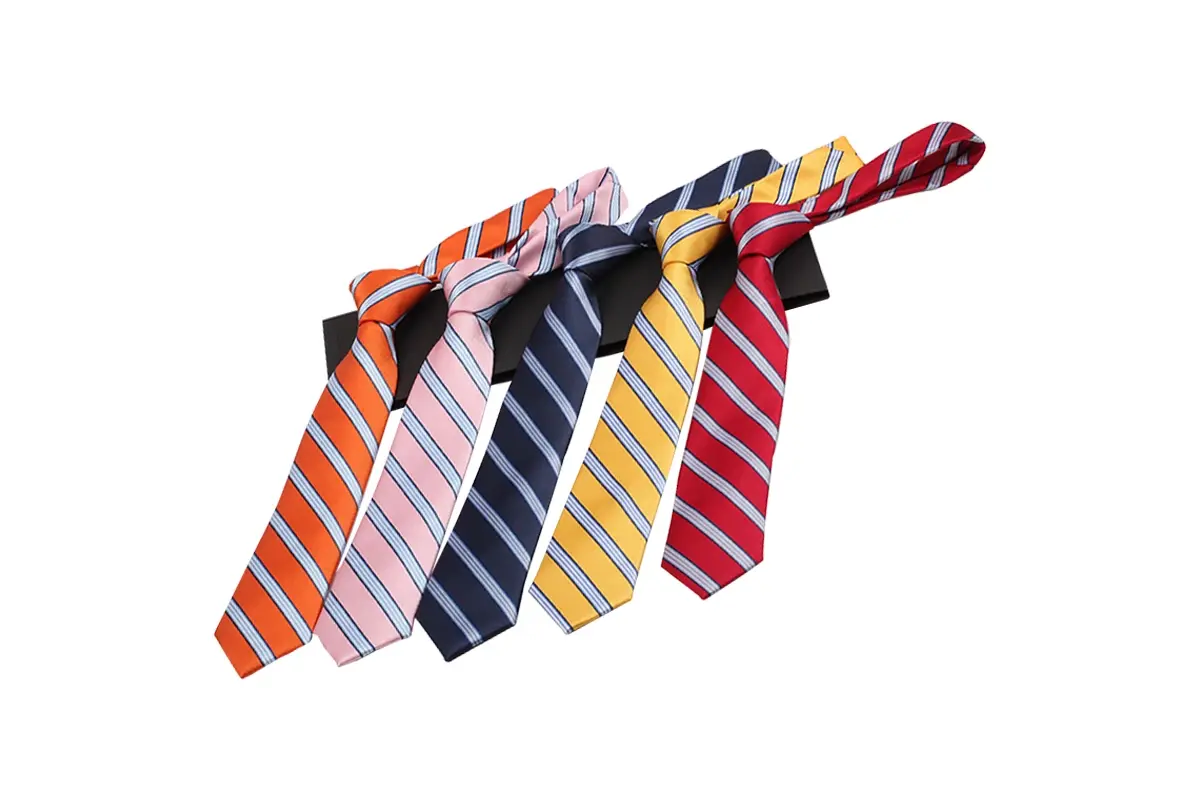
Approve the Yarn Colors in the Correct Order
A striped design depends on the individual yarn colors and their sequence. Provide Pantone codes or a physical reference, label each band, and approve the woven or finished sample before bulk production.
- Pantone Color References
Identify the brand or club Pantone reference for each stripe and ground color. - Physical Color or Tie Sample
To match an existing uniform, club tie, or approved product, mark the exact target areas and provide a current representative sample. - Labeled Color Sequence
Number main bands and accent colors in order to make the direction and repeat clear. - Woven or Finished-Sample Approval
When stripe color and proportion are critical, approve the physical reference; photos and screens may display yarn colors differently.
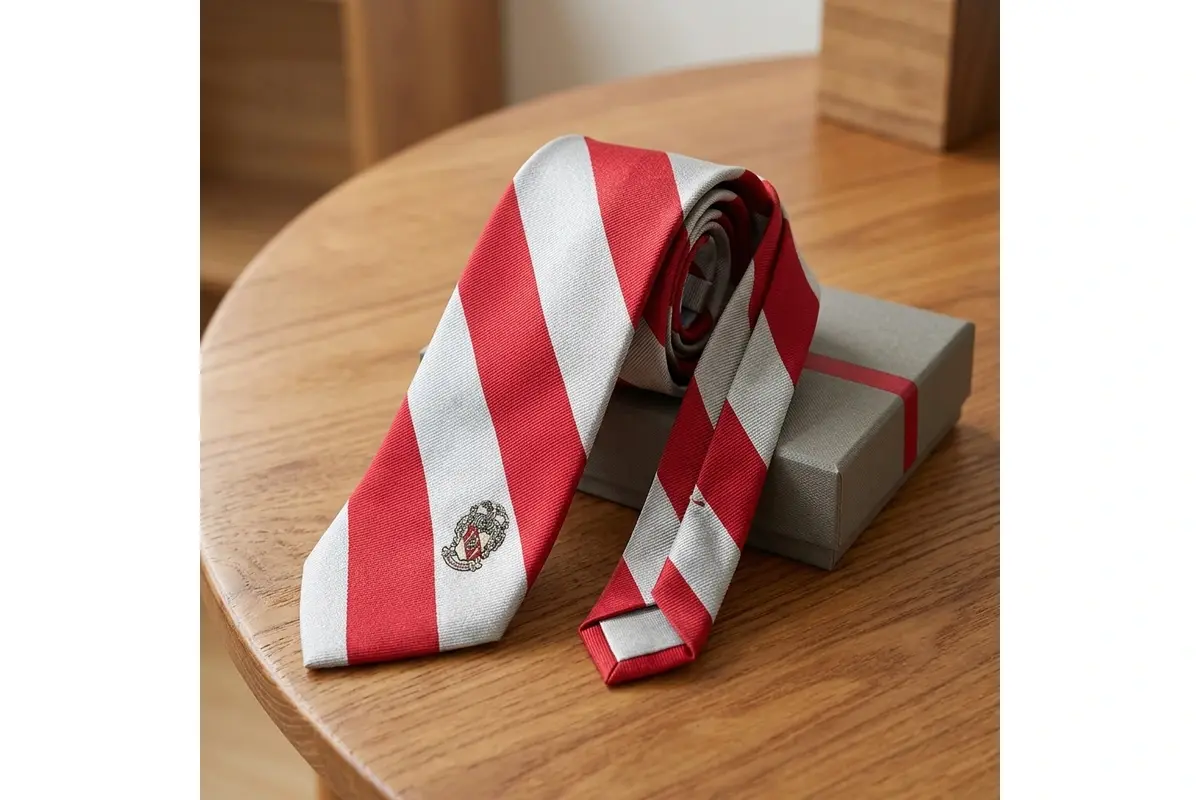
Combine a Woven Logo with Stripes
A logo, crest, or short text can be woven into a striped design when its scale and position are planned with the bands. Confirm whether the mark is placed or repeated and how it relates to the stripe sequence.
- Positioned Woven Logo
Define the size, location, orientation, and stripe clearance for a single corporate or club mark on the front blade. - Repeated Logo Between Stripes
Set logo spacing and its alignment with the stripe color sequence for each repeat. - Crest, Initial, or Text Motif
Fine lines and small letters in association, club, or organization identifiers need review for clear weaving.
Related Custom Products
Compare corporate woven, striped school, woven logo, and woven polyester ties.
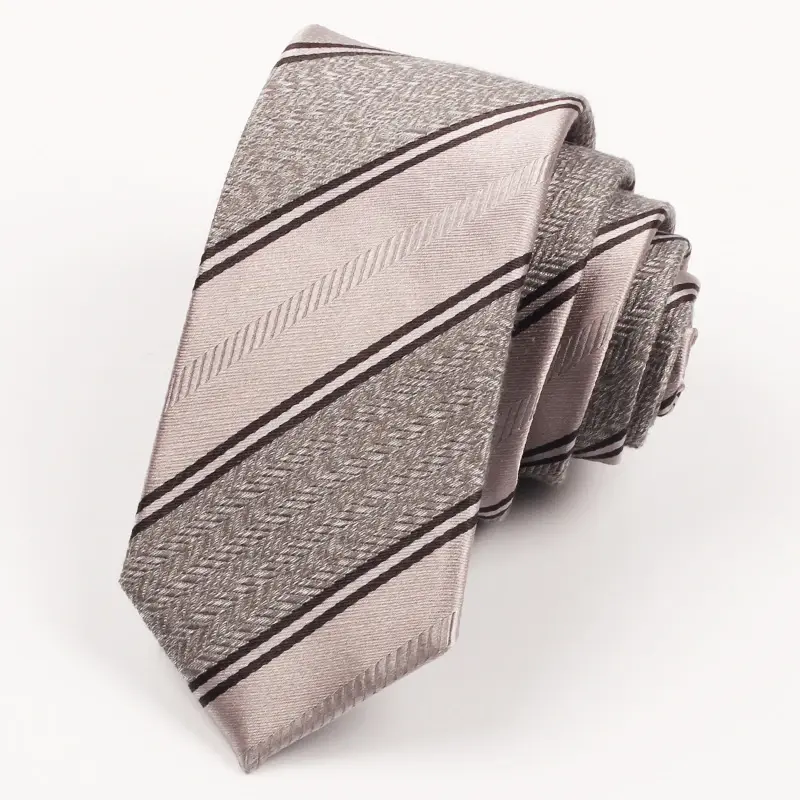
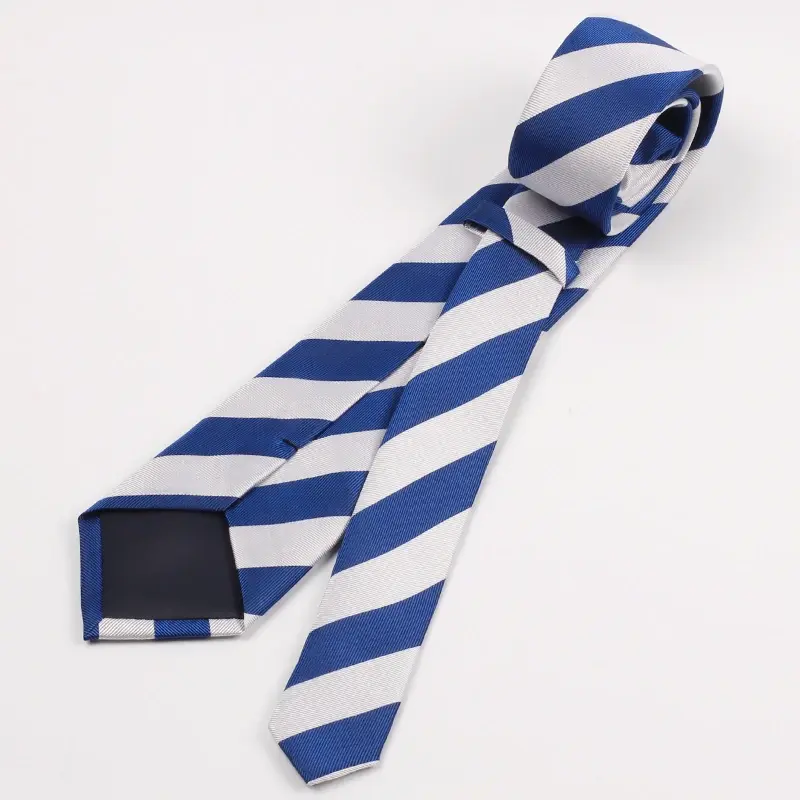
Check Stripe Accuracy from Fabric to Finished Tie
Quality checks cover material, yarn color sequence, stripe direction, band widths, spacing, repeat, cutting orientation, interlining, sewing, dimensions, logo position, labels, packaging, and quantity against approved artwork and samples. Special jacquard fabric is managed through supplier controls and incoming inspection.
Send Your Stripe Brief for Review
Send your striped woven tie requirements and estimated quantity.
Request a Custom Quote