
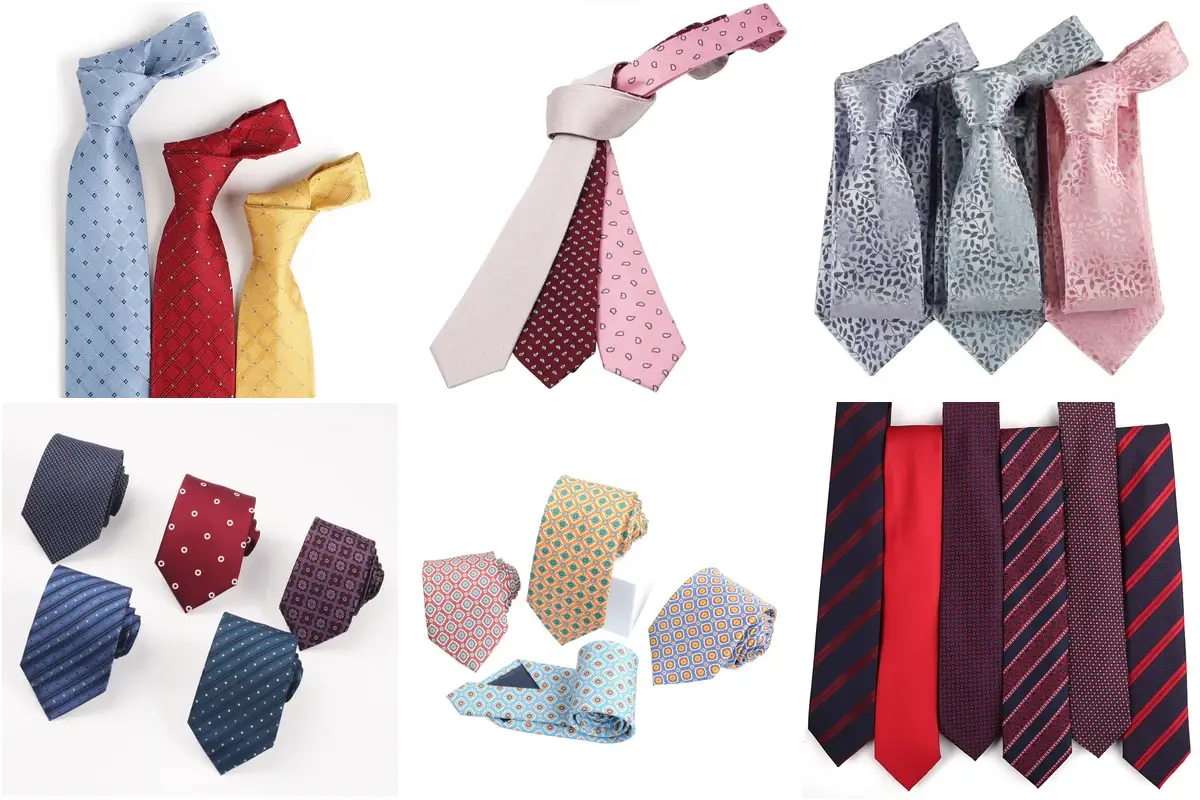
For a custom tie with repeated logos or defined stripes, jacquard weaving is a useful starting point. For artwork with gradients or many color transitions, discuss a suitable printing method. Neither route is automatically better: the right choice depends on what the design must preserve at the finished tie size.
Start with the artwork you actually plan to use. A small crest with fine lettering raises different questions from a wide stripe or an all-over illustration. LuxoTie offers custom woven ties and custom printed ties; the method and fabric are reviewed together before sampling.
What is the difference?
In a jacquard woven tie, the pattern is created by the arrangement of yarns in the fabric. The yarn colors and weave structure affect how the design looks and feels. Printing places the artwork onto fabric using a method selected for the material and design.
“Woven” and “silk” are not competing categories. Woven describes how a pattern is made; silk describes a fiber. A silk tie can have a woven pattern or a printed pattern. Likewise, polyester is a material choice, not a synonym for printing.
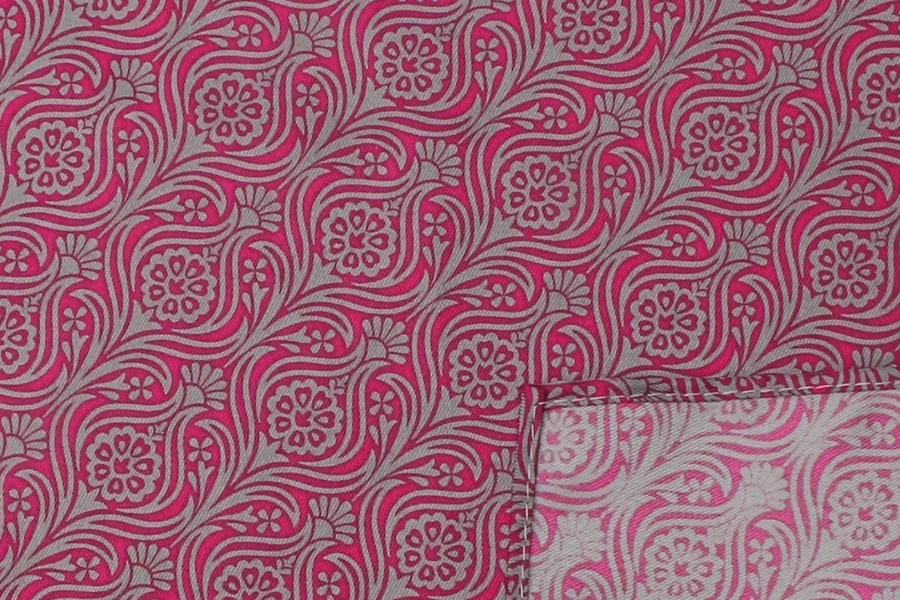
Compare the design requirements
| Design requirement | Woven route | Printed route |
|---|---|---|
| Repeated logo or stripe | Discuss repeat size, yarn colors and weave detail. | Discuss repeat size, edges and placement on the cut tie. |
| Gradients or complex color transitions | The weave may require artwork simplification. | Discuss a full-color method; screen printing is not the default for gradients. |
| Visible texture | Review how the weave changes the surface and motif. | Review the base fabric and the effect of the selected printing method. |
| Fine lettering | Check legibility in a woven sample at actual size. | Check legibility in a print sample at actual size. |
| Brand color | Confirm available yarn colors and the sample appearance. | Confirm the color result on the selected fabric. |
This is a design comparison, not a quality ranking. Both routes need a clear specification and sample approval. A photograph alone does not establish fiber content, color accuracy or durability.
Check the logo at its final size
Place the logo inside a drawing of the intended tie width. Then mark its dimensions, distance from the tip and repeat spacing. For an all-over pattern, show the repeat rather than sending only an enlarged isolated motif.
Review the tie both flat and knotted. A logo that is clear on a full artwork sheet may become too small on the blade, sit inside the knot or fall outside the visible area. Ask for a simpler version if small letters or closely spaced lines cannot be reproduced clearly. Approve that revision before sampling.
- Corporate logo: identify which elements and colors must remain unchanged.
- School crest: identify whether small text is essential or whether an approved simplified crest is available.
- Illustrated pattern: identify the gradients and fine details that must survive scaling.
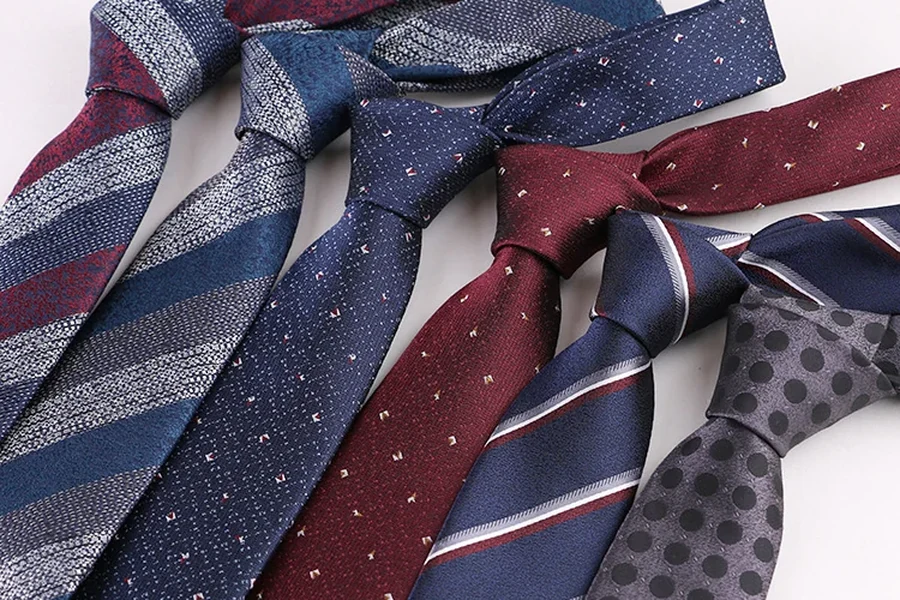
Choose the fabric separately
After choosing a likely design route, compare fabric options for the intended wearer and budget. LuxoTie’s woven range includes silk, polyester and silk-polyester blends. The available printing route depends on the chosen fabric and artwork; confirm the specific combination in the quotation.
Do not select care instructions from the words “woven” or “printed.” Ask for care guidance for the actual material, lining and decoration. If a school or uniform program has a particular care requirement, state it before the sample is made.
Approve the appearance on a sample
Use a color reference and inspect the sample under consistent lighting. A Pantone reference helps communicate the target, but a screen preview does not confirm the result on fabric. Compare the motif size, edge definition, repeat spacing and appearance when tied.
A woven swatch or print strike-off helps review the design on fabric. A finished tie is needed to review the complete shape, knot and logo position. Record which sample is being approved and what it does not yet confirm.
For the next step, use the custom tie sample approval checklist. Keep price comparisons on the same fabric, size, quantity, labels and packaging so a change in specification is not mistaken for a saving.
Frequently asked questions
Related guides
- How to Order Custom Ties: A Quote-Ready Checklist
- Custom Tie Sample Approval: What to Check Before Production
Share your logo or pattern, preferred fabric, tie dimensions and quantity. Identify any color or design details that must remain unchanged.
Discuss Your Project